A Symphony of Emotion and Form: The Vision of Rosso Fiorentino
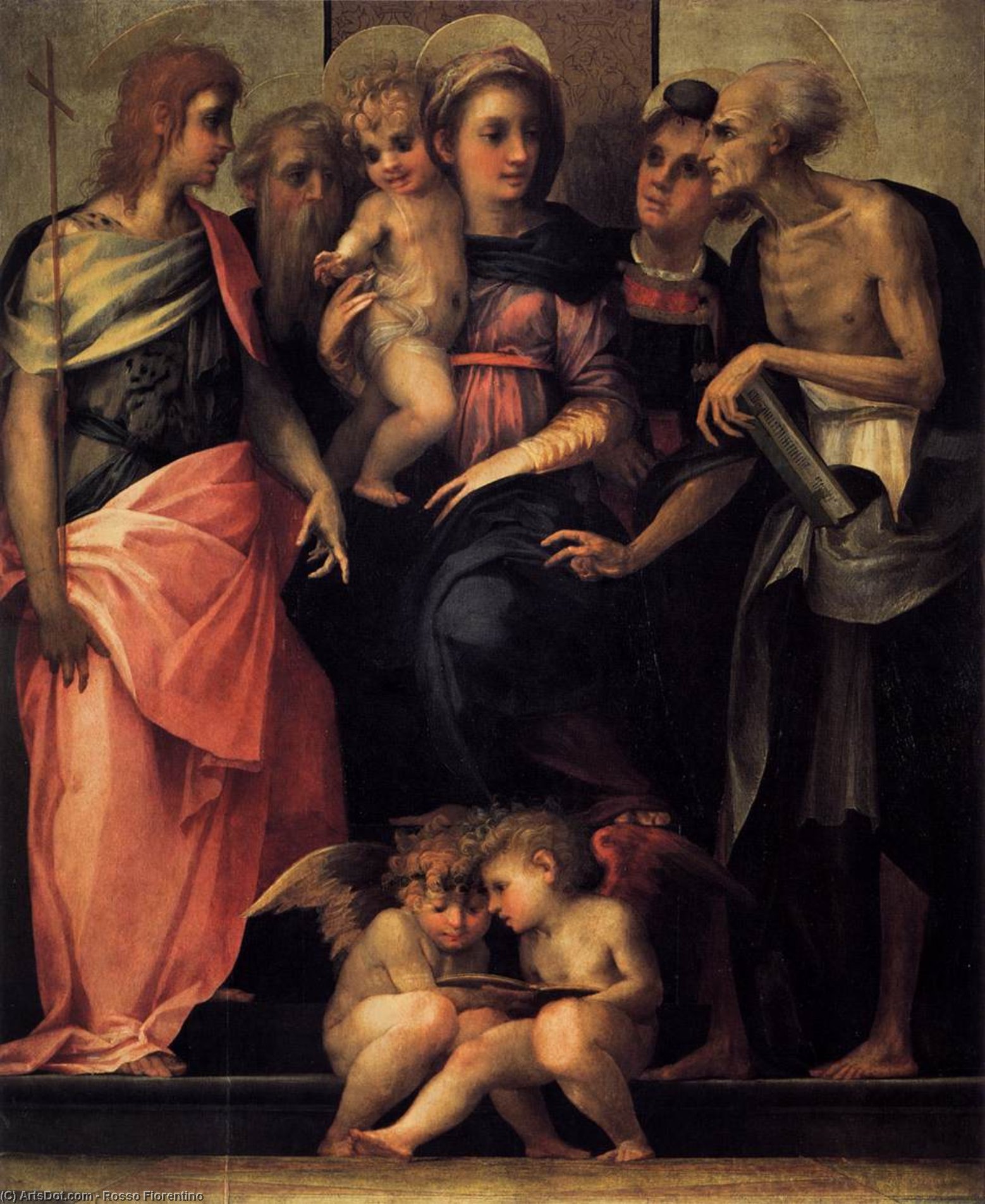
In the transition from the balanced harmony of the High Renaissance to the expressive tension of Mannerism, few artists captured the shifting soul of Italy as audaciously as Giovanni Battista di Jacopo. Known to history as Rosso Fiorentino, his work serves as a bridge between two worlds, and nowhere is this more evident than in his masterpiece, Madonna Enthroned with Four Saints. Painted in 1518, this work was commissioned by Leonardo Buonafede for the Hospital of Santa Maria Nuova, and it remains a profound testament to an artist who refused to be bound by the classical perfection of his predecessors. To gaze upon this canvas is to witness a moment where spiritual reverence meets a new, unsettling psychological depth.
The painting depicts the sacred event of the Presentation of Mary at the Temple, yet it transcends mere biblical illustration. Within a richly ornamented architectural setting, Rosso orchestrates a crowded, dynamic composition that guides the viewer through a celestial hierarchy. The Virgin Mary and Child sit enthroned, surrounded by Joseph, John the Baptist, an angel, and various attendants, all arranged upon a stepped platform. This arrangement creates a rhythmic sense of depth, pulling the eye upward toward the divine center. While the architecture provides a sense of grandeur, it is the figures themselves—with their elongated proportions and expressive gestures—that breathe life into the sacred narrative.
The Mastery of Mannerist Technique and Light
For the discerning collector or interior designer, the technical brilliance of this piece offers endless inspiration. Rosso Fiorentino utilized oil on wood to achieve a meticulous, layered texture that enhances the dramatic chiaroscuro lighting of the scene. The light does not merely illuminate; it sculpts. Entering from the upper left, the directional light casts deep, evocative shadows that lend volume and a palpable weight to the drapery and human forms. This interplay of light and dark creates a sense of theatricality, making the figures appear to emerge from the very fabric of the composition.
The color palette is a masterclass in understated power. Eschewing the bright, primary brilliance often associated with earlier Renaissance works, Rosso employs a more muted, contemplative selection of earthy tones—rich browns, warm ochres, and deep, resonant reds. These colors reflect the solemnity of the subject matter, grounding the divine event in a sense of earthly reality. The smooth, flowing lines that define the characters' silhouettes are occasionally interrupted by the artist's signature stylistic eccentricities, such as distorted perspectives and unexpected anatomical tensions, which serve to heighten the emotional stakes of the scene.
An Eternal Presence for the Refined Space
Beyond its historical significance, Madonna Enthroned with Four Saints possesses an enduring emotional resonance that makes it a captivating choice for high-quality reproductions in sophisticated interiors. The artwork does not merely decorate a room; it anchors it with a sense of history and spiritual gravity. Whether placed in a gallery-style study or as a focal point in a grand living space, the painting’s complex layers of meaning—from the religious symbolism of the Presentation to the avant-garde spirit of Mannerism—invite continuous contemplation.
Owning a reproduction of such a pivotal work allows one to bring the fiery, transformative energy of the Florentine school into the modern home. It is a piece that speaks to those who appreciate the nuance of art history and the beauty of technical mastery. In every brushstroke of this reproduction, the legacy of "The Red Florentine" lives on, offering a window into a period of profound artistic revolution and an invitation to experience the sublime.