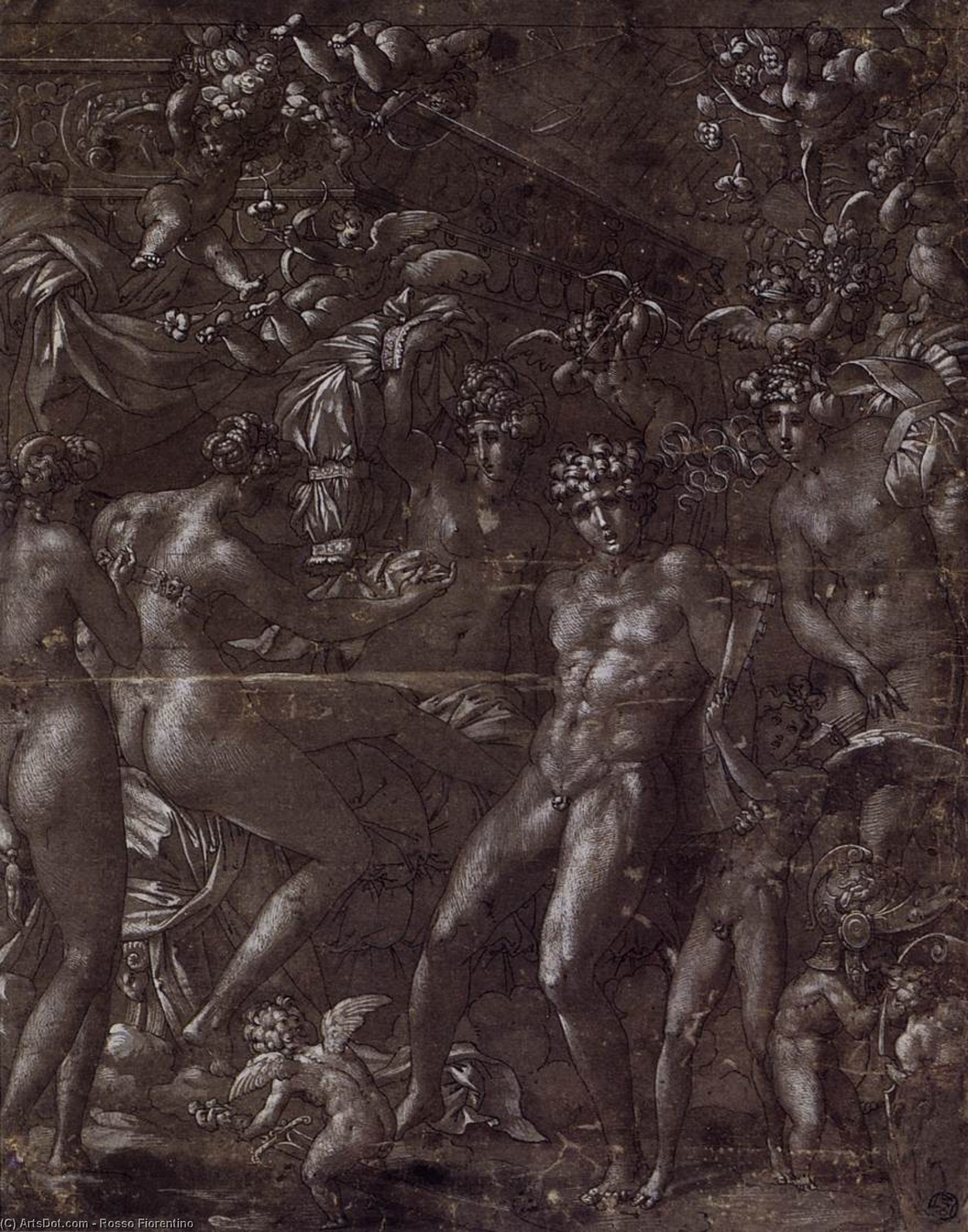
A Symphony of Passion and Power
In the quiet corridors of the Musée du Louvre, there exists a window into a world where the boundaries between divine myth and human vulnerability dissolve. Rosso Fiorentino’s “Mars and Venus,” completed around 1530, is not merely a depiction of Roman deities; it is a profound exploration of the tension between conquest and surrender. As a cornerstone of Florentine Mannerism, this work deliberately pivots away from the serene, balanced perfection of the High Renaissance. Instead, it invites the viewer into a realm of stylized forms and psychological depth, where every line and shadow whispers of an underlying emotional turbulence. To behold this piece is to witness the moment where the classical ideal meets the restless spirit of a changing era.
The visual narrative unfolds with a captivating dynamism that draws the eye through a carefully choreographed dance of figures. At the heart of the composition, we encounter the muscular Mars and the elegantly draped Venus, their interaction serving as a masterclass in movement and contrast. The artist’s technique—a masterful marriage of pen and ink drawing with subtle color washes—allows for an ethereal translucency. One can almost feel the ripple of fabric across Venus's gown, mirroring the powerful, grounded stance of the god of war. Through the meticulous use of hatching and cross-hatching, Rosso Fiorentino sculpts form out of shadow, creating a sense of weight and presence that makes the mythological scene feel startlingly intimate and real.
The Tension of an Era
To understand the soul of this artwork, one must look to the historical currents flowing through 16th-century Europe. Painted during the reign of François I, "Mars and Venus" reflects a period of profound cultural anxiety. The stability of the Renaissance was giving way to the complexities of the Reformation and new artistic explorations that favored distortion over harmony. This is the essence of Mannerism: a deliberate departure from classical conventions to express inner turmoil. In this piece, the figures are not presented as static icons of virtue but as individuals caught in a web of conflicting desires. The interplay between the strength of Mars and the seductive repose of Venus symbolizes the eternal struggle between the destructive forces of war and the transformative power of love.
For the discerning collector or interior designer, this artwork offers more than just aesthetic beauty; it provides a focal point of intellectual and emotional gravity. A high-quality reproduction of this masterpiece brings with it a sense of historical prestige and a sophisticated narrative layer to any space. Whether placed in a contemporary gallery setting or a classic study, the dramatic contrasts and fluid lines of Rosso Fiorentino’s work command attention, acting as a conversation piece that bridges the gap between the ancient mythic past and the modern emotional experience. It is an invitation to contemplate the beautiful, often chaotic, dance of human passion.