A Bold Dialogue Between Reality and Illusion: Exploring Roy Lichtenstein’s Collage for Hologram Interior
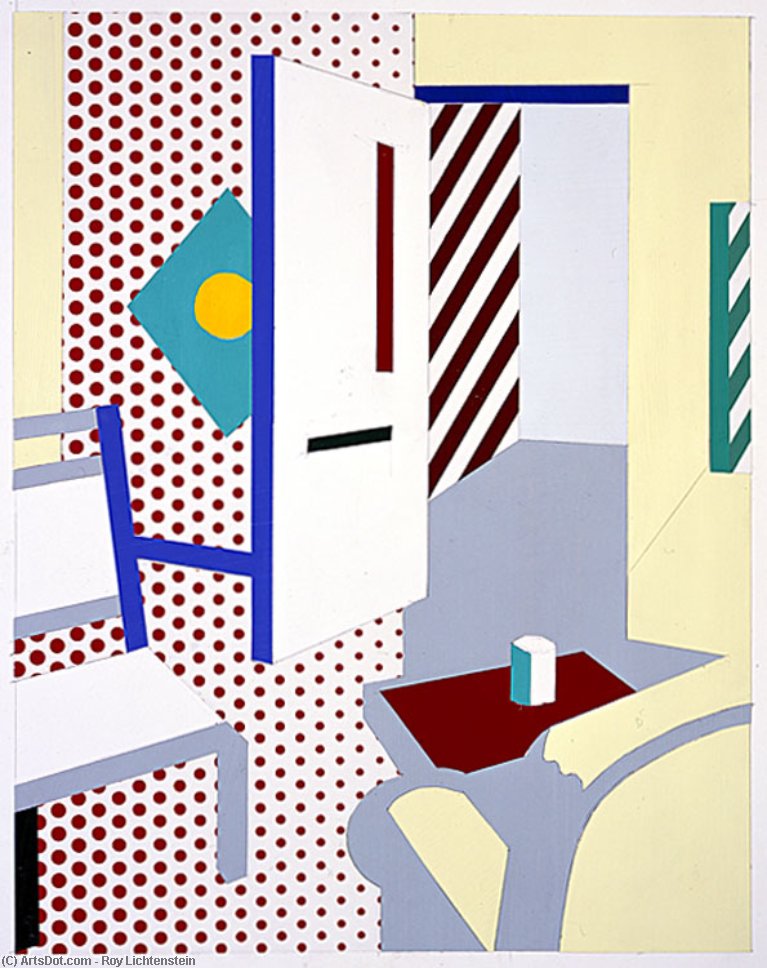
The painting “Collage for Hologram Interior,” created by Roy Lichtenstein in 1996, stands as a quintessential embodiment of Pop Art's fascination with everyday life rendered through stylized visual language. More than just a depiction of a dining room—complete with chairs and tableware—it’s an intricate exploration of perception and representation, reflecting Lichtenstein’s groundbreaking approach to artistic expression. The photograph captures the artwork in its entirety, showcasing a meticulously crafted scene bathed in vibrant hues that defy traditional painting conventions.
- Subject Matter: The composition centers around a domestic interior—specifically a dining room—highlighting the artist's deliberate choice to elevate mundane subjects into artistic contemplation.
- Style: Lichtenstein’s signature style is instantly recognizable through his use of Ben-Day dots, a technique borrowed from comic strips. These halftone patterns create an illusion of texture and color, mimicking the printing process and distancing the artwork from representational realism.
The artist's meticulous attention to detail—evident in the placement of furniture and the subtle shading—contrasts sharply with the simplified aesthetic dictated by Ben-Day dots. This juxtaposition underscores Lichtenstein’s intention to critique the conventions of fine art while simultaneously engaging with popular culture. The painting’s color palette is deliberately bold, favoring reds, yellows, and blues that contribute to an energetic visual experience. These colors aren't merely decorative; they serve as a symbolic reference to the dynamism and vibrancy of urban life—a theme recurrent throughout Lichtenstein’s oeuvre.
- Technique: Lichtenstein employed acrylic paint on canvas, applying it in thin layers to achieve a luminous surface finish. The Ben-Day dot technique was meticulously applied using silkscreen printing, ensuring consistent color distribution and textural uniformity.
- Historical Context: Created during the height of Pop Art’s influence—a reaction against Abstract Expressionism—the painting aligns itself with the movement's core tenets: a rejection of emotional subjectivity and an embrace of mass media imagery. Lichtenstein deliberately appropriated elements from comic books, elevating them to the level of fine art.
Ultimately, “Collage for Hologram Interior” transcends its subject matter to evoke a feeling of controlled optimism. The stylized depiction of a familiar space invites viewers to consider how perception shapes reality—a concept central to Lichtenstein’s artistic philosophy. It's a piece that speaks to the enduring power of visual storytelling and demonstrates Lichtenstein’s masterful ability to transform commonplace elements into profound statements about art and culture. Its reproduction offers an exceptional opportunity to experience Lichtenstein’s innovative technique and captivating vision within the comfort of one’s own home, bringing a touch of Pop Art brilliance to any interior design scheme.