A Vibrant Intersection of Mundane and Masterful
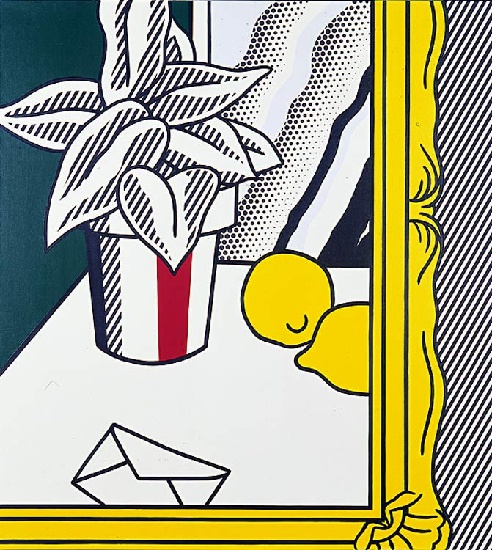
In the quiet corners of a domestic setting, one might expect to find stillness, yet Roy Lichtenstein’s 1982 masterpiece, Painting (Still Life With Envelope), breathes a rhythmic, electric energy into the very concept of the inanimate. At first glance, the composition presents a deceptively simple arrangement: a delicate yellow bird perched atop an envelope, nestled among potted plants and a central vase. However, to look upon this work is to witness the profound transformation of the everyday into the iconic. Lichtenstein invites us to reconsider the objects that populate our lives, stripping away their quiet shadows and replacing them with a bold, graphic vitality that demands attention in any curated space.
The painting serves as a captivating dialogue between the familiar and the stylized. The presence of the yellow bird introduces a touch of organic whimsy, acting as a focal point of life amidst the structured elements of the still life. This juxtaposition—the living creature against the paper envelope and ceramic vessels—creates a narrative tension that is both playful and contemplative. For the discerning collector or interior designer, this piece offers more than mere decoration; it provides a window into a world where the boundaries between high art and popular culture dissolve, making it an ideal centerpiece for modern, avant-garde, or eclectic interiors seeking a punch of intellectual character.
The Precision of the Pop Aesthetic
To understand the soul of this work, one must look closer at Lichtenstein’s revolutionary technique. Moving far beyond traditional academic realism, the artist employs his signature Ben-Day dots—a method that mimics the mechanical halftone printing process found in mid-century comic strips and commercial advertisements. This approach creates a fascinating illusion of depth through flatness. Instead of using soft gradients or subtle shadows to define form, Lichtenstein utilizes a strategic grid of colored dots to simulate light and tone. The result is an aesthetic of crisp, calculated precision that feels both retro and eternally contemporary.
This technique, often referred to as "bold benching," rejects the heavy, emotional brushwork of Abstract Expressionism in favor of a clean, industrial clarity. Every line is deliberate, every primary color is striking, and every dot serves a structural purpose. This graphic intensity ensures that the painting retains its impact even from a distance, making it a powerful tool for creating visual focal points in large-scale architectural settings. The way the light seems to dance across the surface of the "printed" textures provides a tactile quality that is visually stimulating, offering a sophisticated layer of texture to any wall it graces.
A Legacy of Cultural Reimagination
Born from the vibrant, jazz-infused atmosphere of Manhattan, Lichtenstein’s artistic journey was one of constant interrogation. Painting (Still Life With Envelope) is a late-career testament to his ability to synthesize his influences—from the rhythmic improvisations of jazz to the mass-produced imagery of American consumerism. By elevating a simple still life to the status of a monumental pop icon, he challenges the viewer to find beauty in the mechanical and the commonplace. There is a profound sense of nostalgia embedded in the work, yet its execution remains strikingly forward-looking.
For those seeking to infuse their surroundings with a sense of historical significance and artistic wit, this reproduction offers an unparalleled opportunity. It captures the essence of a movement that redefined the 20th century, bringing the pulse of the street into the sanctity of the gallery. Whether placed in a minimalist loft or a classic study, the painting acts as a conversation starter, evoking emotions ranging from nostalgic warmth to intellectual curiosity. It is not merely an image of objects; it is an invitation to see the world through a lens of vibrant, unapologetic clarity.