A Moment of Serenity: Exploring Rutilio Manetti’s “The Rest on the Flight into Egypt”
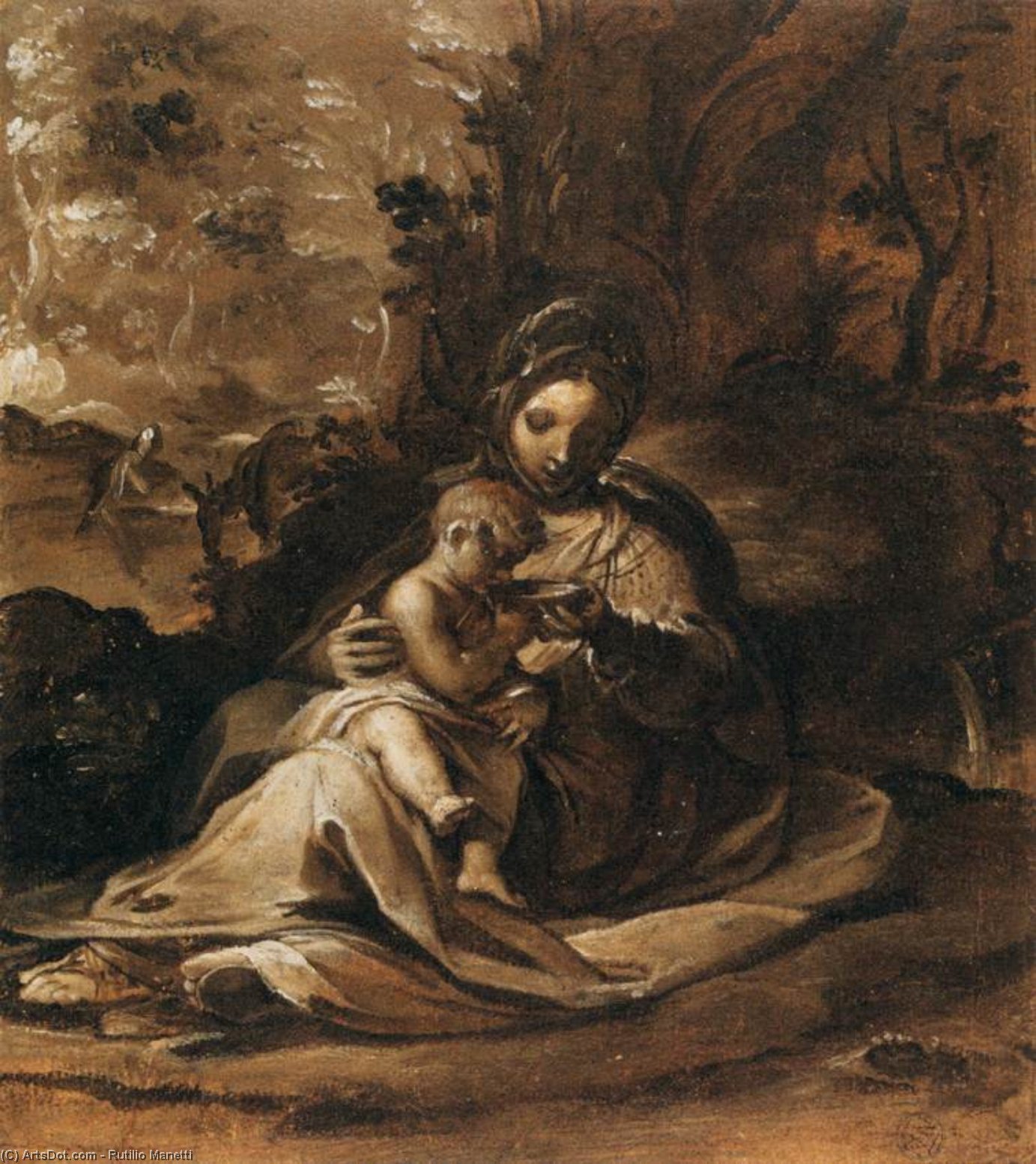
Rutilio di Lorenzo Manetti's "The Rest on the Flight into Egypt," painted around 1628 and now housed in the San Pietro alle Scale church in Siena, Italy, is more than just a depiction of a biblical scene; it’s a profound meditation on maternal love, familial devotion, and the quiet grace found amidst hardship. Manetti, a pivotal figure bridging the late Mannerist and early Baroque periods in Siena, masterfully captures a fleeting moment within the narrative of Mary, Joseph, and the infant Jesus seeking refuge in Egypt – a story steeped in symbolism and enduring emotional resonance.
The painting immediately draws the viewer into a scene of remarkable tranquility. It’s not the dramatic, action-packed portrayal often associated with biblical narratives; instead, Manetti presents a serene tableau of domesticity. Mary, depicted as a young woman radiating gentle serenity, is asleep, cradling the infant Jesus in her arms. Joseph, rendered with a quiet dignity, holds a manuscript – likely a musical score – while an angel, youthful and luminous, plays a viol, offering a hymn to the Virgin Mother. The composition feels intimate, almost voyeuristic, as if we’ve stumbled upon a private moment of respite within this family's perilous journey.
Baroque Realism: Technique and Artistic Influence
Manetti’s style is a compelling blend of influences, reflecting the evolving artistic landscape of his time. While rooted in the traditions of Siena painting – particularly the work of Francesco Vanni – he demonstrates a growing awareness of the dramatic lighting and emotional intensity championed by Caravaggio and other Baroque masters. The use of *chiaroscuro*, the stark contrast between light and shadow, is particularly effective here, sculpting the figures and creating a palpable sense of depth and volume. The impasto technique—the application of thick layers of paint—adds texture to the fabrics, skin tones, and even the landscape, lending a tactile quality to the scene.
Interestingly, scholars have identified a direct influence from Annibale Carracci’s “Choice of Hercules,” completed just a few years prior. The pose of the angel playing the viol is remarkably similar, suggesting that Manetti was exposed to this groundbreaking work and consciously adopted elements of its dynamic composition. This connection highlights the vibrant artistic exchange occurring in Italy during this period.
Symbolism and Spiritual Depth
Beyond its visual beauty, “The Rest on the Flight into Egypt” is rich with symbolic meaning. The angel’s music serves as a direct invocation of Mary's role as the Mother of God, emphasizing her divine grace and maternal compassion. The manuscript held by Joseph could represent the safeguarding of faith and tradition within the family. The very act of resting – a moment of vulnerability and reliance on one another – underscores the profound bond between these figures.
Furthermore, the setting itself—a simple landscape with trees and distant hills—is not merely decorative; it symbolizes the temporary refuge offered by nature, mirroring the divine protection sought by the Holy Family. The scene speaks to themes of hope amidst adversity, faith in the face of danger, and the enduring power of family love – timeless concepts that continue to resonate deeply with viewers today.
A Legacy of Italian Baroque Art
Rutilio Manetti’s “The Rest on the Flight into Egypt” stands as a testament to his artistic skill and his engagement with the evolving currents of the Italian Baroque. It's a poignant portrayal of a biblical narrative, elevated by masterful technique, evocative symbolism, and a profound understanding of human emotion. Reproductions of this captivating artwork offer a window into a pivotal moment in art history—a reminder of the beauty, spirituality, and enduring power of Italian Renaissance and Baroque painting.