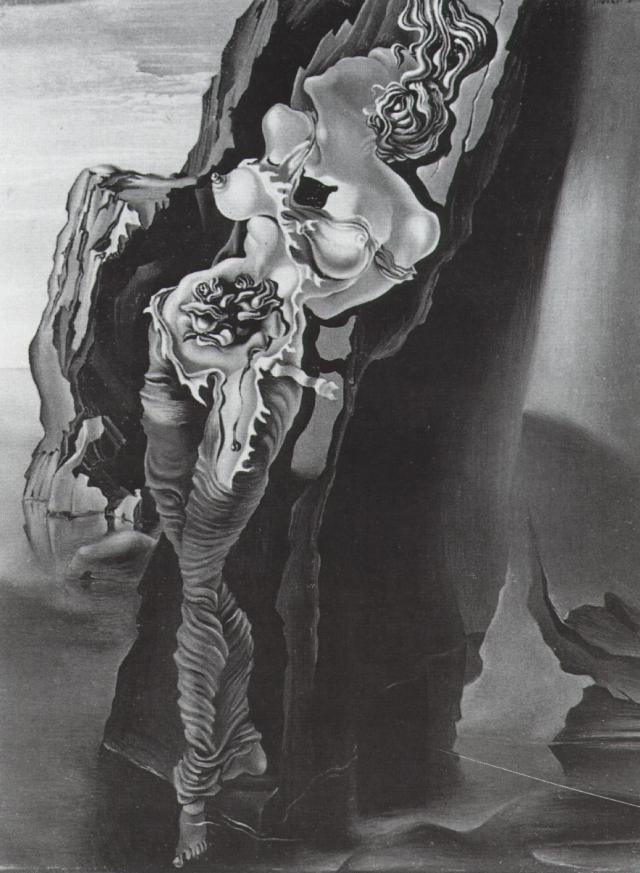
Surrealist dream logic comes alive through the distorted forms in the 1931 masterpiece Gradiva by Salvador Dalí, offering a rare opportunity to discover and own this hauntingly beautiful work.
Explore Salvador Dalí (1904-1989), the master of Surrealism! Discover dreamlike landscapes, iconic imagery like melting clocks & his lasting impact on art & pop culture. #SalvadorDali #Surrealism
A Descent into Dream Logic
Salvador Dalí’s “Gradiva,” painted in 1931, stands as a cornerstone of Surrealist art—a mesmerizing exploration of the subconscious mind rendered with meticulous detail and imbued with unsettling beauty. More than just an image, it is a journey into a landscape sculpted from anxieties and desires, mirroring the artist’s own preoccupation with themes of duality and transformation. The painting depicts a female figure, seemingly referencing the Roman goddess Gradiva—the maiden who emerged from the Etrusantly tomb—amidst a desolate expanse punctuated by distorted forms and shadowy recesses. This is not merely observation; it is an invitation to contemplate the hidden currents beneath the surface of consciousness, where the boundaries between reality and illusion begin to dissolve into a dreamlike state.
The Mastery of Illusion and Form
In this work, Dalí employs a masterful technique of oil painting on canvas, prioritizing precision and textural nuance to ground his surrealist visions in a startlingly tangible reality. The composition is dominated vertically, focusing intently on Gradiva herself—a figure elongated and contorted, positioned at the center of an amorphous backdrop. Hard lines delineate her contours, providing stability against the swirling organic shapes that dominate the background, creating a palpable sense of movement and instability. These blurred forms are deliberate choices designed to evoke the fluidity of dreams and challenge conventional perceptions of space. Through a monochromatic palette of deep blacks and ethereal whites, Dalí captures subtle variations in tone that contribute significantly to the painting’s atmospheric depth, proving his unwavering commitment to realism within an unreal realm.
Symbolism and the Psychological Landscape
“Gradiva” pulsates with symbolic significance, acting as a window into the human psyche. The desolate landscape represents the barrenness of rational thought, contrasted by Gradiva's emergence from the tomb—a potent metaphor for rebirth and the confrontation of mortality. Her posture, a deliberate gesture of movement, suggests an attempt to escape confinement or perhaps a transition between states of being. For the collector or interior designer, this piece offers more than mere decoration; it provides a profound emotional resonance. The artwork evokes feelings of anxiety, disorientation, and mystery, making it a captivating centerpiece for spaces that value intellectual depth and avant-garde sophistication. To possess a high-quality reproduction of such a masterpiece is to invite the enigmatic power of the subconscious into one's environment, where the interplay of light, shadow, and distorted form continues to challenge and inspire all who behold it.