A Dreamscape of Loss and Time: Unveiling Salvador Dalí’s *Juliet's Tomb*
Salvador Dalí’s 1942 painting, *Juliet's Tomb*, is a hauntingly beautiful exploration of grief, memory, and the relentless passage of time—hallmarks of his mature Surrealist style. More than just an illustration of Shakespeare’s tragic tale, it’s a deeply personal meditation rendered with meticulous detail and unsettling imagery. This work exemplifies Dalí’s ability to transform literary themes into profoundly psychological landscapes.
Composition and Visual Language
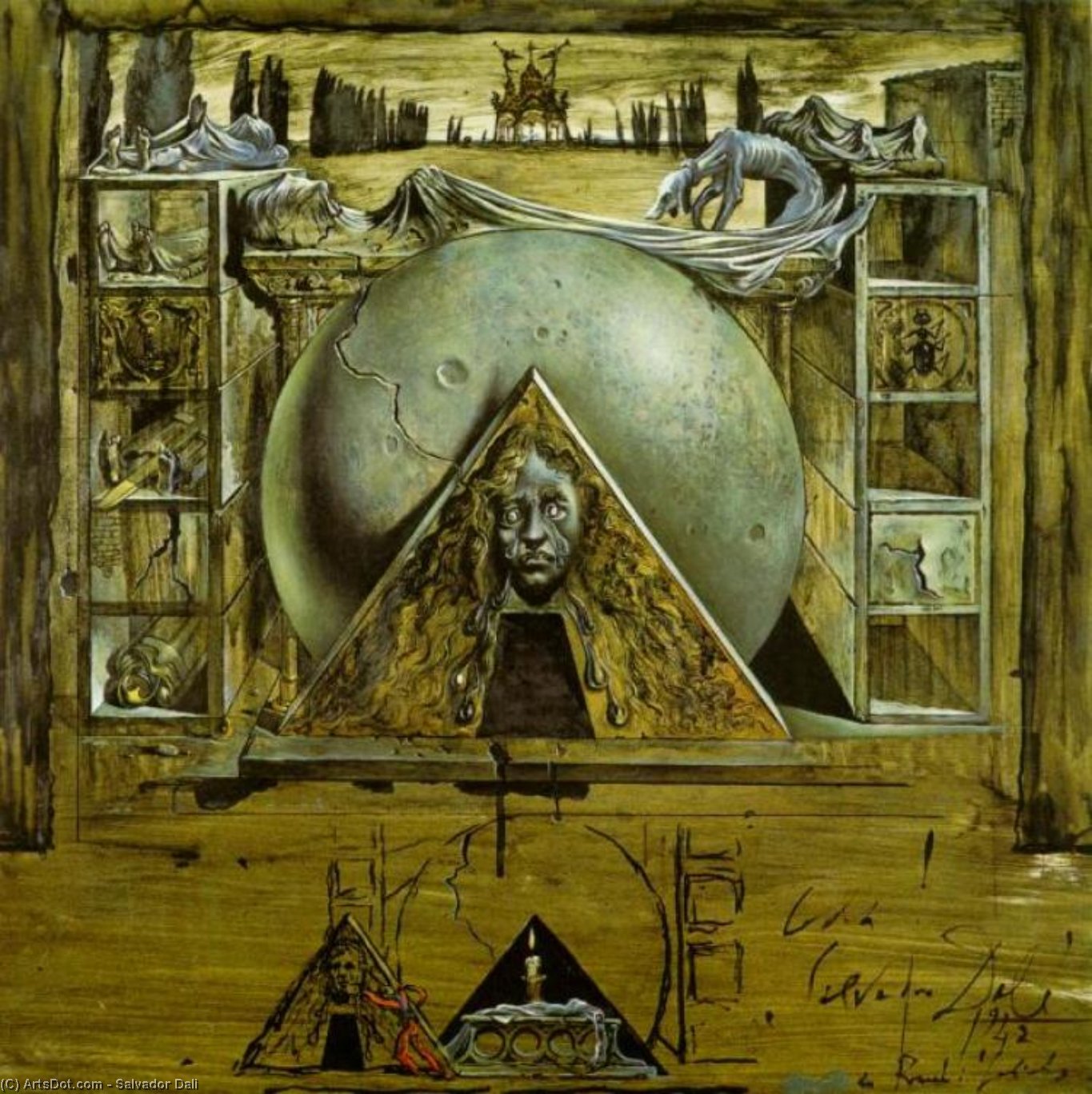
The painting centers around a reclining female figure, ostensibly Juliet, enveloped within a strange, cavernous space. Above her floats a translucent, geometric form containing a distorted face – perhaps representing the lingering presence of Romeo or the specter of death itself. The composition is dominated by a large, pale green sphere, adding to the dreamlike and slightly claustrophobic atmosphere. Several key elements recur throughout Dalí’s oeuvre: most notably, melting clocks draped across architectural fragments. These aren't merely time-telling devices; they symbolize the *relativity* of time, its fluidity, and its power over human experience. The fragmented architecture—columns, shelves, and undefined structures—suggest a crumbling world, mirroring the shattered lives at the heart of the story. The use of dramatic chiaroscuro (strong contrasts between light and dark) enhances the painting’s emotional intensity.
Surrealism and Psychological Depth
*Juliet's Tomb* is a quintessential example of Surrealism, an artistic movement born from the post-World War I desire to unlock the power of the unconscious mind.
Surrealist artists sought to reconcile the realms of dream and reality, believing that true creativity resided in accessing the subconscious. Dalí masterfully achieves this through illogical juxtapositions, symbolic imagery, and a hyperrealistic technique that lends an unsettling believability to his fantastical visions. The painting isn’t simply *about* Juliet's death; it aims to evoke the *feeling* of grief, loss, and the disorientation of mourning.
It is a visual representation of psychological states rather than a literal depiction of events.
Historical Context and Artistic Influences
Created during World War II, *Juliet's Tomb* reflects the anxieties and uncertainties of the era. The pervasive sense of loss and fragility resonates with the widespread trauma experienced globally. Dalí’s artistic development was influenced by a range of sources, including Renaissance masters like Raphael (evident in his precise draftsmanship) and early 20th-century movements such as Cubism and Futurism. However, he synthesized these influences into a uniquely personal style characterized by meticulous detail, bizarre imagery, and a fascination with psychoanalysis—particularly the theories of Sigmund Freud.
Symbolism and Interpretation
The symbolism within *Juliet's Tomb* is rich and multilayered:
- Clocks: Represent the relativity of time and its destructive power.
- Geometric Forms: Suggest a sense of order imposed upon chaos, or perhaps the attempt to rationalize grief.
- The Reclining Figure: Embodies vulnerability, loss, and the stillness of death.
- Architectural Fragments: Symbolize the crumbling foundations of life and memory.
Ultimately, the painting invites multiple interpretations. It can be seen as a commentary on the futility of love in the face of fate, a meditation on mortality, or a reflection of Dalí’s own personal anxieties.
Emotional Impact and Legacy
*Juliet's Tomb* is not an easy painting to look at. It evokes feelings of melancholy, unease, and profound sadness. Yet, it is precisely this emotional intensity that makes it so compelling. The work’s enduring appeal lies in its ability to tap into universal human experiences—love, loss, grief, and the fear of mortality. As a masterpiece of Surrealism, *Juliet's Tomb* continues to inspire artists and captivate audiences with its haunting beauty and psychological depth. Its influence can be seen in contemporary art, film, and design, solidifying Dalí’s place as one of the most important and innovative artists of the 20th century.