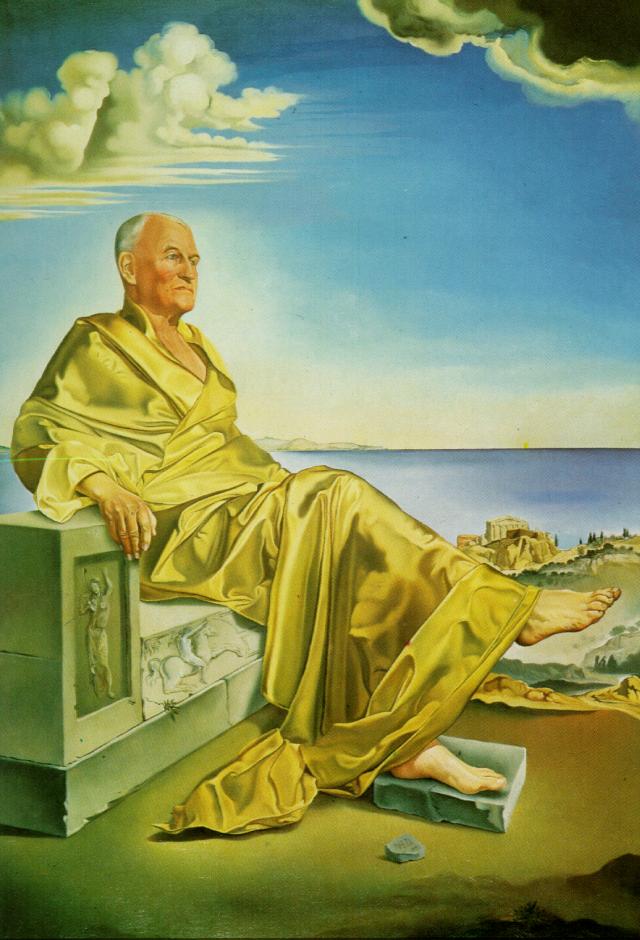
'La Turbie' - Sir James Dunn Seated, 1949: A Surrealist Portrait of Dignified Isolation
Salvador Dalí’s “La Turbie” – Sir James Dunn Seated (1949) stands as a quintessential example of the artist’s masterful fusion between Realism and Surrealism. Executed in oil on canvas, this portrait transcends mere representation; it delves into the subconscious mind, presenting a meticulously crafted tableau that speaks volumes about human psychology and artistic innovation.
- Subject Matter: The artwork depicts Sir James Dunn, a British diplomat seated upon a stone bench beneath an expansive sky. This deliberate positioning emphasizes both physical stillness and contemplative reflection – Dunn is presented not as an active participant but as an observer of the surrounding environment.
- Style & Technique: Dalí’s signature style is evident in every brushstroke. The painting employs meticulous detail to capture Dunn's likeness, utilizing realistic shading and texture to convey a palpable sense of presence. However, this realism is juxtaposed with surreal elements—the sky mirroring the contours of Dunn’s robe—creating an unsettling yet captivating visual paradox.
- Historical Context: Created during Dalí’s peak Surrealist period, “La Turbie” reflects the broader artistic movement's preoccupation with dreams, irrationality, and psychological exploration. The influence of Sigmund Freud’s theories on psychoanalysis is palpable, as Dali seeks to portray inner states rather than external appearances.
- Symbolism: The barren landscape surrounding Dunn serves as a powerful symbol of isolation and detachment—a visual representation of the diplomat's internal world. The birds positioned strategically in the composition represent freedom and aspiration, subtly contrasting with Dunn’s seated posture. Furthermore, the golden robe symbolizes prestige and authority, highlighting Dunn’s social standing within the context of his time.
- Emotional Impact: “La Turbie” evokes a profound sense of melancholy and contemplation. The painting invites viewers to ponder questions of identity, perception, and the relationship between inner experience and external reality. Dalí's masterful use of color and light contributes to this emotional resonance, creating an atmosphere that is both serene and subtly unsettling—a testament to his ability to capture the complexities of human consciousness.
This striking portrait exemplifies Dali’s genius in blending meticulous observation with fantastical imagination. Its enduring appeal lies in its capacity to provoke introspection and inspire awe at the boundless possibilities of artistic expression.