A Surrealist Reverie: Delving into Dalí’s Portrait of Mrs. Harrison Williams
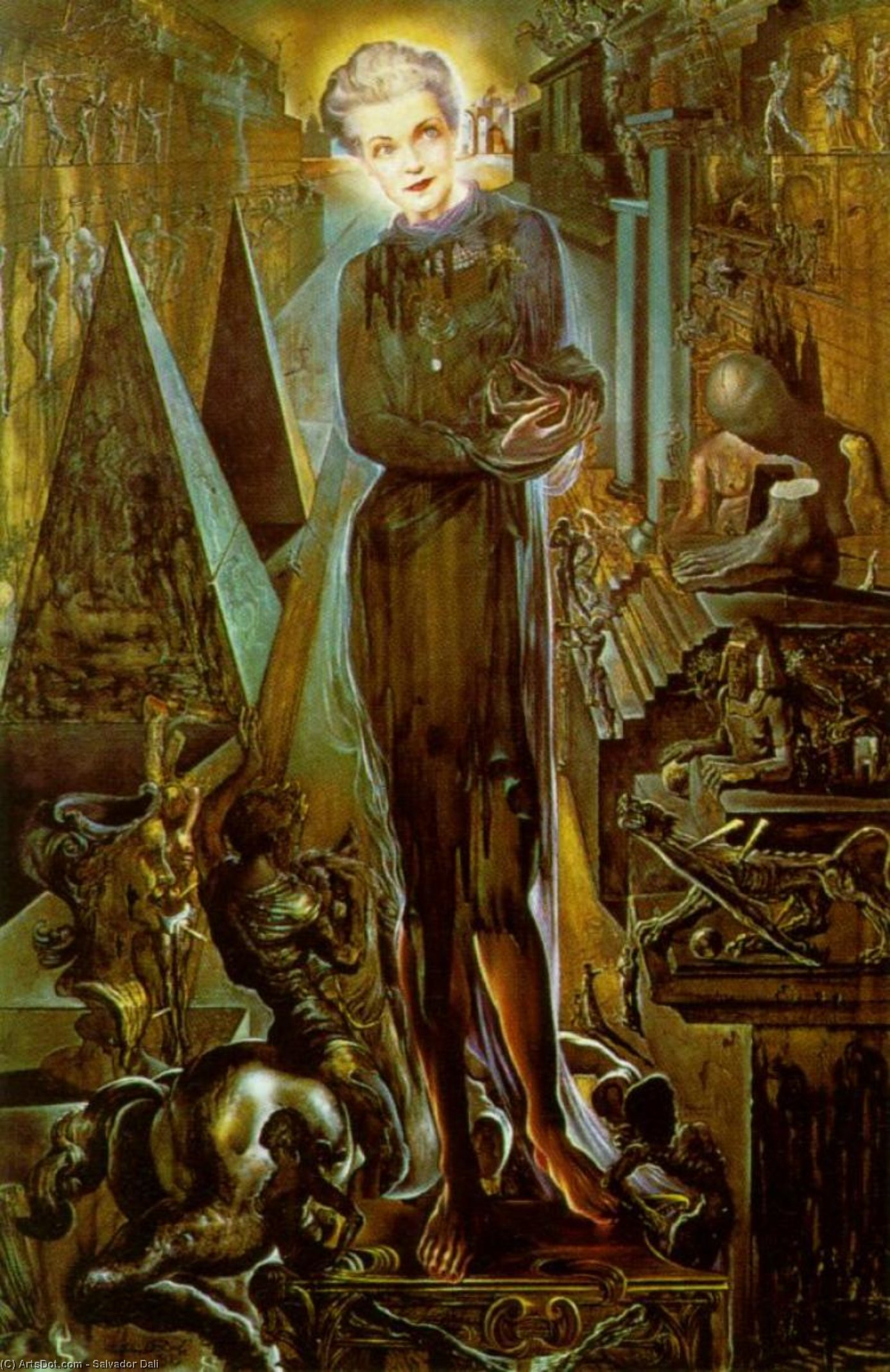
Salvador Dalí's 1943 portrait of Mrs. Harrison Williams, more famously known as Mona Bismarck, is not merely a depiction of an American socialite; it’s a meticulously constructed descent into the subconscious, a visual poem brimming with symbolic weight and technical mastery. Painted during his formative years in America, having fled wartime Europe with Gala, this work encapsulates Dalí's burgeoning surrealist style – a deliberate rejection of conventional representation in favor of exploring the dreamlike landscapes of the mind. The painting transcends simple portraiture, becoming instead an invitation to decipher a complex tapestry of desire, illusion, and the anxieties of a world on the brink.
The Allure of Mona Bismarck and Dalí’s Artistic Response
Mona Bismarck was a figure perfectly suited to capture Dalí's imagination. Celebrated for her striking beauty and flamboyant style, she moved effortlessly through high society, embodying an aristocratic elegance that fascinated the artist. Dalí doesn’t simply *paint* Mona; he constructs an environment around her that speaks volumes about his perception of her persona – a woman both captivating and enigmatic. Her gaze is direct, almost challenging, yet there's a subtle melancholy in her expression, hinting at hidden depths beneath the polished surface. The precision with which she is rendered—the delicate features, the shimmering pearls adorning her gown—contrasts sharply with the chaotic, dissolving world that surrounds her, creating a powerful tension within the composition.
Deconstructing Reality: Technique and Symbolism in Play
The background of the portrait is where Dalí truly unleashes his surrealist vision. Melting clocks – perhaps his most iconic symbol representing the fluidity and distortion of time – intertwine with fragmented geometric shapes and amorphous forms, disrupting any sense of order or stability. These aren’t merely decorative flourishes; they are conduits to a deeper psychological truth, reflecting anxieties about societal upheaval prevalent during World War II. The artist's technique is equally compelling: layers of oil paint applied with meticulous brushwork create a rich textural surface, enhancing the painting’s luminosity and emotional impact. The deliberate use of color – ochre and crimson evoking warmth and passion juxtaposed against cooler shades of gray and violet suggesting introspection and unease – further amplifies this emotive power. The interplay between light and shadow is masterful, drawing the viewer into the dreamlike space Dalí has created.
A Lasting Legacy: Dalí’s Influence on Modern Art
Salvador Dalí, born in Figueres, Spain in 1904, revolutionized painting with his uncompromising exploration of the subconscious. His distinctive style—characterized by meticulous realism combined with fantastical imagery—challenged conventional artistic norms and captivated audiences worldwide. “Portrait of Mrs. Harrison Williams” stands as a testament to his genius, an enduring emblem of surrealism’s fascination with the irrational and its ability to illuminate the complexities of human experience. The painting continues to inspire awe and contemplation, reminding us of the power of art to transcend reality and delve into the hidden realms of the mind. It remains a timeless masterpiece, securing Dalí's place as one of the most influential artists of the 20th century.