A Dreamscape of Dissolution: Navigating Dalí’s Surrealist Vision
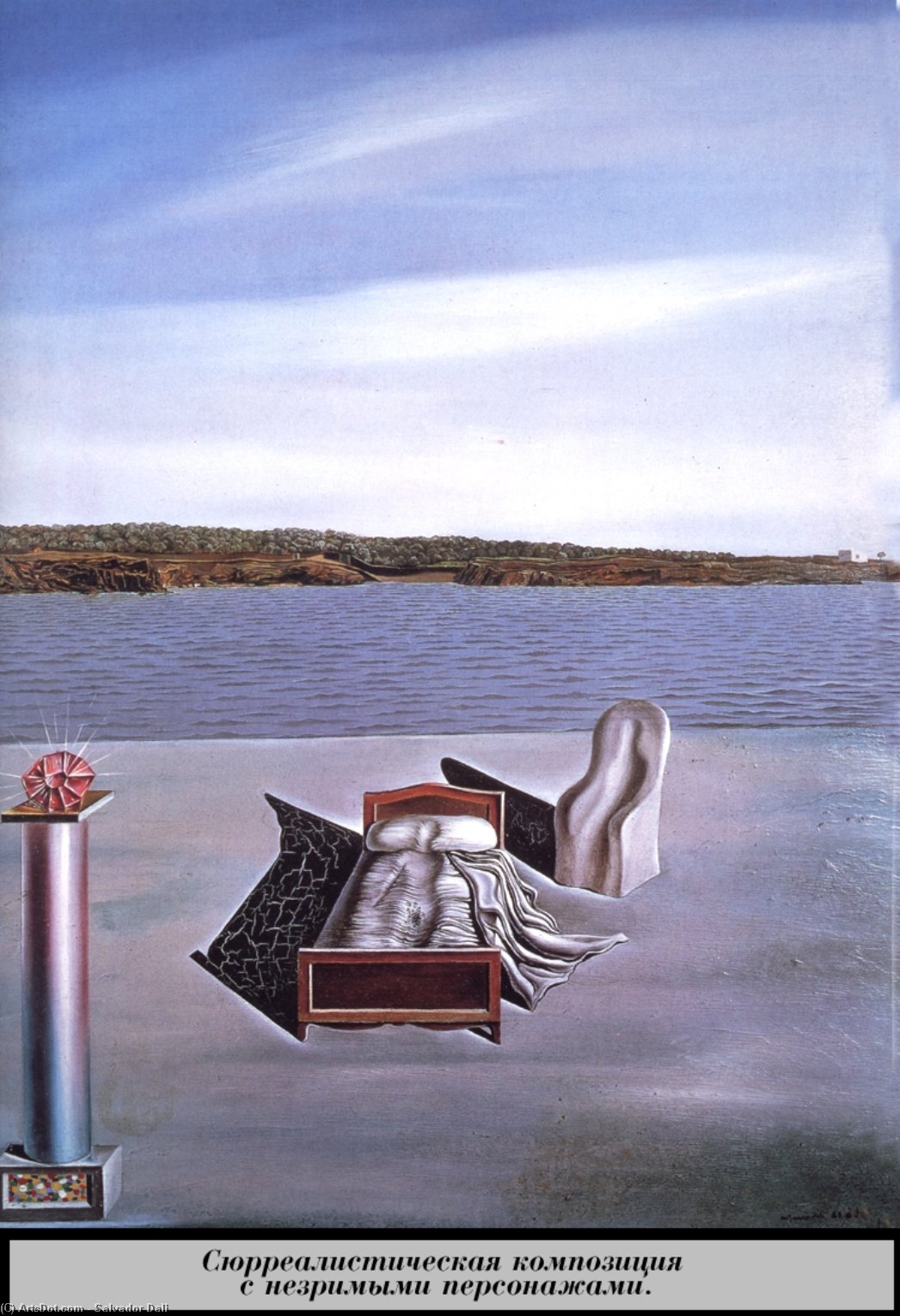
To encounter Salvador Dalí’s “Surrealist Composition with Invisible Characters” is to step through a threshold where the boundaries of the waking world begin to fray and dissolve. Painted around 1936, during the height of the Surrealist movement, this enigmatic work serves as a profound exploration of the subconscious mind. The painting presents a scene that feels simultaneously tangible and impossible: a solitary chair perched precariously upon shimmering waters, accompanied by figures that seem to exist on the periphery of perception. It is an invitation to abandon the safety of logic and surrender to a realm where time liquefies and shadows possess their own intentions.
The composition is anchored by a striking juxtaposition of stability and instability. The centerpiece—a chair rendered with meticulous, almost photographic realism—represents the groundedness of our physical reality. Yet, this very symbol of domestic permanence is undermined by its placement upon a fluid, reflective expanse of water. This tension creates an unsettling atmosphere, a hallmark of Dalí’s ability to provoke contemplation through illogical arrangements. As one gazes into the depths of the painting, the presence of figures—some standing near the edges, others drifting in the mid-ground—adds a layer of psychological complexity, suggesting a world populated by the echoes of repressed emotions and hidden anxieties.
Mastery of Technique and the Language of Symbolism
Dalí’s technical brilliance is on full display through his masterful use of oil paint on cardboard. This medium allows for an unparalleled textural quality, where every deliberate brushstroke contributes to the painting's hauntingly smooth yet detailed surface. His training at the San Fernando Academy in Madrid is evident in the way he captures the subtle nuances of light and shadow, creating a luminous effect that makes the water appear to ripple with life. This precision is crucial; by rendering the impossible with such extreme clarity, Dalí forces the viewer to accept the dreamscape as a legitimate, albeit fractured, reality.
Beyond its visual splendor, the artwork is deeply rooted in the intellectual currents of the early 20th century, specifically the rise of Freudian psychoanalysis. The "invisible figures" within the composition act as potent symbols for the unseen forces of the human psyche—the dreams, fears, and desires that dwell beneath the surface of our conscious thought. For the collector or art enthusiast, this piece offers more than mere decoration; it provides a window into the profound psychological depth of an era defined by the search for truth within the irrational. It is a masterpiece of symbolism that continues to resonate, challenging us to look closer at the shadows we often choose to ignore.
An Evocative Addition to the Sophisticated Interior
For interior designers and connoisseurs of fine art, a high-quality reproduction of this work offers a transformative opportunity. The painting’s unique ability to command attention through its surrealist intrigue makes it an ideal focal point for spaces designed to inspire deep thought and conversation. Whether placed in a contemporary gallery-style living room or a quiet, contemplative study, the piece introduces a sense of mystery and intellectual weight.
The interplay of light, water, and form within Dalí’s composition brings a dynamic energy to any environment. It does not merely occupy space; it alters the atmosphere of a room, inviting guests to linger and lose themselves in its enigmatic depths. Owning a piece that captures such a pivotal moment in art history allows one to curate an environment that celebrates the beauty of the unexpected and the enduring power of the human imagination.