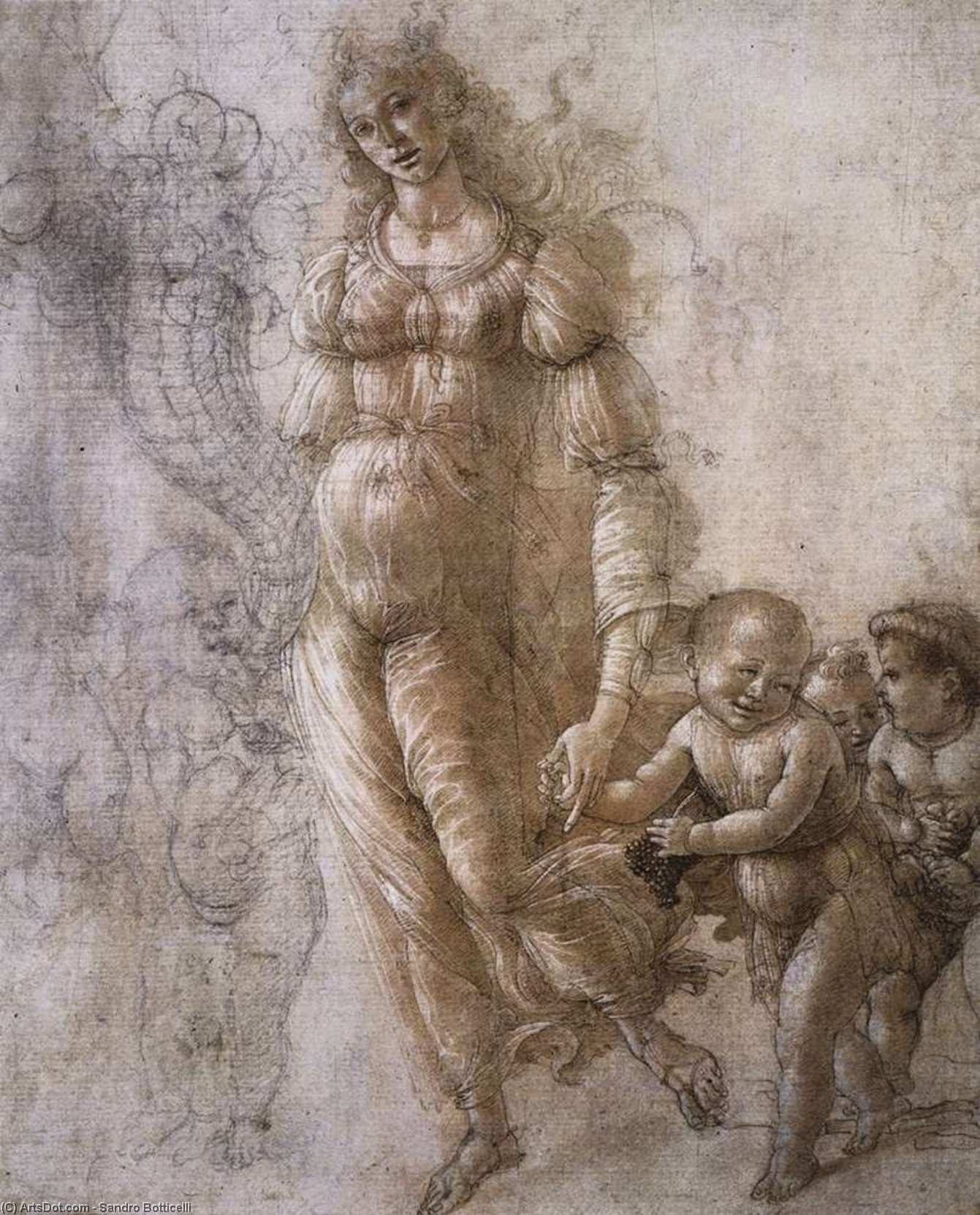
A Renaissance Vision of Plenty: Decoding Botticelli’s “Allegory of Abundance”
Botticelli's "Allegory of Abundance," created in 1480, is more than just a painting; it’s a lyrical embodiment of maternal love, fertility, and the bountiful gifts of nature. Executed with delicate precision on pen (317 x 253 cm), this captivating work resides within the esteemed collection of the British Museum in London, offering viewers a window into the artistic sensibilities of the Early Renaissance.
Subject & Composition: A Mother’s Embrace
At the heart of the composition lies a central female figure, often interpreted as the Virgin Mary or perhaps Ceres, the Roman goddess of agriculture. She tenderly cradles two infants, her flowing dress and cascading hair emphasizing grace and serenity. The arrangement isn't merely aesthetic; it’s deeply symbolic. Surrounding this maternal core are additional figures – one prominently on the left, another near the upper right, with two more subtly placed in the background. This layering creates depth and invites contemplation of the interconnectedness of life and prosperity. The overall composition possesses a gentle diagonal movement, drawing the eye through the scene and emphasizing the nurturing embrace at its center.
Artistic Style & Technique: Botticelli’s Signature Elegance
Botticelli's style is instantly recognizable – characterized by elegant linearity and a refined aesthetic that bridges the gap between late Gothic traditions and the burgeoning Renaissance ideals. He masterfully employs delicate lines and subtle shading to create form and volume, imbuing his figures with an ethereal quality. While this particular work exists as a drawing, it showcases Botticelli’s preparatory skill for larger paintings, revealing his meticulous approach to composition and detail. The use of hatching and cross-hatching is particularly notable, building tonal variations that give the scene depth and atmosphere.
Historical & Cultural Context: Florence in Bloom
Born in Florence during a period of immense artistic and intellectual flourishing, Sandro Botticelli (1445-1510) was deeply influenced by the humanist movement. This philosophy emphasized human potential and celebrated classical antiquity. “Allegory of Abundance” reflects this influence through its graceful figures and allegorical themes. Florence itself, under the patronage of the Medici family, was a center for artistic innovation, fostering an environment where artists like Botticelli could thrive and create enduring masterpieces.
Symbolism & Interpretation: A Tapestry of Meaning
The painting is rich in symbolism. The abundance of children represents fertility and prosperity. The flowing garments symbolize grace and purity. While the precise meaning remains open to interpretation, the overarching theme centers on the life-giving forces of nature and the nurturing power of motherhood. Some scholars suggest connections to classical mythology, linking the central figure to goddesses associated with harvest and plenty. The overall atmosphere evokes a sense of harmony, peace, and well-being.
Emotional Impact & Modern Relevance
“Allegory of Abundance” continues to resonate with audiences today because its themes are timeless. The universal experience of maternal love, the desire for prosperity, and the appreciation of natural beauty transcend cultural boundaries. The painting evokes feelings of warmth, tenderness, and hope – qualities that remain deeply valued in modern society.
Collecting & Interior Design
A high-quality reproduction of “Allegory of Abundance” would be a stunning addition to any art collection or interior space. Its soft color palette and graceful composition lend themselves well to various décor styles, from traditional to contemporary. The painting’s themes of abundance and nurturing make it particularly suitable for bedrooms, nurseries, or living areas where creating a sense of peace and tranquility is desired. Consider pairing it with complementary colors like muted greens, golds, and creams to enhance its visual impact.
- Artist: Sandro Botticelli
- Date: 1480
- Medium: Pen on panel
- Dimensions: 317 x 253 cm
- Location: British Museum, London