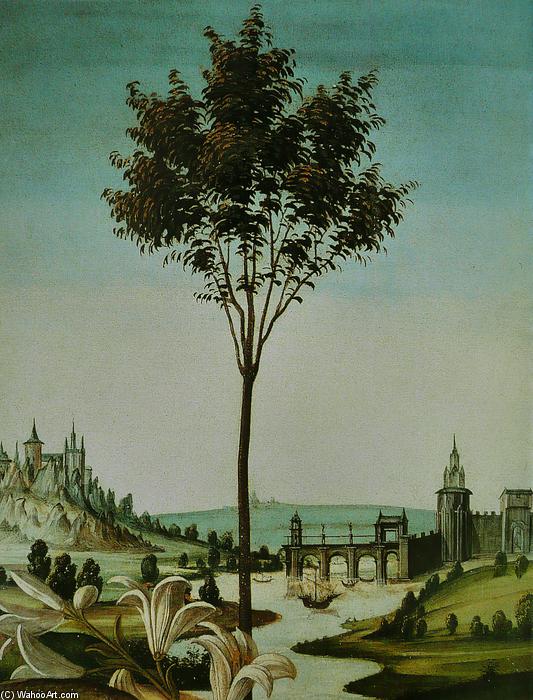
A Moment of Divine Revelation: Botticelli's Annunciation Cestello
Sandro Botticelli’s “Annunciation Cestello,” a captivating detail rendered in exquisite oil on wood panel, offers a profound glimpse into the heart of the Early Renaissance. Painted around 1490, this work transcends mere religious depiction; it is an embodiment of humanist ideals, serene beauty, and the burgeoning artistic spirit of Florence. Measuring 240 x 235 cm, the scale of the painting invites viewers to become fully immersed in the scene’s tranquil atmosphere, a testament to Botticelli's mastery of composition and his ability to evoke profound emotion.
- Subject Matter: The Annunciation, a pivotal moment in Christian theology, depicts the Archangel Gabriel announcing Mary’s impending conception of Jesus.
- Composition: Botticelli skillfully arranges the figures – Mary, poised and receptive, and the radiant angel – within a carefully constructed space dominated by a magnificent tree.
- Technique: The painting showcases Botticelli's signature style characterized by delicate lines, luminous colors, and an almost ethereal quality achieved through his masterful use of oil paint.
The Symbolism of Nature and Grace
The central tree in “Annunciation Cestello” is far more than a mere backdrop; it’s a potent symbol laden with meaning. Rooted in classical mythology, the tree represents life, fertility, and connection to the divine. Its lush green foliage contrasts beautifully with the cool blues and whites of the figures' garments, creating a harmonious balance that reflects the Renaissance fascination with nature’s beauty. Mary’s posture – hands raised in a gesture of acceptance, gaze directed towards the angel – embodies humility and grace, qualities highly valued during this period. The inclusion of a small boat adds another layer of symbolism, perhaps representing the journey of faith or the arrival of salvation.
A Florentine Masterpiece within its Historical Context
Botticelli’s “Annunciation Cestello” was likely commissioned for the Oratorio di Santa Maria Cestio in Rome. The painting reflects the artistic and intellectual currents of Florence during the late 15th century, a time when humanism was challenging traditional religious dogma and celebrating classical antiquity. Botticelli's work exemplifies this shift, blending Christian iconography with elements of Renaissance aesthetics. His patronage by the Medici family further cemented his position as one of the leading artists of his era, contributing significantly to the flourishing artistic environment of Florence.
Emotional Impact and Artistic Legacy
The painting’s enduring appeal lies in its ability to evoke a sense of peace and wonder. Botticelli's delicate brushwork and harmonious color palette create an atmosphere of serenity, inviting viewers to contemplate the profound mystery of faith. “Annunciation Cestello” remains a cornerstone of Renaissance art, influencing generations of artists with its graceful figures, luminous colors, and timeless depiction of a pivotal moment in Christian history. A hand-painted reproduction offers a unique opportunity to experience this masterpiece firsthand, bringing Botticelli’s vision into your home or studio.