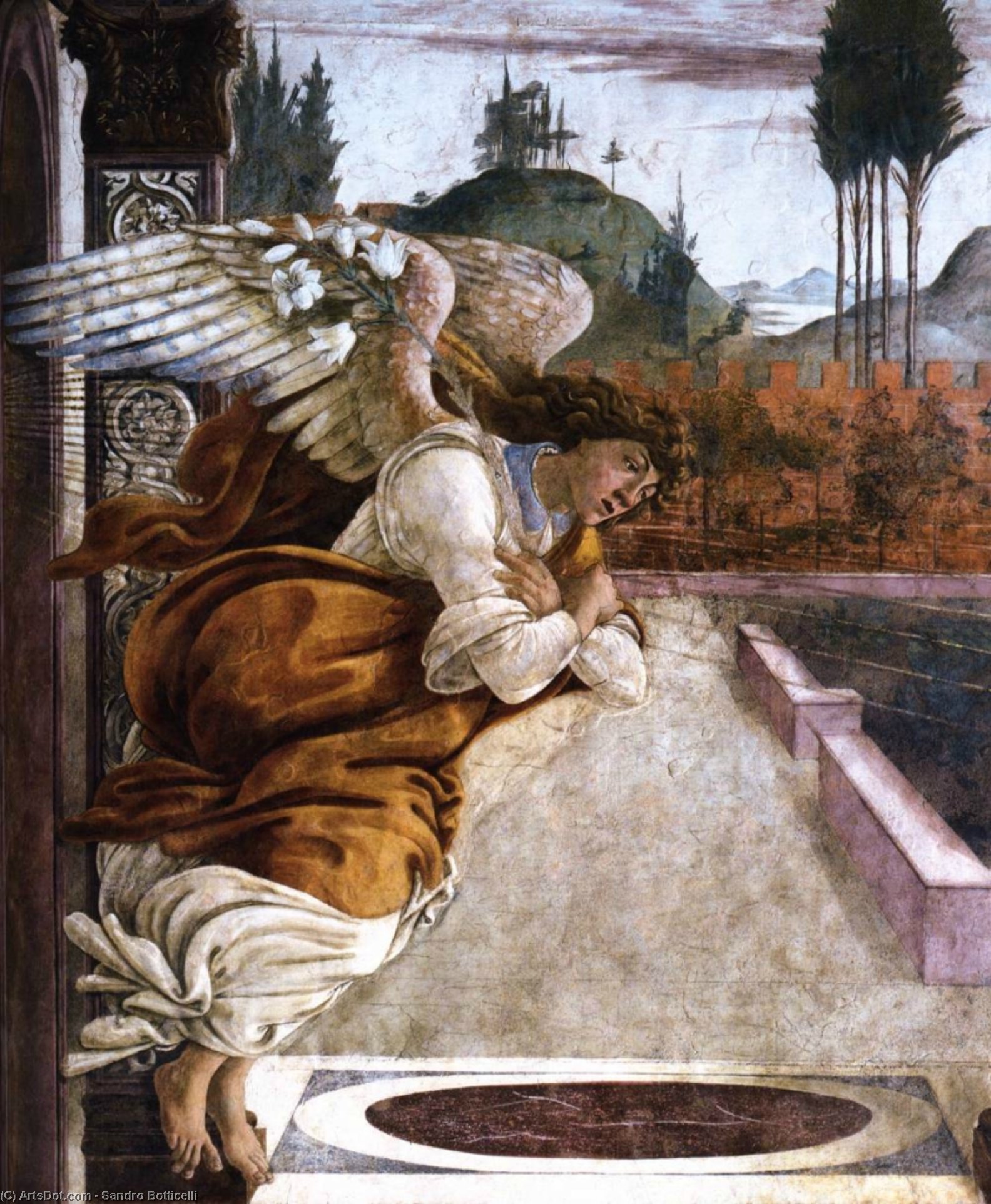
Botticelli's 'Cestello Annunciation' (1489) is a masterpiece of the Early Renaissance, showcasing divine grace and perspective within a serene Florentine setting. Explore its rich symbolism and artistic significance.
Discover Sandro Botticelli (1445-1510), Renaissance master of 'Birth of Venus' & 'Primavera'. Explore his elegant style, mythological themes, and lasting influence on art history!
Step into the Renaissance heart of Florence at the Uffizi Gallery! Explore masterpieces by Botticelli, Leonardo da Vinci & Michelangelo – an unforgettable art experience.
A Moment of Divine Revelation: Botticelli’s Annunciation
Botticelli's "Annunciation," painted in 1481, stands as a cornerstone of Early Renaissance art—a testament to humanist ideals intertwined with profound spiritual contemplation. Executed in tempera on wood panel, this masterpiece captures the pivotal biblical narrative of Gabriel informing Mary about her divine conception, an event that irrevocably shaped Christian theology and artistic representation. The painting resides within the Uffizi Gallery in Florence, Italy, where it continues to inspire awe and admiration for its ethereal beauty and masterful execution.
The Composition: Harmony and Perspective
Botticelli’s genius lies not merely in depicting a sacred scene but in orchestrating it with breathtaking precision. He employs linear perspective—a revolutionary technique emerging during this period—to create an illusion of depth, anchoring the viewer's gaze within the serene Cestello garden where Mary receives Gabriel’s message. The figures are arranged symmetrically around Mary, emphasizing her central role as the vessel of divine grace. Note the careful positioning of Gabriel on the left and Mary on the right, creating a balanced visual composition that reflects the harmonious order characteristic of Renaissance aesthetics.
Style and Technique: Delicate Brushstrokes and Pale Colors
Botticelli’s distinctive style is instantly recognizable—characterized by graceful lines, flowing drapery, and an almost dreamlike quality. His brushstrokes are remarkably delicate, conveying subtle nuances of color and texture. The palette is dominated by pale hues—muted greens, blues, and yellows—reflecting the Florentine landscape and contributing to the painting’s ethereal luminescence. Botticelli skillfully utilizes sfumato—a technique pioneered by Leonardo da Vinci—to soften contours and blend colors seamlessly, creating an atmosphere of tranquility and spiritual reverence.
Symbolism: Echoes of Classical Antiquity
Beyond its visual splendor, "Annunciation" is laden with symbolic significance rooted in classical mythology and Christian iconography. The Cestello garden itself represents Paradise—the earthly realm mirroring the divine Jerusalem—underscoring Mary’s acceptance of God's will. Gabriel’s outstretched hand symbolizes divine grace and revelation, while Mary’s palms clasped together express humility and prayerfulness. The bird perched on Mary’s left shoulder is often interpreted as representing the Holy Spirit—God’s active presence guiding Mary toward her destiny. These elements resonate with humanist ideals emphasizing human reason and virtue alongside spiritual faith.
Emotional Impact: A Vision of Graceful Beauty
“Annunciation” transcends mere representation; it evokes a profound emotional response in viewers. Botticelli's masterful depiction captures the essence of divine grace—the moment of transformative revelation that unites humanity with God. The painting’s serene beauty inspires contemplation and reverence, inviting us to contemplate themes of faith, humility, and spiritual aspiration. Its enduring legacy testifies to Botticelli’s ability to translate complex theological concepts into a visual language accessible yet deeply evocative—a testament to the power of art to communicate universal truths.