A Renaissance Riddle: Decoding Botticelli’s Allegory
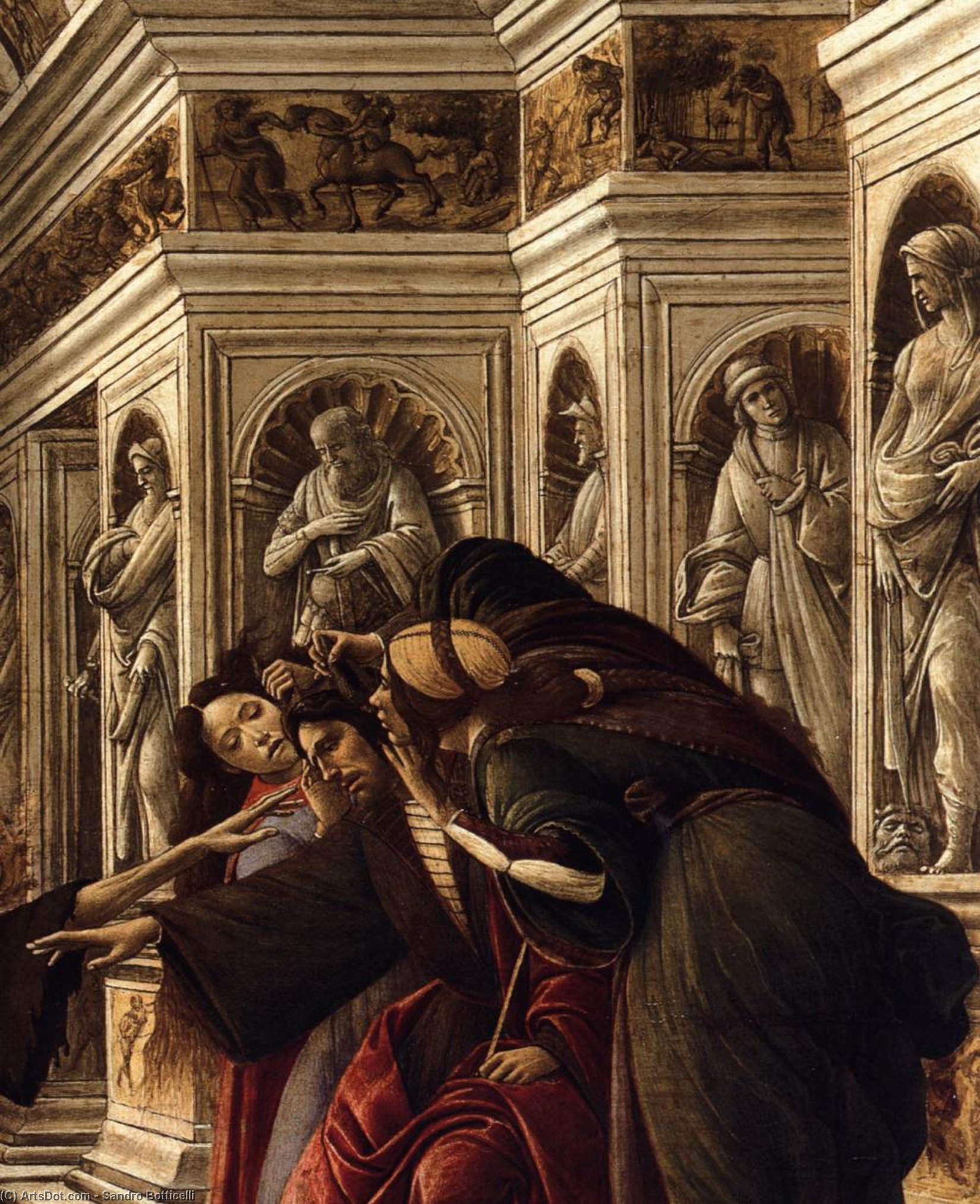
Sandro Botticelli's “Calumny of Apelles”, completed around 1494–1495, is far more than a mere masterpiece of the Florentine Renaissance; it is a profound visual meditation on the fragility of reputation and the corrosive nature of falsehood. Inspired by a lost ancient painting by the celebrated Greek master Apelles, Botticelli breathes life into a classical legend to explore the timeless struggle between truth and slander. The scene unfolds within a complex, crowded space where every figure and statue serves as a character in a moral drama. At its heart, the work captures a moment of intense psychological tension, inviting viewers to look beyond the surface beauty and confront the heavy themes of honor, shame, and the devastating impact of unfounded accusations.
The composition is a masterclass in narrative layering, utilizing a pyramidal structure that guides the eye through a labyrinth of human emotion. As one gazes upon the detail, the focus often rests on the central figures—a man caught in a moment of vulnerability, perhaps receiving a haircut, surrounded by an assembly of witnesses. Botticelli’s ability to render human anatomy is nothing short of extraordinary; he captures the subtle tremors of apprehension and the weight of discomfort in the faces of those present. This sense of drama is heightened by the strategic placement of statues representing various virtues and vices, which act as silent, eternal judges watching over the unfolding chaos of the mortal scene.
The Grace of Line and the Radiance of Tempera
To behold this work is to experience the quintessential Botticellian style: a breathtaking marriage of graceful linearity and a delicate, ethereal color palette. Unlike many of his contemporaries who sought out heavy, dramatic polychromy, Botticelli favored a more restrained approach. He employed muted reds, soft blues, and gentle yellows to create a harmonious atmosphere that feels both grounded in reality and elevated by myth. His signature technique—the precise, flowing outlines of his figures—gives the painting an almost rhythmic quality, as if the characters are moving through a dreamlike state of moral crisis.
The technical execution relies on the luminous properties of tempera paint on wood. This medium allowed Botticelli to achieve an exceptional vibrancy and a translucent depth that has preserved the delicate hues for centuries. For the discerning collector or interior designer, a high-quality reproduction of this piece offers more than just decoration; it brings a sense of historical weight and intellectual depth to a space. The way light interacts with the fine details of the pigments creates a captivating presence that can serve as a sophisticated focal point in any curated gallery or elegant living environment.
A Timeless Legacy for the Modern Collector
Beyond its technical brilliance, the “Calumny of Apelles” resonates deeply due to its emotional complexity. It speaks to the universal human experience of being misunderstood and the societal struggle to uphold justice. For those seeking to adorn their homes with art that inspires conversation and reflection, this work offers an inexhaustible well of symbolism. Every element, from the positioning of a hand to the stoic gaze of a marble statue, is a clue in a larger philosophical puzzle.
Owning a reproduction of such a significant Renaissance treasure allows one to bridge the gap between the 15th century and the modern era. It is an invitation to dwell within the brilliance of the Florentine school, surrounding oneself with the elegance, intellect, and enduring beauty that Botticelli bequeathed to the world. Whether placed in a study filled with books or a grand hall designed for contemplation, this artwork remains a powerful testament to the enduring power of storytelling through paint.