A Vision of Suffering and Majesty: Botticelli’s Christ Carrying the Cross
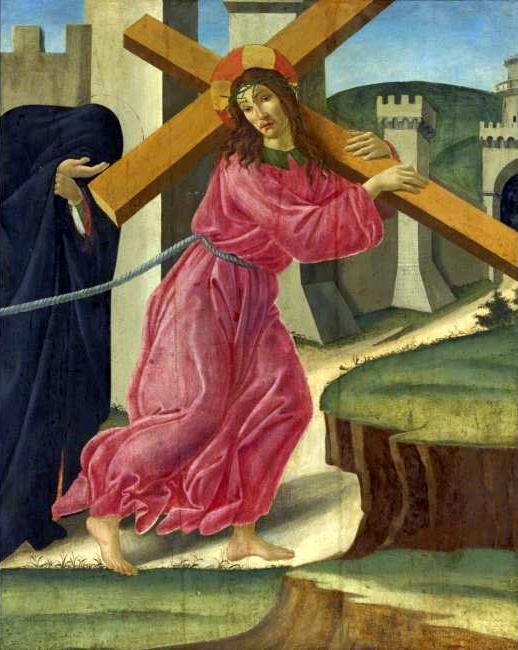
Botticelli's "Christ Carrying the Cross," painted around 1490, stands as an emblem of Florentine Renaissance idealism—a paradoxical blend of spiritual contemplation and visual splendor. Executed in tempera on wood panel, this monumental artwork transcends mere representation; it embodies a profound meditation on faith, sacrifice, and divine grace within a meticulously crafted architectural setting. The painting’s enduring appeal lies not only in its exquisite beauty but also in the rich tapestry of symbolism woven into every brushstroke.
- Subject Matter: At its core, the image depicts Jesus Christ bearing the cross—a central motif in Christian iconography representing his suffering and atonement for humanity's sins. Botticelli’s portrayal is remarkably serene, capturing a moment of profound solemnity rather than depicting the gruesome realities of crucifixion. This deliberate choice underscores the artist’s humanist sensibilities, prioritizing spiritual contemplation over sensationalism.
- Style: Botticelli’s style is instantly recognizable for its ethereal grace and delicate lines—characteristics that firmly situate it within the Florentine Mannerist tradition yet retain a distinctly Pre-Renaissance aesthetic. The figures are rendered with flowing drapery and subtle modeling, creating an illusion of volume that defies the limitations of tempera paint. This technique prioritizes elegance and refinement, reflecting the humanist ideals prevalent during the period.
- Technique: Botticelli’s masterful use of tempera—a pigment bound in egg yolk—allowed for unparalleled luminosity and tonal subtlety. The artist skillfully layered thin glazes upon a prepared wooden panel, achieving remarkable depth and vibrancy without resorting to oil paints. This painstaking process demanded considerable patience and precision, reflecting the meticulous craftsmanship characteristic of Florentine art workshops.
- Historical Context: Painted during Lorenzo de’ Medici's reign—the “Magnificent Florence”—“Christ Carrying the Cross” reflects the humanist revival that swept across Europe in the mid-15th century. The Medicis championed artistic patronage, fostering an environment where artists like Botticelli could explore ambitious themes and experiment with innovative techniques. Furthermore, the painting aligns with a broader trend toward portraying biblical narratives with psychological realism—a departure from earlier stylized depictions.
- Symbolism: Beyond its depiction of Christ’s suffering, the artwork is replete with symbolic elements. The castle-like structure dominating the background represents Jerusalem and symbolizes divine authority. The moat surrounding it signifies the separation between earthly imperfection and spiritual purity. The two birds soaring above—often interpreted as doves representing peace—underscore the overarching message of redemption and hope.
The emotional impact of “Christ Carrying the Cross” is undeniable. Botticelli’s masterful composition invites viewers to contemplate the profound mysteries of faith and sacrifice, fostering a sense of reverence and contemplation. Its luminous colors and graceful lines evoke an atmosphere of serenity and solemn beauty—a testament to the artist's ability to capture not only visual splendor but also the deepest recesses of human emotion. Today, reproductions of this iconic masterpiece continue to inspire artists and collectors alike, ensuring its legacy as one of the most enduring symbols of Renaissance spirituality.