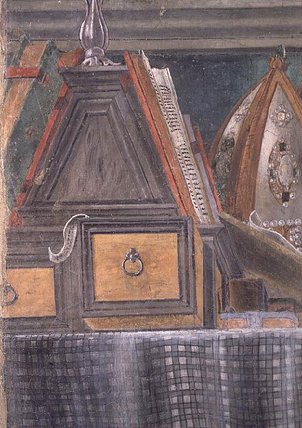
A Window into the Soul: Botticelli’s “Detail From St. Augustine In His Cell”
Sandro Botticelli's "Detail From St. Augustine In His Cell," painted around 1480, is more than just a depiction of a saint; it’s a profound meditation on faith, vision, and the very nature of inspiration. Executed in fresco against the walls of the Vespucci family’s chapel within the Church of Ognissanti in Florence, this intimate scene offers a rare glimpse into the contemplative world of St. Augustine himself – a world meticulously rendered with Botticelli's signature grace and attention to detail.
The painting immediately draws the eye to Augustine, seated at his desk, bathed in an ethereal light that streams from the upper left corner. This isn’t merely illumination; it’s a symbolic representation of the divine encounter described by St. Augustine himself. According to his own account, as he contemplated the death of St. Jerome, a brilliant light appeared, accompanied by the saint's voice, revealing Jerome’s final words. Botticelli masterfully translates this intensely personal experience into visual form, capturing not just the physical presence of Jerome but also the profound spiritual impact of the moment.
A Study in Renaissance Detail and Technique
Botticelli’s technical skill is immediately apparent in the meticulous rendering of Augustine's study. The artist employs a layered approach characteristic of early Florentine fresco painting, building up color and form through successive applications of pigment. Observe the careful modeling of Augustine’s robes, the textures of the books stacked upon his desk – meticulously detailed with their spines and clasps – and the delicate sheen on the instruments of scholarship. The use of *sfumato*, a technique pioneered by Leonardo da Vinci, subtly softens the edges and creates an atmospheric haze, lending the scene a sense of depth and realism.
Beyond the technical mastery, Botticelli’s choice of composition is deliberate. The placement of Augustine within his study, surrounded by symbols of learning and contemplation, reinforces the saint's role as a scholar and theologian. The inclusion of the clock – a relatively new invention at the time – subtly introduces an element of temporal awareness, reminding us of the fleeting nature of earthly existence and the enduring pursuit of spiritual truth.
Symbolism and Spiritual Resonance
“Detail From St. Augustine In His Cell” is rich in symbolic meaning. The light itself represents divine revelation, while the books symbolize knowledge and wisdom – essential components of Augustine’s intellectual journey. Jerome's presence, even as a ghostly apparition, underscores the importance of tradition and the continuity of faith. The scene speaks to the core tenets of Christian belief: the possibility of encountering the divine through contemplation, the transformative power of scripture, and the enduring legacy of the saints.
This painting was commissioned during a period of immense artistic and intellectual ferment in Florence – the Early Renaissance. Botticelli’s work reflects this spirit of inquiry and innovation, blending classical ideals with Christian themes to create a truly unique and powerful image. It's a testament to the artist's ability to capture not just outward appearances but also the inner life of his subject.
A Timeless Masterpiece for Collection and Inspiration
Today, reproductions of “Detail From St. Augustine In His Cell” continue to captivate viewers with their beauty and depth. Whether adorning a private study or gracing a more public space, this artwork offers a powerful reminder of the enduring human quest for meaning and understanding. Its serene composition and evocative symbolism make it an ideal choice for those seeking to infuse their surroundings with a sense of intellectual curiosity and spiritual contemplation.