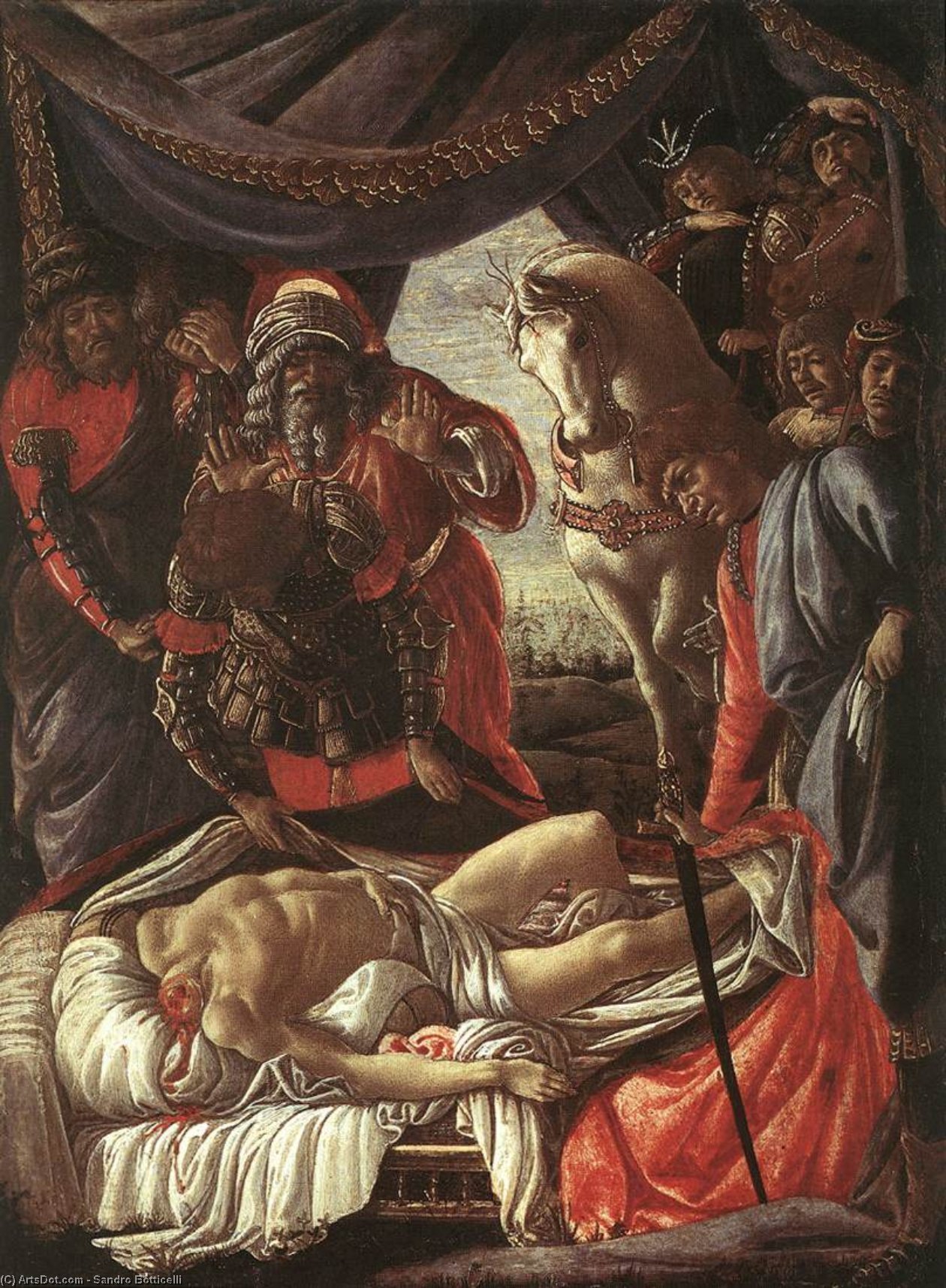
Sandro Botticelli's Dramatic Revelation: The Discovery of Murder of Holophernes
Sandro Botticelli’s “Discovery of Murder of Holophernes,” painted circa 1496-1497, is a profoundly unsettling and exquisitely rendered scene that transcends the simple depiction of a crime. This work, housed within the rich tapestry of the Early Renaissance, offers a glimpse into the anxieties and moral complexities of its time, revealing Botticelli’s mastery of composition, color, and psychological drama. The painting's immediate impact lies in its stark realism – a brutal confrontation with death that was remarkably uncommon in Florentine art of this period. It is not a glorification of heroism or a celebration of martial prowess; instead, it presents a scene of horrified discovery, capturing the raw emotion of those witnessing the aftermath of violence.
- Subject Matter: The painting’s subject – the gruesome discovery of Holophernes, the Assyrian governor, murdered by his wife – was drawn from Ovid's *Metamorphoses*, a cornerstone of Renaissance learning. This engagement with classical literature wasn't merely decorative; it provided Botticelli with a framework for exploring themes of betrayal, revenge, and the precariousness of human life.
- Composition: Botticelli’s masterful use of composition draws the viewer directly into the scene. The figures are arranged in a dynamic diagonal line, leading the eye from the dead body to the horrified onlookers. The curtained backdrop adds depth and theatricality, enhancing the sense of an unfolding drama.
Technique and Materials: A Window into Botticelli’s Studio
Botticelli employed his signature tempera-on-panel technique, a method favored by Florentine artists for its ability to produce vibrant colors and fine detail. The use of tempera, derived from egg yolk, allowed for meticulous layering and blending, creating the luminous quality characteristic of Botticelli’s work. Note the subtle gradations in color – particularly in the drapery and skin tones – demonstrating his keen observation of human form and his ability to render texture with remarkable accuracy. The artist's attention to detail extends to the horse, rendered with a surprising degree of realism for its time, further grounding the scene in a tangible reality.
- Color Palette: Botticelli’s palette is dominated by cool blues and greens, punctuated by warmer tones in the flesh and clothing. This restrained color scheme contributes to the painting's somber mood, emphasizing the tragedy of the event.
- Brushwork: The brushstrokes are generally smooth and controlled, reflecting Botticelli’s meticulous approach to his craft. However, there are moments of expressive impasto – particularly in the folds of the drapery – that add a sense of dynamism and movement to the scene.
Symbolism and Interpretation: Layers of Meaning
Beyond its immediate narrative, “Discovery of Murder of Holophernes” is laden with symbolic meaning. The presence of the horse suggests both the barbarity of the act and the potential for retribution. The curtained backdrop evokes a theatrical stage, blurring the lines between reality and illusion, suggesting that this event might be part of a larger, more complex drama. The figures’ gestures – their expressions of shock, horror, and disbelief – convey a profound sense of vulnerability in the face of violence. It's important to note that Botticelli was deeply influenced by humanist thought, which emphasized human emotion and experience; this is reflected in the painting's intense psychological realism.
- Classical Allusions: The scene’s connection to Ovid’s *Metamorphoses* invites viewers to contemplate themes of transformation, fate, and the consequences of human actions.
- Moral Ambiguity: While the painting depicts a clear crime, it does not offer easy moral judgments. The viewer is left to grapple with the complexities of human nature and the unsettling realization that violence can erupt unexpectedly.
Emotional Impact and Artistic Legacy
"Discovery of Murder of Holophernes" remains a powerfully evocative work, demonstrating Botticelli’s ability to capture not just physical likeness but also intense emotion. Its unflinching portrayal of death and its exploration of human vulnerability continue to resonate with viewers today. This reproduction offers an exceptional opportunity to experience the full force of Botticelli's artistic genius – a masterpiece that exemplifies the height of Renaissance art and continues to captivate audiences across centuries.