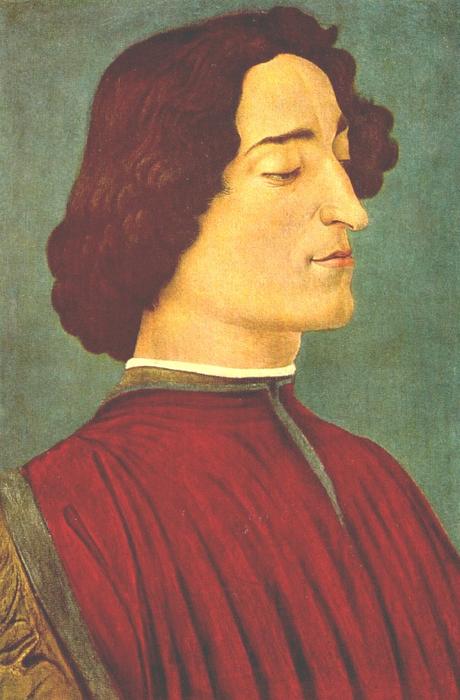
A Portrait of Dignified Resolve: Sandro Botticelli’s Giuliano de' Medici
Sandro Botticelli’s “Giuliano de’ Medici,” completed around 1480, stands as a testament to the humanist ideals flourishing in Florence during its golden age. More than just a likeness of the Florentine prince—a prominent figure within the influential Medici family—the painting embodies Botticelli's mastery of style and his profound understanding of visual language. It’s a piece that whispers tales of ambition, piety, and the quiet contemplation characteristic of Renaissance portraiture.
- Subject Matter: The portrait depicts Giuliano de’ Medici, son of Lorenzo il Magnifico, in a pose that exudes composure and seriousness. Botticelli meticulously captures his facial features—the furrowed brow, the downward gaze—suggesting an inner life preoccupied with weighty matters.
- Style & Technique: Botticelli's signature style is immediately recognizable through its graceful lines and delicate coloration. Employing tempera on poplar wood—a technique favored by Florentine artists of his era—Botticelli achieved remarkable luminosity and tonal subtlety. The artist skillfully blended pigments to create a harmonious palette dominated by muted blues and reds, reflecting the prevailing artistic conventions of the time.
- Historical Context: Painted during Lorenzo il Magnifico’s reign, “Giuliano de’ Medici” reflects the humanist movement's emphasis on human dignity and intellectual pursuits. Botticelli’s work aligns with a broader trend toward portraying individuals as subjects of contemplation rather than mere symbols of power or status—a deliberate departure from earlier Byzantine portraiture.
- Symbolism: While subtle, symbolic elements contribute to the painting’s overall impact. The muted blues evoke serenity and spiritual reflection, mirroring Giuliano's contemplative demeanor. The robe’s crimson hue symbolizes nobility and royal authority, reinforcing his position within Florentine society.
- Emotional Impact: Botticelli’s portrait transcends mere representation; it invites viewers to consider Giuliano’s inner world—his thoughts, emotions, and moral convictions. The painting's quiet dignity speaks volumes about the humanist values that underpinned Renaissance culture, fostering a connection between artist and subject that continues to resonate today.
Botticelli's Influence & Legacy
Sandro Botticelli’s “Giuliano de’ Medici” cemented his reputation as one of Florence’s foremost painters and profoundly impacted subsequent artistic developments. His meticulous attention to detail, combined with his masterful use of color and line, established a benchmark for portraiture—inspiring artists across Europe to emulate his style. As showcased in Villa Medici's gardens, Botticelli’s aesthetic principles continue to inspire contemporary creativity. Explore reproductions of “Giuliano de’ Medici” at ArtsDot.com for a glimpse into the timeless beauty of Renaissance art.
Further Exploration
Consider researching Francesco Rosselli and Conrad Meit—artists who similarly bridged stylistic divides during their respective periods, demonstrating how artistic traditions evolve over time. Also delve into Botticelli’s broader oeuvre, including “Madonna and Child with Eight Angels,” to appreciate the breadth of his artistic vision and its enduring significance in art history.