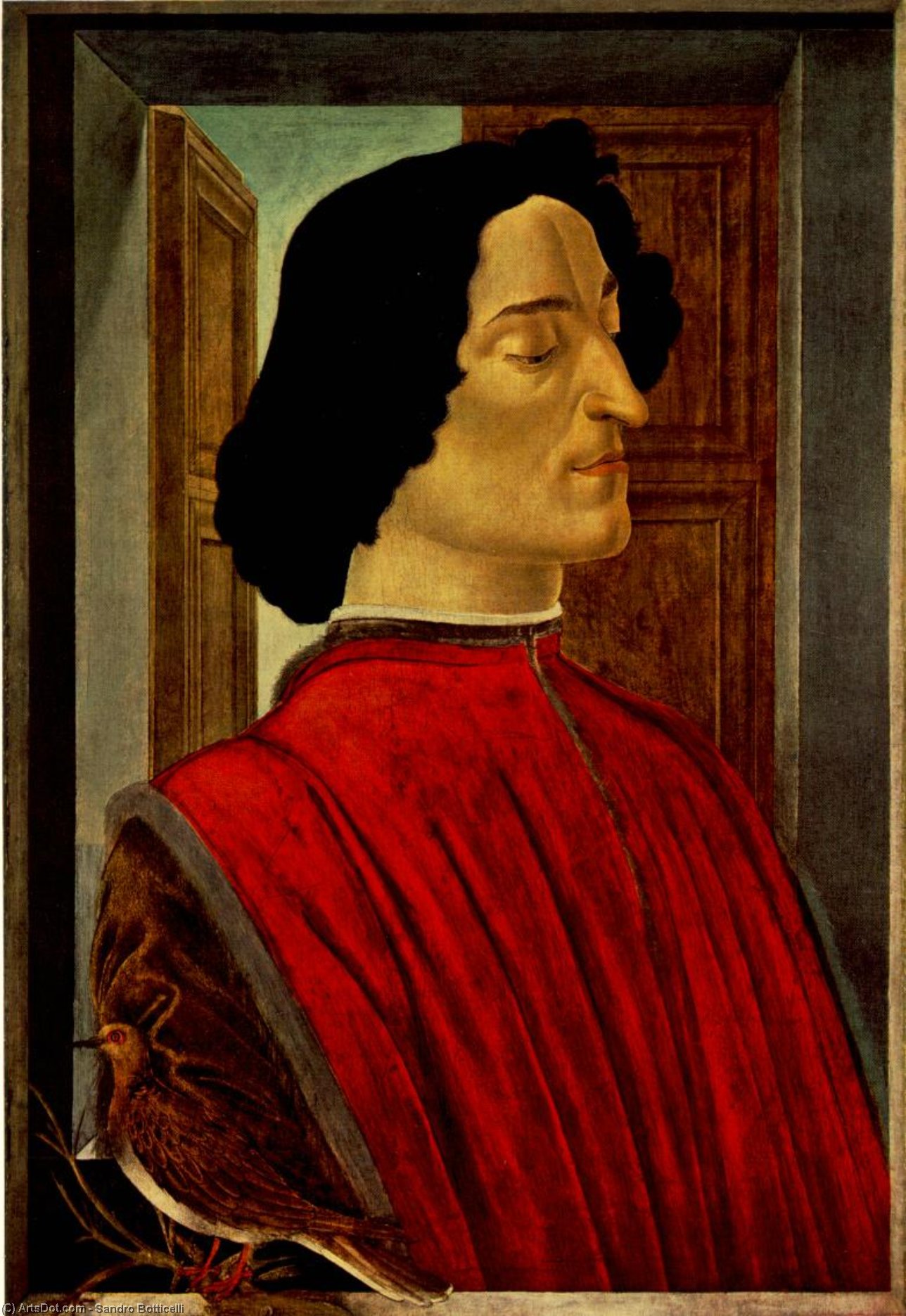
A Portrait of Quiet Contemplation: Sandro Botticelli’s Guliano de Medici
Botticelli's *Portrait of Giuliano de' Medici* stands as a serene emblem of the Florentine Renaissance, capturing not just an individual likeness but also a profound meditation on humanist ideals. Painted circa 1485, this masterpiece resides in Berlin’s Gemäldegalerie Neue Sammlung and offers a glimpse into the intellectual climate that defined its era—a period marked by burgeoning interest in classical learning and artistic innovation.
- Subject Matter: The portrait depicts Giuliano de' Medici, a prominent member of Florence’s ruling family, seated in repose. His gaze is directed upwards, suggesting introspection or absorption in thought – an uncommon portrayal for portraits of the time which typically focused on formal dignity and outward projection.
- Style & Technique: Botticelli’s signature style—characterized by graceful lines, delicate coloration, and a subtly idealized depiction—is evident throughout. The artist employs tempera paint on poplar wood, a technique favored for its luminosity and ability to achieve nuanced tonal gradations. This meticulous approach contributes to the painting's ethereal quality.
The composition is thoughtfully arranged, featuring Giuliano centrally positioned against a muted backdrop that emphasizes his stillness. A bird perched upon his shoulder serves as an intriguing visual element—often interpreted as symbolizing wisdom and vigilance, aligning with humanist philosophies prevalent during Botticelli’s lifetime. Scattered books around him underscore the importance of scholarship and intellectual pursuits within Florentine society. These weren't merely decorative additions; they represented Giuliano’s engagement with the philosophical currents shaping his world.
- Historical Context: Created during Lorenzo de' Medici’s reign—known as “Lorenzo il Magnifico”—the portrait reflects the humanist revival that swept across Europe. Botticelli’s patronage by the Medicis exemplifies the family’s commitment to fostering artistic excellence and promoting classical ideals.
- Symbolism: Beyond Giuliano's posture and the bird, the painting embodies broader symbolic representations of Renaissance humanism. The upward gaze signifies aspiration towards enlightenment, mirroring the humanist belief in the potential for human reason to elevate the soul.
Ultimately, *Portrait of Giuliano de Medici* transcends mere representation; it communicates a mood of contemplative serenity—a testament to Botticelli’s artistic genius and his ability to capture the spirit of an unforgettable moment in Florentine history. Its delicate beauty continues to inspire admiration and serves as a poignant reminder of the Renaissance's enduring legacy.