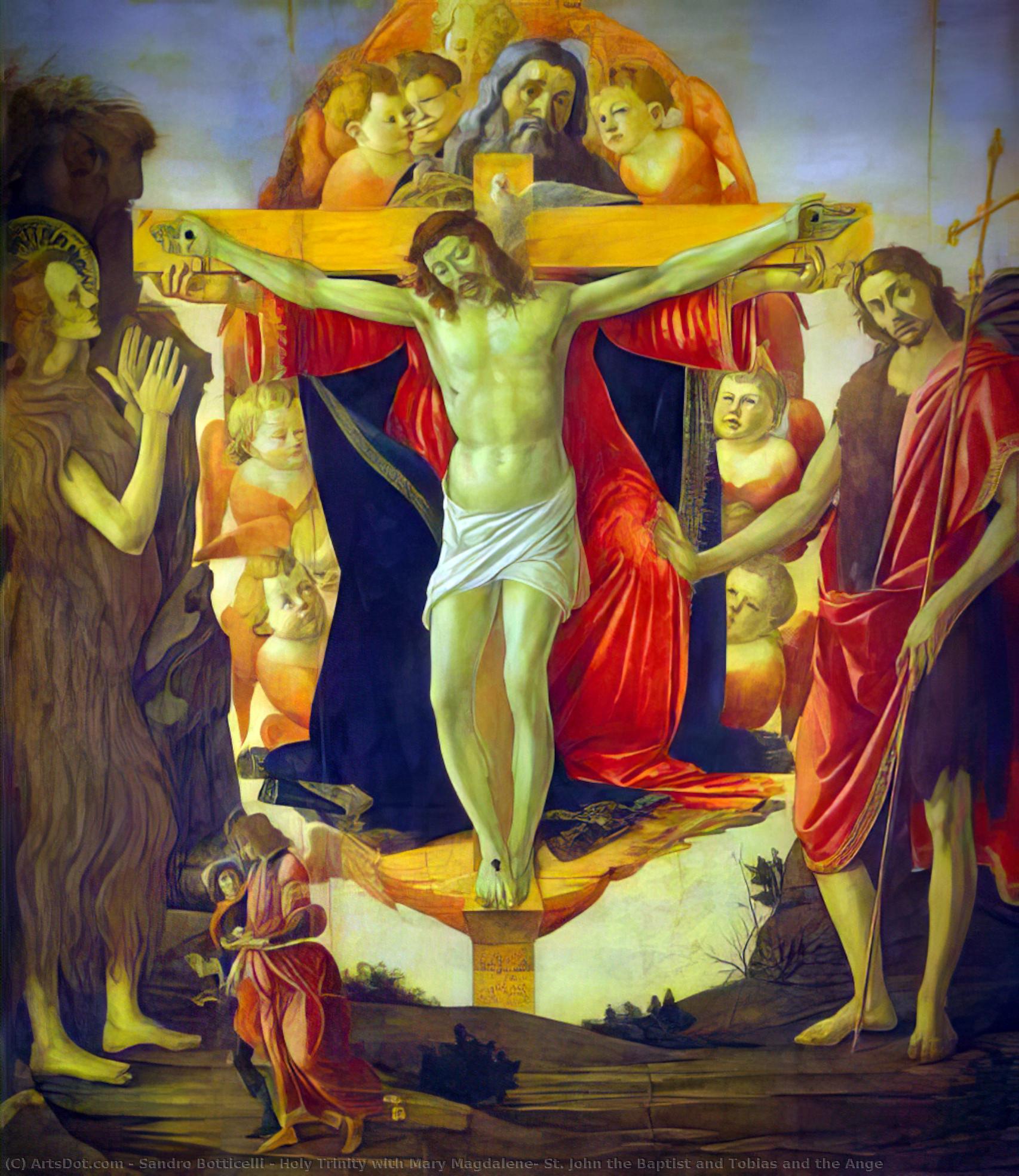
Holy Trinity with Mary Magdalene, St. John the Baptist and Tobias and the Ange
The
Holy Trinity with Mary Magdalene, St. John the Baptist and Tobias and the Ange stands as a cornerstone of Renaissance art—a testament to Botticelli’s unparalleled ability to fuse religious devotion with artistic innovation. Created between 1491 and 1493 for the church of Santa Elisabetta delle Convertite in Florence, this altarpiece transcends mere depiction; it embodies the spiritual aspirations of its time and continues to resonate with viewers today. Its current home is the Courtauld Institute Galleries in London, where visitors can immerse themselves in the beauty and complexity of Botticelli’s vision.
Commission and Context
The painting's genesis lies within a profound social context: Florence was grappling with the legacy of papal indulgences and witnessing a surge of piety amongst former prostitutes who sought redemption through conversion. The Arte dei Medici e degli Speziali, guild of doctors and pharmacists, commissioned this artwork specifically for Santa Elisabetta delle Convertite—a gesture reflecting the church’s role as a sanctuary for those seeking spiritual renewal. Mary Magdalene occupies a central position within this narrative, symbolizing forgiveness and transformation – an image powerfully echoed in Donatello's *Magdalene Penitent*, demonstrating Botticelli’s engagement with contemporary artistic trends.
Composition and Symbolism
Botticelli meticulously crafted the composition to convey theological significance. At its heart is Jesus crucified—a solemn reminder of sacrifice and divine compassion—surrounded by figures representing God, the Holy Spirit (manifested as a dove), Mary Magdalene, St. John the Baptist, Tobias, and Raphael. The almond-shaped frame enclosing the Trinity symbolizes the divine mystery, adorned with seraphim – angelic beings signifying purity and holiness. The backdrop of rocky spurs adds depth to the scene, grounding it in earthly reality while simultaneously elevating it towards celestial realms. Notably, St. John’s gesture directs the viewer's gaze toward the crucified Christ—a deliberate compositional element reflecting established artistic conventions of the period.
Artistic Significance
Botticelli’s mastery is evident in his masterful use of oil on panel—a technique that allowed for nuanced shading and luminous color—capturing the ethereal beauty characteristic of Renaissance painting. The delicate lines and graceful curves defining Botticelli's figures exemplify the stylistic ideals of his era, mirroring the elegance found in works like *Magdalene Penitent* by Donatello. Furthermore, the inclusion of Tobias and Raphael symbolizes divine guidance and protection—a reference to the biblical tale where Raphael instructs Tobias to capture a fish to save his father’s life. This detail underscores Botticelli's awareness of biblical narratives and his ability to infuse them with symbolic richness.
- Size: Unknown
- Date: Unknown
## Explore this painting in our virtual tour
The Trinity with Saints Mary Magdalen and John the Baptist is on display at The Courtauld Gallery, Somerset House, London. Zoom in to look closely at Botticelli’s masterpiece!
## Watch a short film
Additional Research
See more collection highlights