A Moment Frozen in Inferno’s Embrace
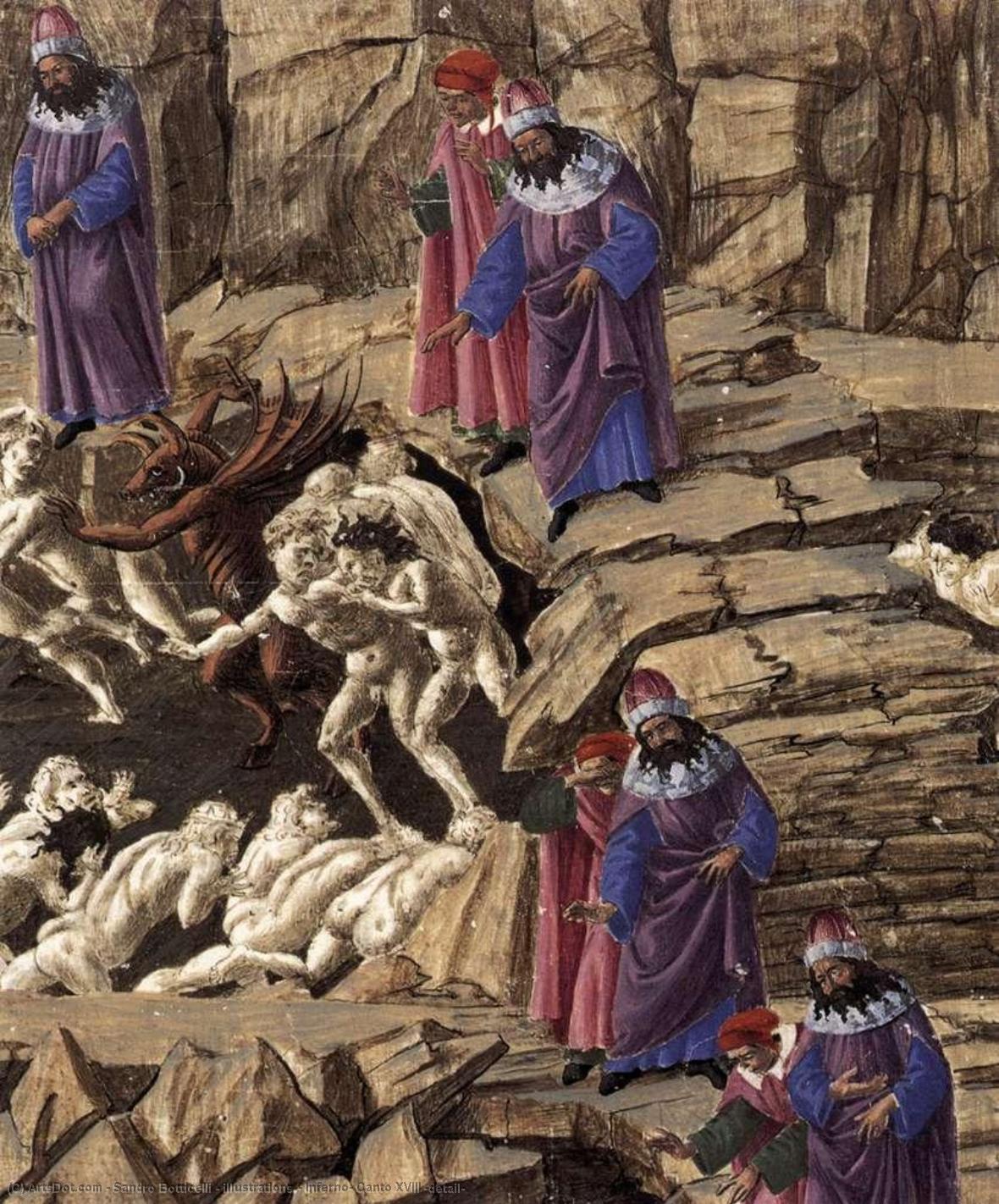
- Sandro Botticelli's “Illustrations - Inferno, Canto XVIII (detail)” transcends mere depiction; it embodies the spirit of Renaissance Florence and delves into Dante Alighieri’s profound exploration of sin and redemption. Captured with meticulous precision by a skilled hand, this artwork offers an intimate glimpse into a pivotal scene from Dante’s epic poem.
- The painting portrays a group of figures positioned atop rugged rocks against a backdrop of imposing mountains—a landscape deliberately chosen to mirror the perilous journey undertaken by Dante and Virgil through Hell. The artist skillfully employs chiaroscuro, manipulating light and shadow to heighten dramatic tension and emphasize the emotional weight of the moment.
Technical Mastery: Botticelli’s Delicate Brushstrokes
Botticelli's technique is characterized by a remarkable sensitivity to color and form—traits that distinguish him from many of his contemporaries. He favored tempera paint on wood panels, a medium known for its luminosity and durability. The artist’s brushstrokes are remarkably subtle, conveying an ethereal quality that captures the essence of Dante’s vision.
Symbolism Rooted in Medieval Tradition
- The figures depicted—one adorned in purple robes and another dressed as a monk—represent theological concepts central to medieval thought. Purple symbolizes royalty and piety, while monastic garb signifies spiritual devotion. These symbols underscore the poem’s moral compass, reminding viewers of the importance of righteousness and repentance.
- Furthermore, the presence of an animal—likely a dog or cat—adds another layer of interpretation. Animals frequently served as emblems of fidelity and vigilance in medieval art, reinforcing the narrative's themes of perseverance and divine guidance.
Emotional Resonance: Capturing Dante’s Psychological Depth
Botticelli doesn’t simply illustrate Dante’s Inferno; he strives to convey its psychological impact. The artist’s careful composition directs the viewer’s gaze toward the central figures, inviting contemplation on their inner turmoil and unwavering faith. “Illustrations - Inferno, Canto XVIII (detail)” remains a testament to Botticelli's ability to translate complex ideas into visually arresting imagery—a masterpiece that continues to inspire awe and provoke reflection centuries later.