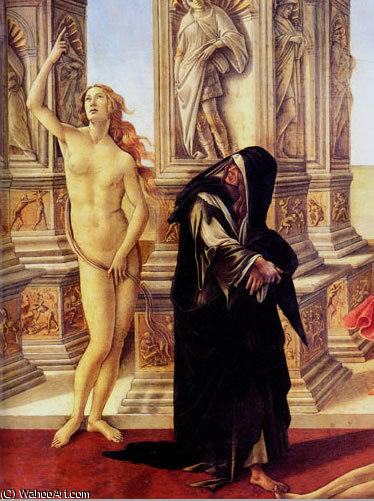
A Moment Frozen in Mythic Grace
In the heart of the Florentine Golden Age, Sandro Botticelli captured a fragment of a lost legend that continues to haunt and inspire the modern imagination. La calunnia di Apelle (part.) is not merely a painting; it is a profound meditation on the fragility of reputation and the corrosive nature of deceit. Inspired by a vanished masterpiece attributed to the Greek painter Apelles, Botticelli’s work delves into the humanist tensions of his era, weaving a narrative of artistic rivalry and the destructive power of slander. The scene unfolds with a dramatic intensity, drawing upon classical mythology to explore the complex psychological dynamics that arise when truth is obscured by false accusation.
The composition presents a breathtaking encounter between the divine and the earthly. At the center of this mythic drama stands Venus, an embodiment of feminine virtue and celestial grace, positioned before a statue of her own likeness. Her gaze, directed toward the youthful Cupid, creates a tension that pulls the viewer into the unfolding story. Cupid, bearing his bow and arrow, serves as a symbol of the impulsive passions that can ignite both love and conflict. Through this interaction, Botticelli invites us to witness a moment where the boundaries between mythic permanence and human vulnerability dissolve, offering an emotional depth that resonates with anyone who has felt the weight of judgment or the sting of injustice.
The Mastery of Line and Luminous Color
To behold a reproduction of this work is to experience the signature elegance of the Early Renaissance. Botticelli’s technique is a masterclass in tempera on panel, where he achieved a remarkable luminosity through the meticulous layering of thin, translucent glazes. This method allows light to penetrate the surface, creating an illusionistic depth that makes the figures appear to breathe within their frame. His style—characterized by delicate, flowing lines and an ethereal sense of movement—prior to the strict realism of later periods, prioritizes expressive gesture and idealized form. This Mannerist influence lends the characters a poetic, almost dreamlike quality that transcends the physical limitations of the medium.
The artist’s use of color is both restrained and strategically powerful. While much of the palette favors muted, sophisticated hues that evoke the antiquity of the subject matter, Botticelli punctuates the scene with vibrant reds. These crimson accents serve as visual anchors, guiding the eye through the intricate composition and contributing to the painting's symbolic resonance. For the discerning collector or interior designer, these tonal subtleties offer a versatile aesthetic appeal; the work can anchor a room with its classical gravity or provide a sophisticated splash of Renaissance warmth within a contemporary setting.
A Timeless Legacy for the Modern Collector
Beyond its technical brilliance, La calunnia di Apelle offers an intellectual richness that makes it a centerpiece for any curated collection. The painting serves as a window into the Florentine spirit—a period where classical wisdom and Christian devotion danced in delicate harmony. For those seeking to adorn their spaces with art that sparks conversation, this piece provides endless layers of interpretation. It is a work that speaks to the enduring human struggle between ambition and deceit, making it as relevant in a modern gallery as it was in a Medici palace.
Investing in a high-quality hand-painted reproduction of this masterpiece allows one to bring the soul of the Renaissance into the home. Whether placed in a sunlit study or a grand living hall, the painting’s ability to evoke serenity, melancholy, and awe ensures it remains a captivating focal point. It is an invitation to engage in a silent dialogue with history, capturing the very essence of beauty and the eternal struggle for truth.