The Architect of Hell: Botticelli's Lucifer from *La Divina Commedia*
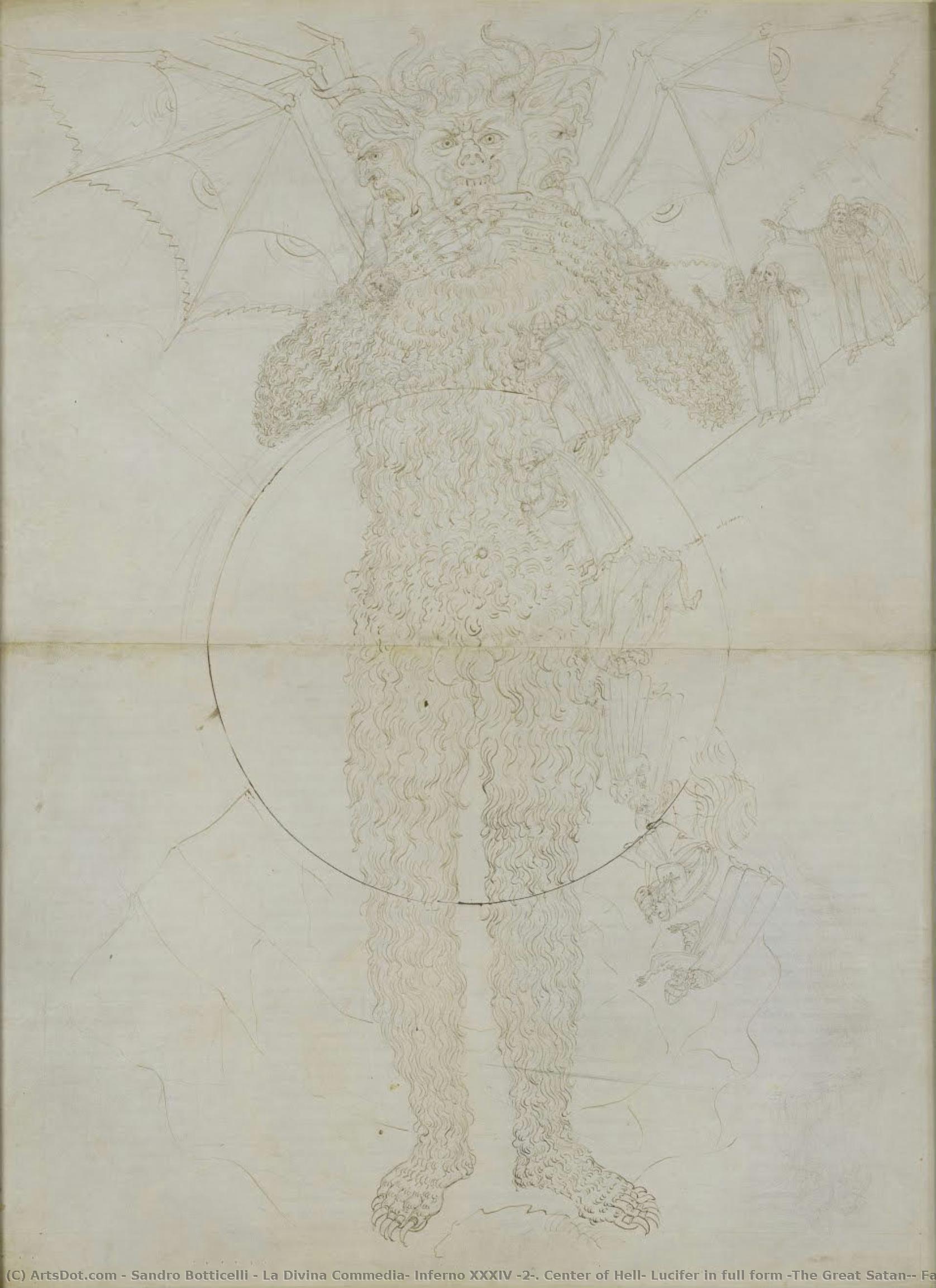
Sandro Botticelli’s “Inferno XXXIV (2): Center of Hell – Lucifer in full form (The Great Satan); Farewell to the Inferno” is not merely a drawing; it’s a visceral plunge into the heart of Dante Alighieri's most harrowing vision. This meticulously rendered study, captured in stark monochrome, offers an unparalleled glimpse into Botticelli’s profound understanding of Renaissance art and his masterful ability to translate complex theological concepts into a powerfully evocative image. The piece, executed with astonishing detail using pen and ink on paper, transcends its humble materials to become a monument to human despair and the terrifying majesty of evil.
The drawing focuses entirely upon Lucifer, positioned within a dramatic circular frame that immediately isolates him as the central, dominating force of Hell. Botticelli’s anatomical precision is breathtaking; every sinew, feather, and facet of the monstrous figure is rendered with painstaking accuracy. The artist doesn't shy away from depicting the grotesque – the gaping maw, the cloven hooves, the fiery wings – yet he imbues even this embodiment of corruption with a chilling grandeur. The low-angle perspective subtly elevates Lucifer, reinforcing his position as the apex predator of the underworld and visually communicating his immense power.
A Renaissance Master at Work: Technique and Style
Botticelli’s technique is a testament to the dedication demanded by this demanding subject matter. The use of hatching and cross-hatching creates an astonishingly rich range of tones within the monochrome palette, suggesting depth, texture, and even the flickering infernal flames that surround Lucifer. The lines themselves are not simply outlines; they are carefully constructed to define form and create a sense of movement – particularly evident in the swirling patterns of his wings. This isn’t a romanticized depiction of demonic power; it's a rigorously observed study of anatomy and light, executed with the precision characteristic of a master Renaissance artist.
The drawing’s starkness is deliberate. Botticelli deliberately avoids color, forcing the viewer to engage with the image through line alone. This restraint amplifies the emotional impact, mirroring the desolate landscape of Hell itself. The smooth texture achieved through the meticulous application of ink speaks to Botticelli's control and mastery of his medium – a testament to years of dedicated practice.
Symbolism and Spiritual Weight
“Inferno XXXIV” is deeply rooted in Dante’s *Divine Comedy*, a cornerstone of Western literature. Lucifer, here depicted as “The Great Satan,” represents not just personal evil but the corruption of humanity itself. His isolation at the center of Hell underscores his role as the ultimate source of damnation and despair. The surrounding figures, though less detailed, hint at the suffering of those trapped within Dante’s infernal circles – a constant reminder of the consequences of sin.
Beyond its immediate narrative context, the drawing operates on a profoundly symbolic level. Lucifer's form—a grotesque parody of divine beauty—represents the perversion of ideals and the triumph of darkness over light. The act of “farewell to the inferno” suggests not just an escape but also a final reckoning with one’s own moral failings. Botticelli, through this single drawing, offers a potent meditation on themes of sin, redemption, and the eternal struggle between good and evil.
Bringing Botticelli's Inferno Home
ArtsDot is proud to offer meticulously crafted hand-painted reproductions of Sandro Botticelli’s “Inferno XXXIV (2).” These reproductions capture not only the technical brilliance of the original drawing but also its haunting emotional power. Whether you are an art collector, a design enthusiast seeking inspiration for your interior spaces, or simply captivated by the drama and symbolism of this iconic image, our hand-painted reproductions provide a stunning way to experience Botticelli’s masterpiece. Each reproduction is created with the same care and attention to detail as the original, ensuring that you receive a truly exceptional piece of art.