A Lament Born of Faith and Turmoil
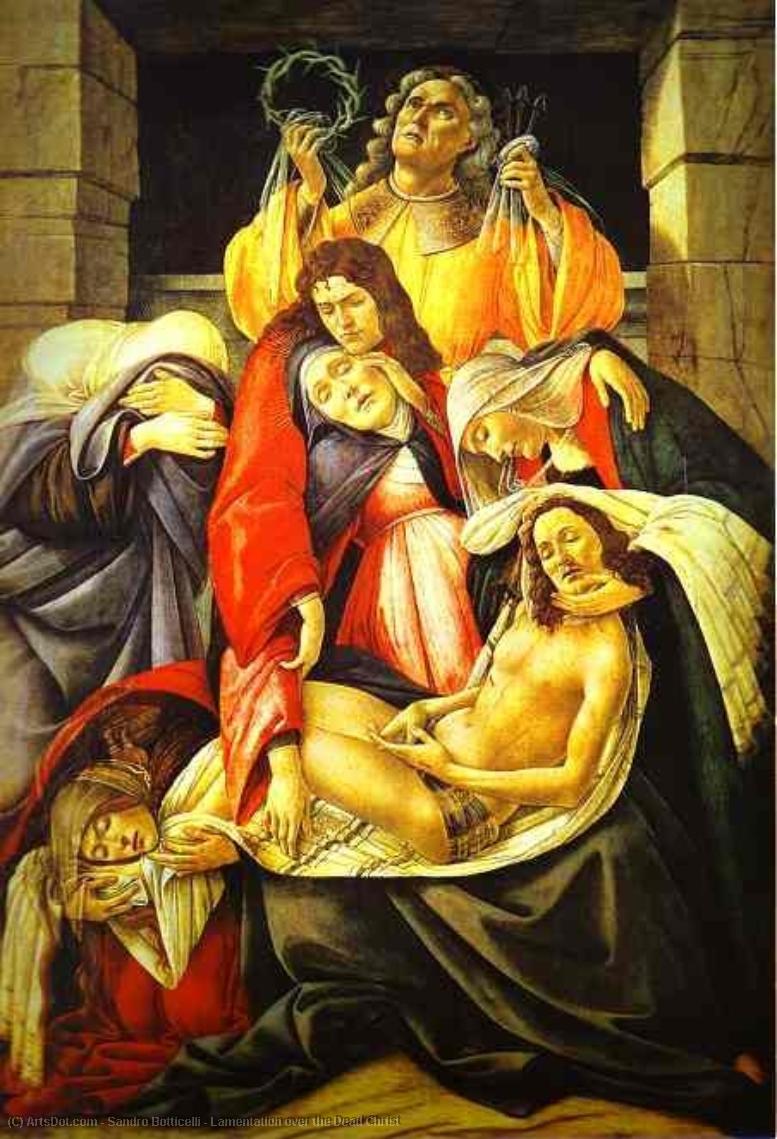
Sandro Botticelli’s *Lamentation over the Dead Christ*, painted between 1490-1495, is a profoundly moving depiction of grief and spiritual contemplation. Housed in the Museo Poldi Pezzoli in Milan, this artwork transcends a simple portrayal of mourning; it's a window into a pivotal moment in both religious history and Botticelli’s personal artistic journey.
Compositional Harmony & Stylistic Grace
The painting is masterfully composed with a pyramidal structure, drawing the viewer’s eye upwards towards Joseph of Arimathea who presents the instruments of Christ's Passion – the crown of thorns and nails – as stark reminders of his suffering. Botticelli’s signature linear grace is immediately apparent in the flowing drapery and delicately rendered figures. The tightly interwoven arrangement of mourners intensifies the sense of collective sorrow, while simultaneously evoking the shape of a cross, subtly reinforcing the sacrifice at its heart. The artist doesn't prioritize strict realism; instead, he employs a deliberate stylization that emphasizes emotional expression over anatomical precision.
A Cast of Grief: Identifying the Figures
Botticelli populates this scene with key figures from the New Testament. The central figure is, of course, the Virgin Mary, cradling her son’s lifeless body in a poignant *pietà*. Surrounding her are St. John the Evangelist, his face etched with anguish; St. Peter, embodying strength amidst sorrow; and Sts. Jerome and Paul, their expressions reflecting deep spiritual contemplation. Each figure contributes to the overall atmosphere of lamentation, creating a chorus of grief that resonates across centuries.
The Shadow of Savonarola & Historical Context
This *Lamentation* was created during a period of intense religious fervor in Florence, heavily influenced by the Dominican friar Girolamo Savonarola. Savonarola’s fiery sermons denounced corruption and called for moral reform, profoundly impacting Florentine society – and Botticelli himself. The painting reflects this shift in Botticelli's artistic focus; he moved away from the mythological subjects favored by the Medici court towards more deeply personal and religiously charged themes. This work embodies a newfound austerity and emotional intensity that distinguishes it from his earlier, more decorative paintings.
Symbolism & Emotional Resonance
Beyond its literal depiction of mourning, the painting is rich in symbolism. The positioning of Christ’s body, the gestures of the mourners, and even the somber color palette all contribute to a powerful emotional impact. The small scale of Christ's figure emphasizes his vulnerability and humanity, while the contorted poses of the figures convey their profound grief and despair. Botticelli doesn’t shy away from portraying raw emotion; he invites viewers to share in the sorrow of this sacred moment.
Botticelli’s Legacy & Enduring Appeal
The *Lamentation over the Dead Christ* is a testament to Botticelli's artistic genius and his ability to capture the complexities of human emotion. It stands as a significant work within his oeuvre, demonstrating his mastery of line, composition, and emotional expression.
For collectors and interior designers, this painting offers a timeless elegance and spiritual depth that can enrich any space.
High-quality reproductions allow you to bring the beauty and emotion of this Renaissance masterpiece into your home.
- Explore other iconic works by Botticelli, such as *The Birth of Venus* and *Primavera*, which showcase his unparalleled skill in mythological storytelling.
- Discover the rich artistic heritage of the Museo Poldi Pezzoli in Milan, a treasure trove of Italian art and artifacts.