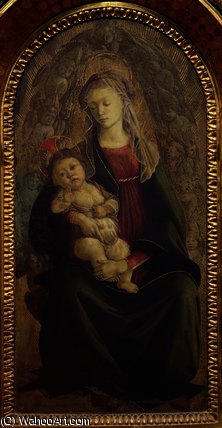
Sandro Botticelli's *Madonna and Child in Glory*: A Symphony of Grace and Divine Love
Sandro Botticelli’s *Madonna and Child in Glory* stands as a quintessential emblem of the Early Renaissance, a period defined by an unprecedented revival of classical ideals intertwined with profound spiritual contemplation. Painted circa 1480-1490, this exquisite depiction of the Virgin Mary cradling the infant Jesus is more than just a portrait; it’s a carefully constructed meditation on faith, beauty, and the boundless love at the heart of Christian belief. Botticelli, deeply embedded within Florence's artistic milieu – his formative years spent under Fra Filippo Lippi – masterfully translates this spiritual essence into a visual language characterized by ethereal grace and delicate detail.
- Subject Matter: The central focus is undeniably the Virgin Mary, presented with an almost otherworldly serenity. Her posture, her gaze fixed upon the Christ Child, speaks volumes of maternal devotion and protective love.
- Composition: The composition is meticulously balanced, drawing the viewer’s eye from Mary's serene face to the infant Jesus, who occupies a position of profound significance within the scene.
- Angelic Presence: Two angels flank the central figures, adding layers of symbolic meaning and reinforcing the divine nature of the event. Their presence elevates the scene beyond a simple portrait, transforming it into a sacred narrative.
Technique and Materials: Botticelli’s Signature Style
Botticelli's mastery lies in his ability to render human form with an unparalleled sense of elegance and fluidity. *Madonna and Child in Glory* exemplifies this skill through the use of tempera on panel, a technique favored by Florentine artists during this era. Tempera paint, composed of pigments suspended in egg yolk, allowed for exceptional detail and luminosity – qualities that contribute significantly to the painting’s ethereal quality. Note the subtle gradations of color, particularly in Mary's drapery, which create a sense of volume and movement. The artist’s meticulous attention to line, evident in the flowing robes and delicate features, further enhances the work’s visual impact.
- Color Palette: Botticelli employs a restrained yet luminous color palette dominated by blues, reds, and golds – colors traditionally associated with royalty, divinity, and spiritual enlightenment.
- Line Work: The painting is characterized by its flowing lines, which contribute to the overall sense of grace and movement.
Symbolism and Historical Context
*Madonna and Child in Glory* resonates deeply within the context of the late 15th century, a period marked by both religious fervor and burgeoning humanist thought. The depiction of Mary as a powerful, almost regal figure reflects the growing importance of female piety during this time. The angels themselves are not merely decorative elements; they represent divine messengers and protectors, integral to the narrative of salvation. The inclusion of seraphim (angelic beings with six wings) – hinted at in the painting’s title referencing *Madonna in Glory with Seraphim* – further emphasizes Mary's exalted status as a mediator between God and humanity. This work aligns with the broader artistic trends of the Florentine Renaissance, which sought to recapture the beauty and harmony of classical antiquity while simultaneously expressing profound religious devotion.
Emotional Impact and Artistic Legacy
Botticelli’s *Madonna and Child in Glory* continues to captivate viewers centuries after its creation. The painting's serene atmosphere, coupled with the tender depiction of mother and child, evokes a powerful sense of peace, reverence, and profound love. It is a testament to Botticelli’s artistic genius – his ability to translate complex theological concepts into a visually stunning and emotionally resonant work. A hand-painted reproduction offers an unparalleled opportunity to experience this masterpiece firsthand, bringing its timeless beauty and spiritual depth into your home or studio.