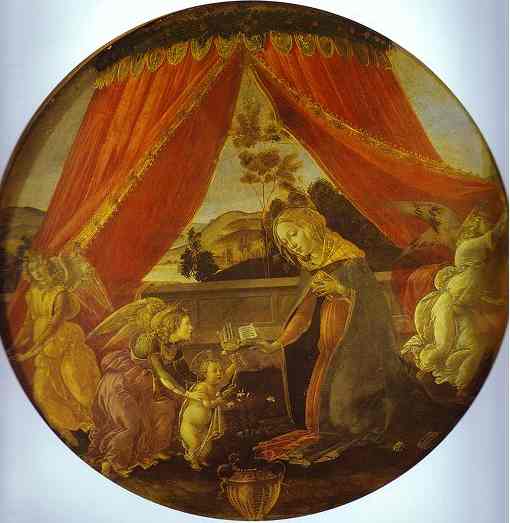
The
Madonna del Padiglione is a stunning oil painting on panel created by the renowned Italian artist
Sandro Botticelli in 1493. This masterpiece of the
Italian Renaissance period depicts the Virgin Mary giving her breast to the Christ Child while being supported by an angel. The rich baldachin over the scene gives the painting its name, as 'padiglione' means 'pavilion' in Italian.
Artistic Context
Sandro Botticelli was a prominent artist during the Early Renaissance period in Italy. His style is characterized by elegance, harmony, and a deep sense of spirituality. The
Madonna del Padiglione is a prime example of his artistic skill and mastery in capturing the essence of religious scenes. You can find more information about
Sandro Botticelli and his works on
ArtsDot.com.
Key Features of the Painting
The
Madonna del Padiglione is a beautiful depiction of the Virgin Mary with baby Jesus in her arms, surrounded by angels who appear to be singing or playing instruments. The scene takes place under a canopy, which adds an elegant touch to the composition. Some notable features of the painting include:
- The use of oil on panel as the medium, which gives the painting its rich and vibrant colors.
- The depiction of the Virgin Mary and baby Jesus in a serene and peaceful atmosphere.
- The presence of angels and a canopy, which adds to the overall sense of elegance and harmony.
You can also learn more about other famous paintings by
Leonardo da Vinci, such as the
Annunciation (detail) (10), on
ArtsDot.com.
The
Madonna del Padiglione is housed at the
Pinacoteca Ambrosiana in Milan, Italy. If you're interested in learning more about this painting and other works by
Sandro Botticelli, I recommend visiting
ArtsDot.com or checking out the Wikipedia page on
Sandro Botticelli.