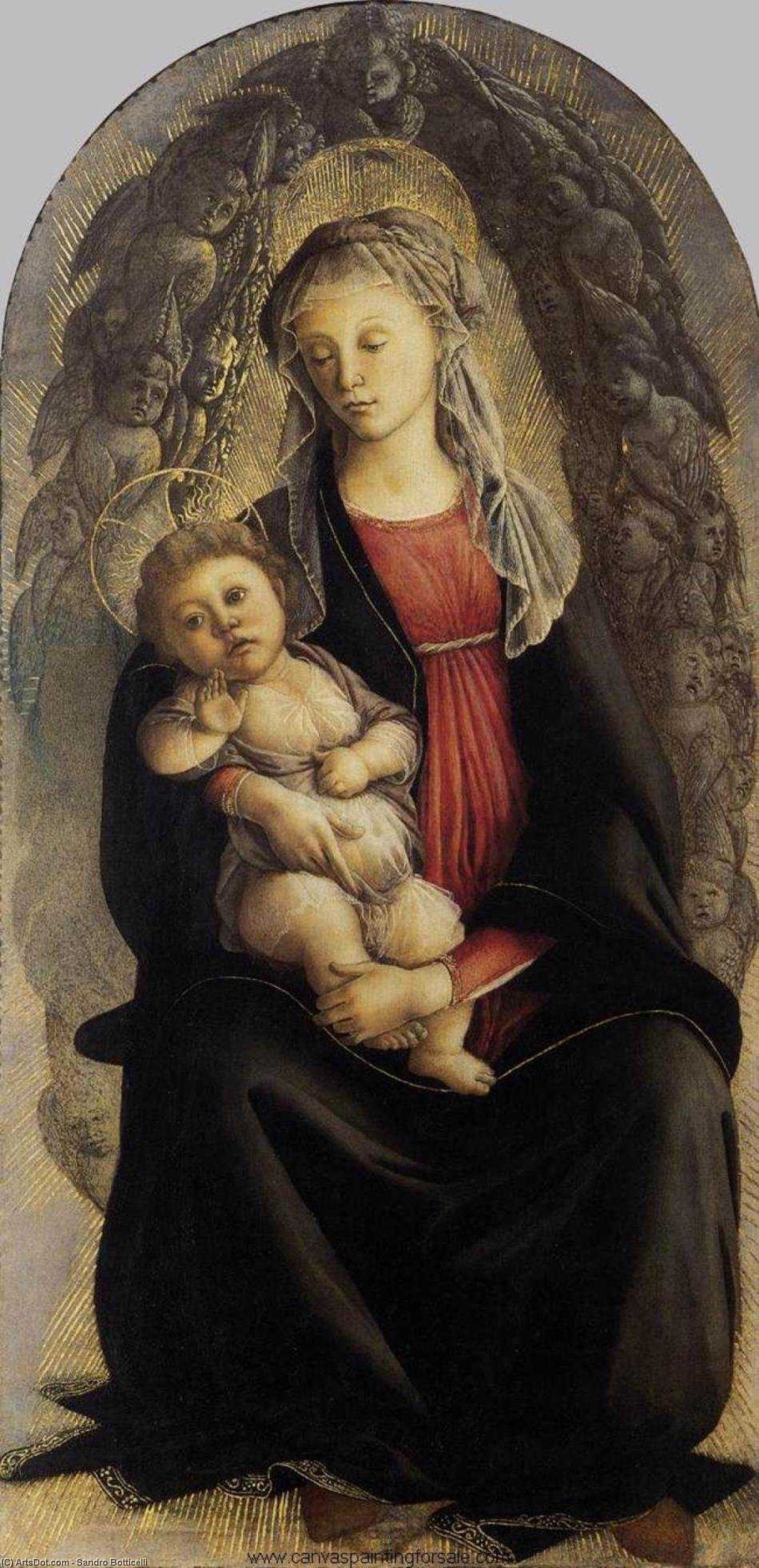
Madonna in Glory with Seraphim – A Botticelli Masterpiece
This exquisite hand-painted reproduction captures the ethereal beauty of Sandro Botticelli’s iconic 1469 painting, "Madonna in Glory with Seraphim." Originally conceived during a pivotal moment in the Florentine Renaissance, this work embodies the era's profound spiritual and artistic sensibilities. The image depicts the Virgin Mary, radiating serenity and divine grace, holding the infant Christ – a scene rich in symbolism and deeply resonant with religious devotion.
A Window into Botticelli’s Style
Botticelli’s signature style is immediately recognizable: elongated figures, flowing drapery, and an almost dreamlike quality. In "Madonna in Glory," this is brilliantly realized. Note the delicate rendering of Mary's robes, the graceful curve of her posture, and the luminous effect achieved through layered glazes – a technique perfected by Botticelli himself. The influence of Fra Filippo Lippi, Botticelli’s early teacher, is evident in the emphasis on elegant lines and a sense of serene composure. This painting showcases his mastery of tempera paint, allowing for subtle gradations of color and an unparalleled level of detail.
Symbolism and Spiritual Depth
The composition itself is laden with symbolic meaning. Mary’s enthronement upon clouds signifies her divine status as Queen of Heaven. The seraphim – angelic beings with six wings – surrounding her represent God's radiant glory and protection. The cruciform nimbus encircling the Christ Child immediately establishes his sacred role, foreshadowing his future sacrifice. Botticelli masterfully conveys the tension between Mary’s maternal love and her awareness of the suffering that awaits her son. The gaze of the infant Jesus, direct and engaging, invites a profound connection with the viewer – a timeless representation of innocence and divine grace.
Historical Context & Significance
Painted around 1470, this work reflects the burgeoning humanist movement in Florence, which sought to reconcile classical ideals with Christian faith. Botticelli’s art was deeply influenced by both Greek mythology (evident in the idealized beauty of his figures) and the latest developments in religious iconography. This painting is a testament to the artistic innovation of the early Renaissance, showcasing a shift away from the rigid formality of medieval art towards a more naturalistic and emotionally expressive style. It’s a remarkable example of how Botticelli used visual language to communicate complex theological ideas with profound beauty and emotional power – a legacy that continues to inspire awe centuries later.