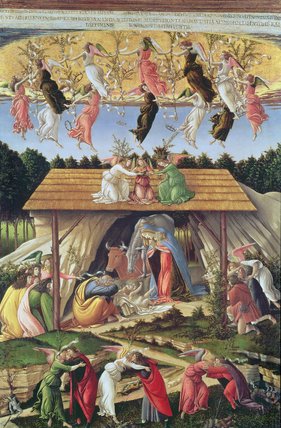
Botticelli’s ethereal Mystic Nativity embodies Renaissance grace—a serene depiction of Mary, Joseph, and angelic figures adorning a humble stable scene. This masterpiece captures the profound spiritual significance of Jesus' birth in Florence during the Early Renaissance.
Discover Sandro Botticelli (1445-1510), Renaissance master of 'Birth of Venus' & 'Primavera'. Explore his elegant style, mythological themes, and lasting influence on art history!
A Vision of Divine Grace: Botticelli’s Mystic Nativity
Botticelli's *Mystic Nativity*, painted circa 1480-1490, stands as one of the most iconic representations of the birth of Jesus Christ within the Early Renaissance. More than just a depiction of biblical narrative, it embodies the humanist ideals that characterized Florence during Lorenzo de Medici’s reign—a fascination with classical beauty intertwined with profound spiritual contemplation. The painting captures a serene tableau within a humble stable setting, meticulously rendered by Botticelli's masterful hand.
The Composition and Technique
Botticelli employed tempera on poplar wood, a technique favored for its luminosity and durability. This medium allowed him to achieve subtle gradations of color and create an ethereal quality that distinguishes itself from the bolder pigments often utilized in contemporaneous works. Observe the delicate layering of paint—particularly evident in Mary’s drapery—which contributes to the painting's luminous glow. The artist’s meticulous attention to detail extends beyond mere representation; he strives to convey a sense of palpable stillness and reverence, reflecting the profound solemnity of the occasion.
Historical Context: Florence at Its Zenith
Florence during Botticelli’s lifetime was experiencing an unprecedented period of artistic innovation and cultural prestige. The patronage of the Medici family fueled ambitious projects—including architectural marvels like Palazzo Vecchio—and fostered a climate where artists could explore humanist themes alongside religious iconography. *Mystic Nativity* reflects this intellectual fervor, drawing inspiration from classical sculpture and incorporating elements of Byzantine art – notably in the stylized depiction of the angels’ wings – demonstrating Botticelli's engagement with artistic traditions beyond his immediate surroundings.
Symbolism: Light, Humility, and Divine Revelation
The painting is replete with symbolic gestures designed to elevate its narrative beyond a simple recounting of events. The soft, diffused light emanating from the upper right corner symbolizes divine illumination—the radiant glory of God penetrating into the earthly realm. Mary’s posture exudes humility and grace, embodying the Virgin Mother's acceptance of God’s will. Furthermore, the inclusion of animals – oxen and sheep – harkens back to Old Testament prophecies concerning the Messiah’s humble origins. The manger itself serves as a focal point, representing Jesus’ incarnation—the embodiment of divine love made manifest in human form.
Emotional Impact: A Moment Frozen in Time
Ultimately, Botticelli's *Mystic Nativity* transcends mere visual representation; it evokes a powerful emotional response. Its serene beauty and contemplative atmosphere invite viewers to contemplate the miracle of birth and its significance within the Christian faith. The painting’s enduring appeal lies in its ability to capture a timeless essence—a profound reverence for divine grace and an affirmation of humanity's capacity for spiritual wonder. It remains a testament to Botticelli’s artistic genius and a cornerstone of Early Renaissance art history.