Introduction to Sandro Botticelli
Sandro Botticelli, born Alessandro di Mariano Filipepi, was an Italian painter of the Early Renaissance. He is best known for his mythological works, such as
The Birth of Venus and Primavera. Botticelli's style is characterized by its graceful figures, delicate colors, and a sense of dreamlike atmosphere.
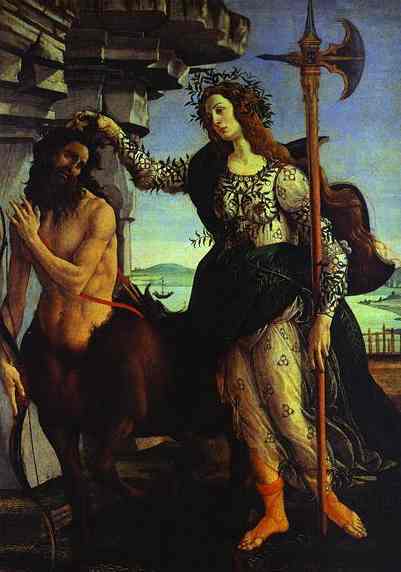
Pallas Camilla and the Centaur: A Masterpiece of Italian Renaissance
Pallas Camilla and the Centaur is a tempera on canvas painting by Sandro Botticelli, created around 1482. The painting is housed in the Uffizi Gallery of Florence, Italy. This masterpiece is an excellent example of Botticelli's style and his ability to bring mythological figures to life.
Interpretation of Pallas Camilla and the Centaur
The painting depicts a scene from Virgil's
Aeneid, in which the warrior maiden Camilla, accompanied by her companion Acca Larentia, encounters a centaur. The centaur is shown as a symbol of chaos and violence, while Camilla represents purity and innocence. The painting can be interpreted as an allegory of the triumph of good over evil.
The Significance of Pallas Camilla and the Centaur
Pallas Camilla and the Centaur is a significant work in the history of art, as it reflects the humanist ideals of the Italian Renaissance. The painting demonstrates Botticelli's deep understanding of classical mythology and his ability to convey complex ideas through visual means.
Conclusion
In conclusion,
Pallas Camilla and the Centaur is a masterpiece of Italian Renaissance art, showcasing Sandro Botticelli's unique style and his deep understanding of classical mythology. The painting is an excellent example of the humanist ideals that characterized the Italian Renaissance and continues to inspire artists and scholars today.
Where to Find Hand-Made Oil Paintings Reproductions
If you are interested in owning a hand-made oil paintings reproduction of
Pallas Camilla and the Centaur, visit our website at
https://ArtsDot.com. We offer high-quality, custom-made reproductions of famous artworks, including Botticelli's masterpieces.
References