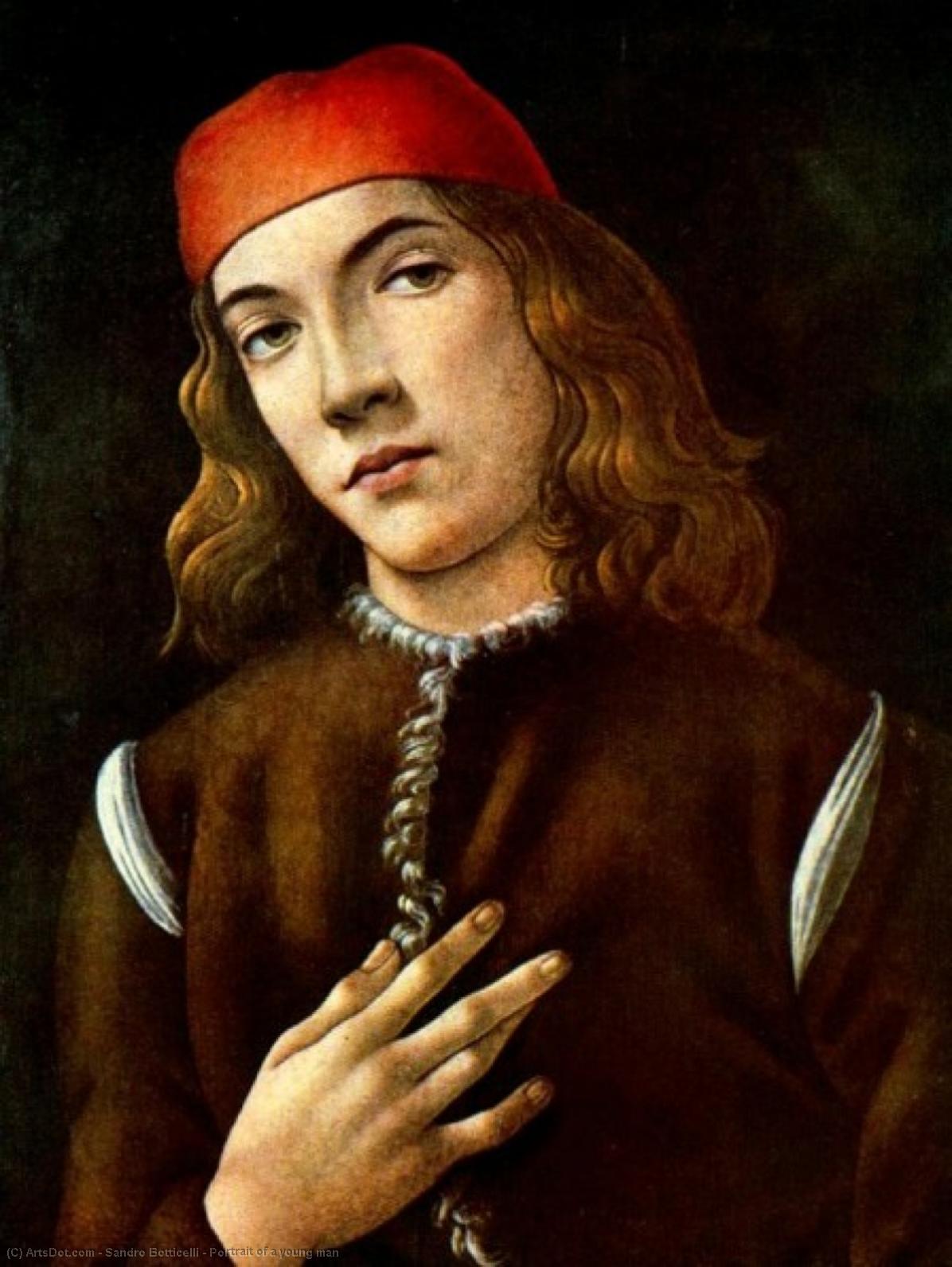
Portrait of a Young Man
The Portrait of a Young Man by Sandro Botticelli stands as an emblem of Renaissance artistic innovation—a deceptively simple depiction that encapsulates profound humanist ideals and masterful technique. Created around 1483, this painting resides within the esteemed National Gallery in Washington D.C., offering visitors a glimpse into the aesthetic sensibilities of Florence during its golden age. Botticelli’s skill lies not merely in capturing likeness but in conveying an aura of contemplative grace—a characteristic that distinguishes it from earlier portraiture traditions.
## The Subject and Composition
Botticelli’s subject is presented head-on, a bold departure from prevailing conventions where figures were typically viewed in profile. This frontal pose immediately establishes a connection between the viewer and the depicted young man, fostering an intimacy rarely achieved in art of the period. He wears a scarlet hat adorned with gilded trim—a deliberate choice reflecting the wealth and status associated with Florentine nobility—and his long hair frames his face, lending him an air of youthful idealism. Beneath the crimson hue lies a carefully constructed composition: the young man occupies the central space, balanced by subtle architectural elements that contribute to the overall sense of harmony. The artist’s meticulous attention to detail extends beyond mere representation; it seeks to imbue the image with emotional resonance.
## Artistic Significance
Botticelli's approach to portraiture exemplifies the humanist spirit of the Early Renaissance—a movement characterized by a renewed interest in classical ideals and an emphasis on human dignity. Unlike portraits that prioritized formal grandeur, Botticelli prioritizes psychological depth, capturing not just physical appearance but also inner character. The use of tempera paint on wood—a technique favored by Florentine artists—results in luminous colors and remarkable textural richness. Furthermore, Botticelli’s masterful handling of light and shadow enhances the portrait's expressive power, creating a captivating interplay between illumination and darkness that draws the eye inward.
## Context within Botticelli's Oeuvre
Botticelli’s artistic output spanned diverse genres, from mythological narratives to religious commissions—demonstrating his versatility as an artist. His celebrated series “The Story of Nastagio degli Onesti,” housed at Museo del Prado in Madrid, Spain, showcases his ability to weave complex tales into visual form. This ambitious undertaking underscores Botticelli's commitment to storytelling and his mastery of narrative painting—skills honed through years of experience and informed by humanist scholarship. Consider also Botticelli’s “The Birth of Venus” and “Primavera,” masterpieces that embody the Renaissance fascination with beauty and allegory, cementing Botticelli’s place as one of the foremost artists of his time.
## Relevance and Legacy
The Portrait of a Young Man transcends its historical context, continuing to inspire admiration for its elegance and psychological insight. Botticelli's influence can be discerned in subsequent generations of painters—particularly Raphael—who adopted his refined style and humanist sensibilities. Raphael’s “Madonna with Beardless St Joseph,” displayed at Museo del Prado, exemplifies the enduring legacy of Botticelli’s artistic vision—a testament to the transformative power of art to capture the essence of human experience. For those eager to delve deeper into Renaissance artistry or explore reproductions of iconic artworks like Botticelli's masterpieces,
The Italian Renaissance Art Movement provides a comprehensive introduction to this pivotal period in art history.
ArtsDot.com offers high-quality, handmade oil painting reproductions of famous artworks, including those by Sandro Botticelli. Visit our website to explore and purchase these beautiful pieces.
For more information on the Italian Renaissance and its artists, refer to
Wikipedia's article on the Italian Renaissance.