A Portrait of Youthful Grace: Botticelli’s Masterpiece
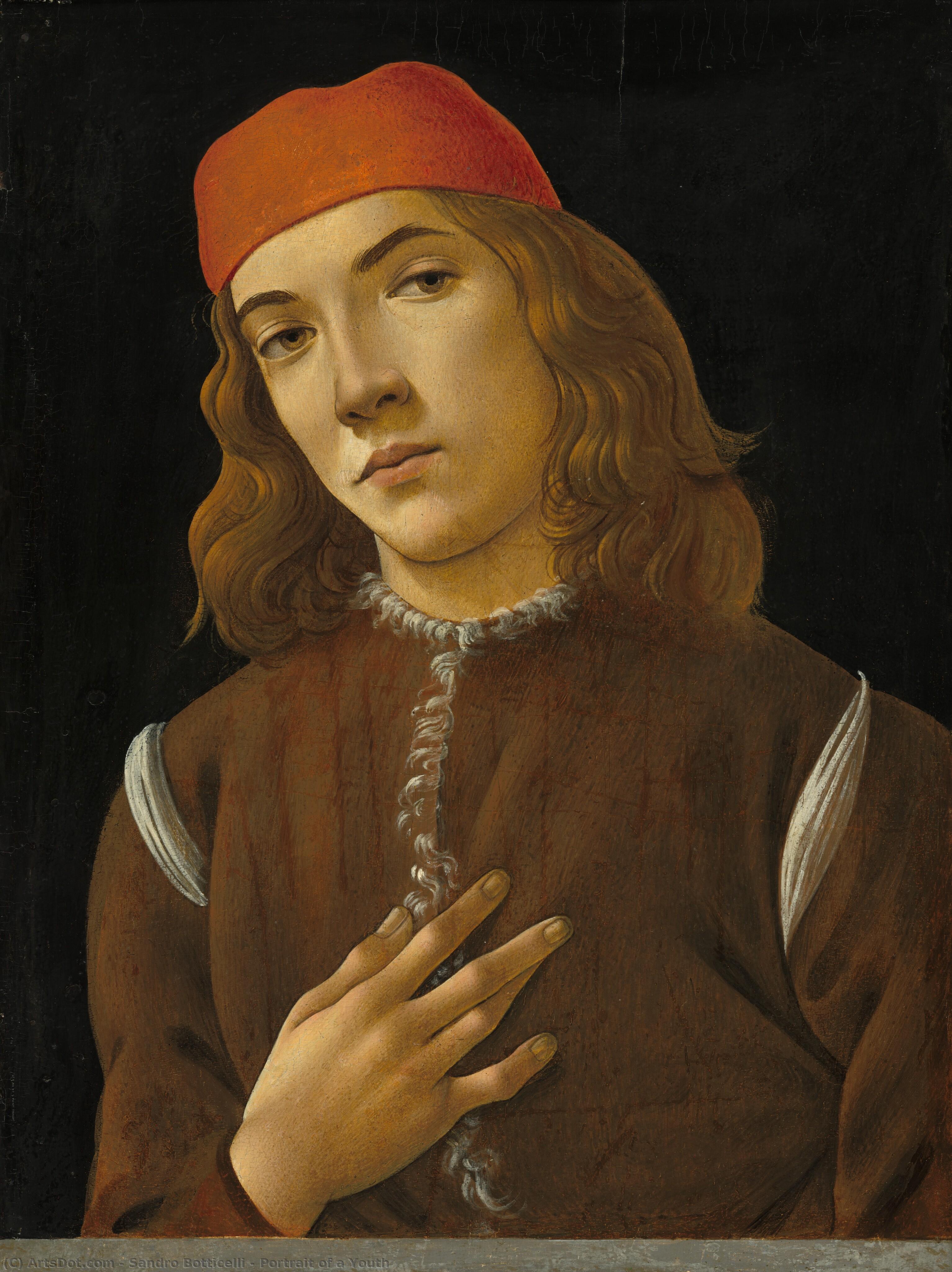
Sandro Botticelli's "Portrait of a Youth," painted in Florence around 1485, is more than just a depiction of a young man; it’s a window into the burgeoning artistic and social landscape of the Early Renaissance. This vertical composition, rendered in tempera on panel against a stark black backdrop, immediately draws the viewer into an intimate encounter with its subject – a figure radiating quiet contemplation and understated elegance. The painting's power lies not in dramatic gesture or opulent display, but rather in the subtle details that reveal Botticelli’s masterful understanding of human form and psychological nuance.
The young man himself is presented with remarkable composure. His smooth, pale skin and shoulder-length, dark blond hair are framed by a narrow gray stone ledge, suggesting a sense of enclosure or perhaps a deliberate stage for his presence. Botticelli’s technique is immediately apparent: the delicate layering of tempera creates a luminous quality, highlighting the textures of the fabric and the subtle variations in tone across the skin. The tilt of his head, directed slightly to our left, coupled with the direct gaze into our right – a classic compositional device – establishes an immediate connection between the viewer and the subject, inviting us to share in his quiet observation.
A Study in Renaissance Detail
Botticelli’s meticulous attention to detail is evident throughout the portrait. The arched eyebrow above his brown eyes speaks of intelligence and perhaps a hint of melancholy, while the long, straight nose and pale pink lips contribute to an overall impression of refined beauty. Notably, he wears a crimson-red, flat-topped cap – a fashionable accessory of the period – and a simple brown garment with glimpses of white linen at the shoulder seams, hinting at a modest yet dignified social standing. The careful rendering of the neckline, adorned with white lining, suggests a touch of luxury or perhaps even protection, adding another layer to the portrait’s narrative.
The subject's hand, held delicately to his chest with fingers overlapping in a gesture of quiet contemplation – a pose frequently seen in Renaissance portraits – is particularly striking. This subtle action conveys a sense of inner reflection and self-awareness, elevating the portrait beyond mere likeness and into the realm of psychological exploration. The choice of this specific gesture speaks volumes about Botticelli’s ability to capture not just appearance but also the essence of his subject's character.
Contextualizing a Renaissance Portrait
Created during a period of immense artistic innovation, “Portrait of a Youth” reflects the evolving trends of the Florentine school. Botticelli, trained initially by Fra Filippo Lippi, was deeply influenced by the legacy of predecessors like Donatello and Masaccio, while simultaneously forging his own distinctive style characterized by lyrical grace and an emphasis on idealized beauty. The painting’s creation coincided with a period of significant political and social change in Florence – the rise of the Medici family and their patronage of the arts – providing a fertile ground for artistic experimentation and innovation.
As art historian Bernard Berenson noted, this portrait exemplifies Botticelli's ability to capture the essence of youthful beauty and introspection. Further research reveals that similar features have been interpreted as early depictions of juvenile arthritis or Marfan syndrome, adding another layer of intrigue to this compelling work. The painting’s enduring appeal lies in its timeless depiction of youth, contemplation, and the quiet dignity of human experience – qualities that continue to resonate with viewers centuries after its creation.
Bringing Botticelli Home
ArtsDot offers meticulously crafted hand-painted reproductions of “Portrait of a Youth,” allowing you to bring this iconic Renaissance masterpiece into your home or office. Our skilled artists replicate Botticelli’s delicate technique and nuanced details with the utmost precision, ensuring that your reproduction captures the painting's original beauty and emotional impact. Available in various sizes and framing options, our reproductions provide an authentic and affordable way to experience the enduring legacy of Sandro Botticelli.