A Symphony of Myth and Renaissance Grace
Sandro Botticelli’s Primavera stands as an eternal emblem of the High Renaissance, a period defined by a profound fascination with classical mythology and the luminous ideals of humanism. Housed within the prestigious Uffizi Gallery in Florence, this monumental panel painting transcends mere depiction to become a meditative exploration of rebirth, beauty, and divine harmony. As one gazes upon this masterpiece, they are transported into an idyllic, enchanted garden where the boundaries between the earthly and the divine blur. The scene is populated by nine figures representing deities and mythological creatures, each contributing to a narrative deeply rooted in Overture’s Metamorphoses. At its heart, the goddess Venus gazes serenely outward, presiding over a landscape that breathes with the vitality of a new season.
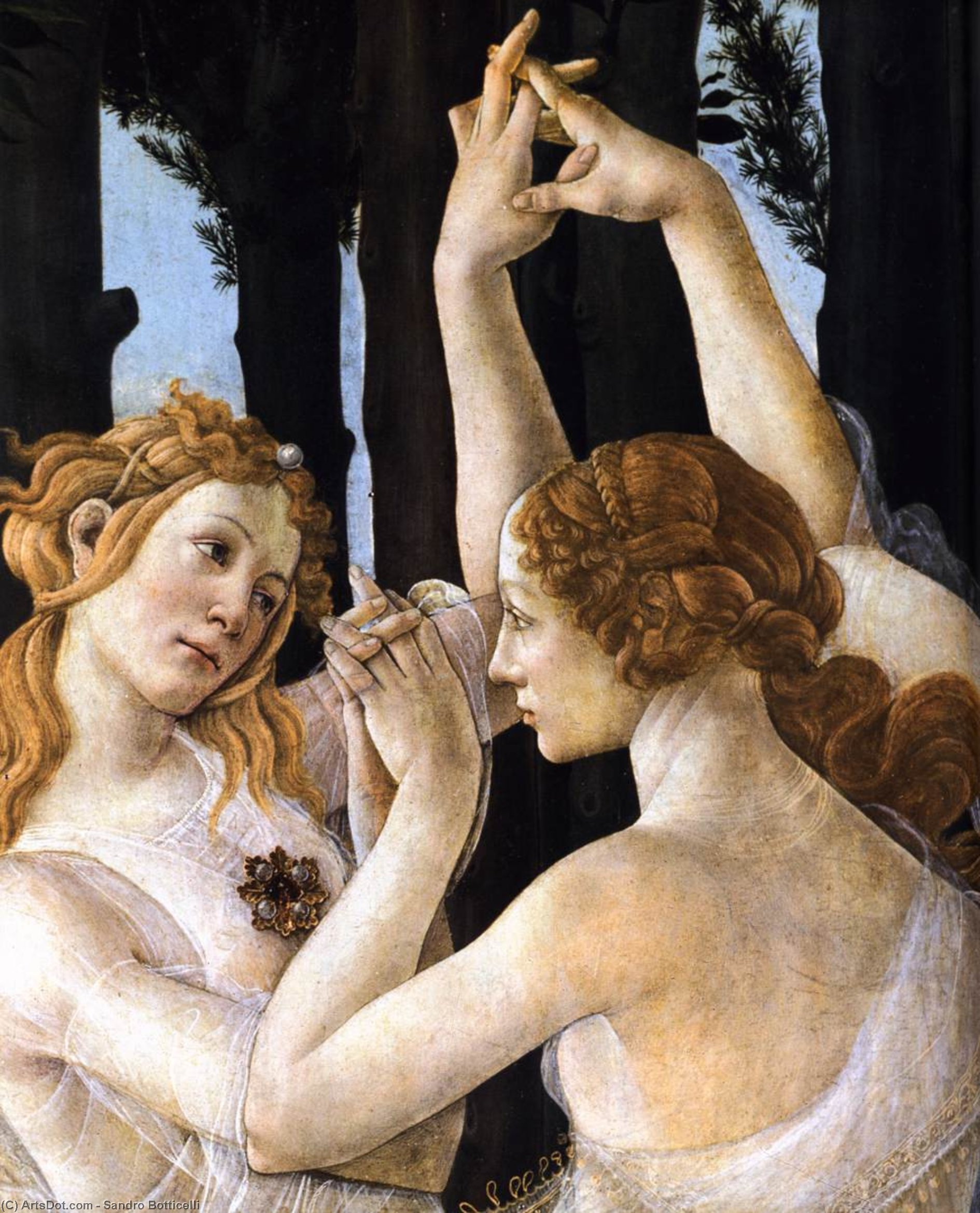
The painting captures a fleeting, magical moment of connection between nature and the divine. In this specific detail, we witness the delicate interaction between figures amidst a lush, verdant setting. One woman appears to hold a bird, her movements graceful and light, while another looks on with an expression of quiet interest. This intimate exchange is set against a backdrop of scattered birds and ancient trees, creating a serene and peaceful atmosphere that invites the viewer to pause and reflect. For the collector or interior designer, such a piece offers more than just visual beauty; it provides a window into a world of tranquility and sophisticated elegance, making it an ideal centerpiece for spaces designed to inspire contemplation and peace.
Mastery of Line and Botanical Precision
Botticelli’s signature style is a masterclass in the use of delicate lines and ethereal forms. Unlike the heavier, more grounded figures found in some of his contemporaries' works, Botticelli’s subjects possess an almost otherworldly elegance, characterized by flowing drapery and graceful, rhythmic poses. This technique reflects the humanist emphasis on idealized beauty that was prevalent during the Florentine Renaissance. Executed with meticulous care using tempera paint on a poplar wood panel, the artwork showcases a remarkable attention to detail that is particularly evident in its botanical accuracy. The artist skillfully blended pigments to achieve subtle gradations of color, creating a luminous surface that captures the vibrant, flickering light of springtime.
The technical brilliance of the piece lies in its ability to balance complex symbolism with naturalistic observation. Beyond the recognizable mythological figures, the painting contains at least 42 identifiable species of plants, including various green and flowering specimens. This commitment to botanical realism serves to ground the mythological allegory in a tangible, living world. For those seeking high-quality reproductions, this level of detail is what makes a Botticelli piece so captivating; every brushstroke contributes to a larger tapestry of life, ensuring that the artwork remains visually engaging from every angle and under any lighting condition.
A Legacy of Neoplatonic Thought and Timeless Decor
To understand Primavera is to understand the intellectual pulse of 15th-century Florence. Created during the illustrious reign of Lorenzo de' Medici, the painting serves as a visual manifesto for Neoplatonic philosophy—a belief system that sought to reconcile Christian theology with the rediscovered wisdom of pagan mythology. The figures within the grove are not merely characters in a myth; they are symbols of virtues, love, and the cyclical nature of life itself. This layering of meaning ensures that the artwork remains intellectually stimulating long after the initial visual impact has been felt.
In the realm of modern interior design, bringing a reproduction of such a masterpiece into a home or gallery space offers an unparalleled sense of cultural prestige. The soft palette and rhythmic composition of Primavera harmonize beautifully with both classical and contemporary decor, providing a touch of historical grandeur that elevates any room. Whether used to anchor a formal dining area or to add a layer of sophisticated storytelling to a private study, this work continues to serve as a testament to the enduring power of beauty, making it a timeless choice for those who appreciate the intersection of history, art, and exquisite craftsmanship.