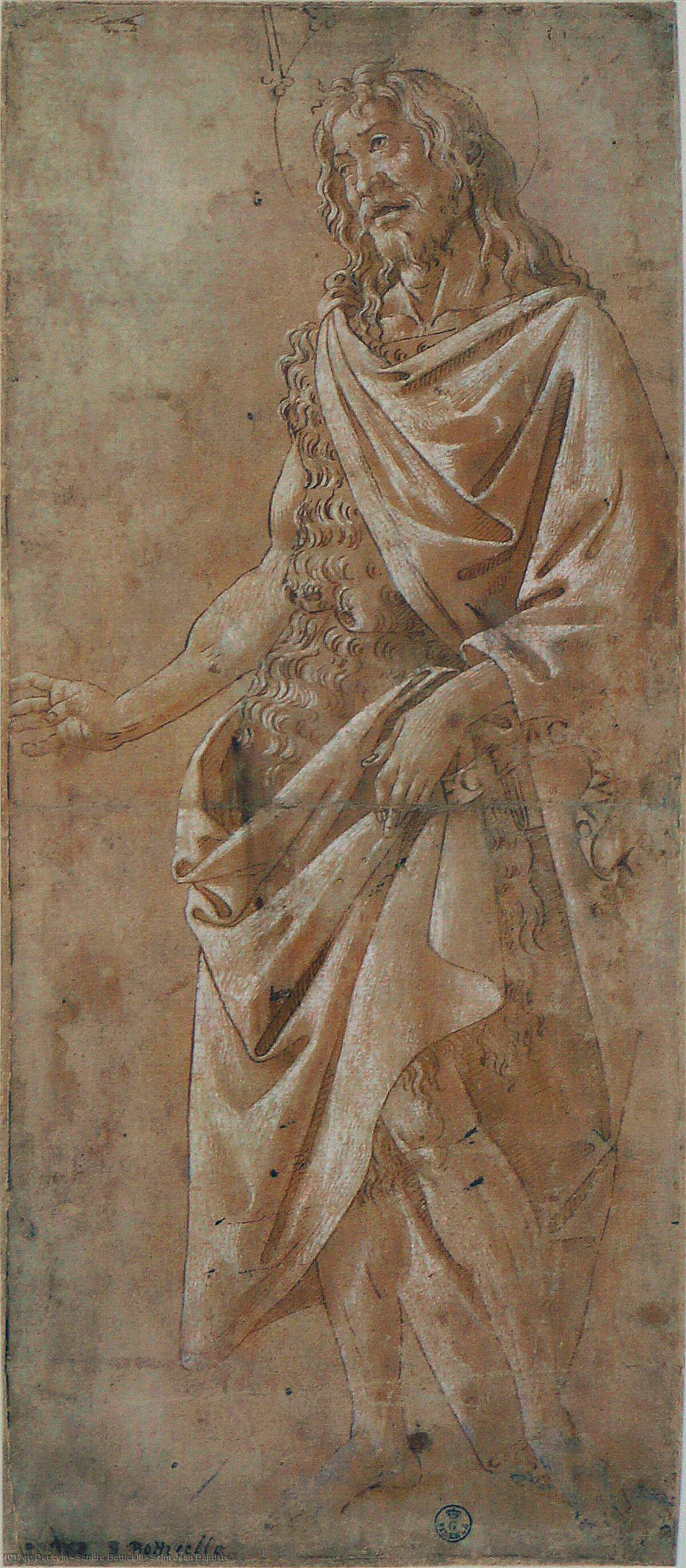
A Moment of Serenity: Botticelli's Saint Jean Baptiste
Sandro Botticelli’s “Saint Jean Baptiste,” painted circa 1490, offers a profound glimpse into the contemplative spirit of the Early Renaissance. This captivating depiction, featuring a young man – likely John the Baptist – stands as a testament to Botticelli's mastery of line and his ability to imbue even seemingly simple scenes with an extraordinary sense of peace and spiritual depth. The painting’s serene atmosphere invites viewers to contemplate themes of faith, solitude, and the connection between humanity and nature, hallmarks of the Florentine artistic vision during this transformative period.
- Subject Matter: The central figure is undoubtedly John the Baptist, a pivotal prophet in Christian tradition. His youthful appearance and solitary stance suggest a period of reflection and preparation for his role as herald of Christ.
- Setting: The beach setting, rendered with remarkable detail, isn't merely a backdrop; it’s integral to the narrative. The water’s edge symbolizes transition – between earthly existence and the divine realm – a common motif in Renaissance art.
Botticelli’s Technique and Style
Botticelli’s distinctive style is immediately recognizable in “Saint Jean Baptiste.” He employs a delicate, almost ethereal, touch, utilizing thin washes of tempera paint to create luminous effects and subtly defined forms. The elongated proportions characteristic of his work – particularly evident in the figure's limbs – contribute to an impression of grace and idealized beauty. Note the meticulous rendering of the fabric of the robe, achieved through careful layering and subtle shading, a technique that demonstrates Botticelli’s dedication to realism within a stylized framework.
- Tempera on Panel: The painting was executed using tempera paint on a wooden panel, a common medium for Florentine artists at the time.
- Linear Emphasis: Botticelli's signature use of precise lines defines the figure’s form and adds to the work’s overall sense of clarity and composure.
Symbolism and Historical Context
"Saint Jean Baptiste" was created during a period of immense intellectual and artistic ferment in Florence, largely fueled by the patronage of the Medici family. The rise of humanism encouraged a renewed interest in classical antiquity, influencing artists to explore themes of mythology and religious narratives with greater depth and complexity. John the Baptist himself held significant symbolic weight – representing repentance, baptism, and the coming of Christ. The inclusion of other figures in the background suggests a broader narrative context, perhaps alluding to the events leading up to Jesus’s birth. The painting's creation aligns perfectly with Botticelli's exploration of religious iconography within a humanist framework.
Emotional Impact and Artistic Legacy
More than just a depiction of a biblical figure, “Saint Jean Baptiste” evokes a powerful sense of tranquility and introspection. The subject’s gaze, directed towards the horizon, invites viewers to share in his contemplative mood. Botticelli's ability to capture this emotional resonance is a testament to his artistic genius and ensures that this painting continues to captivate audiences centuries later. A hand-painted reproduction offers an unparalleled opportunity to experience the beauty and serenity of this iconic work firsthand.