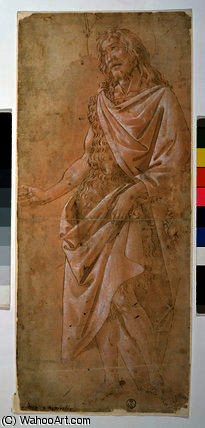
A Preliminary Gesture of Divinity: Botticelli’s Study of St. John the Baptist
Botticelli's "Study of St. John the Baptist," a deceptively simple charcoal drawing executed around 1480, offers a fascinating glimpse into the creative process behind one of Florence’s most celebrated Renaissance masterpieces. More than just a preparatory sketch for the iconic “Madonna and Child with Saint John the Baptist,” this artwork embodies Botticelli's signature style—characterized by graceful lines, idealized forms, and an exquisite sensitivity to light and texture—providing invaluable insight into his artistic vision.
- Subject Matter & Composition: The drawing depicts a male figure draped in flowing robes, positioned in a posture that suggests both contemplation and offering. While the precise identity of the subject remains debated amongst scholars – often interpreted as Saint John the Baptist himself – the pose speaks to themes of humility, piety, and divine grace—concepts central to Renaissance spirituality. The vertical orientation emphasizes the figure’s elongated form, directing the viewer's gaze upwards towards a perceived source of illumination.
- Style & Technique: Botticelli’s approach aligns perfectly with the prevailing artistic conventions of his time. Employing dry point or charcoal on paper—a technique favored for capturing subtle tonal variations—he achieves remarkable realism through meticulous hatching and cross-hatching. These shading methods skillfully delineate musculature, drapery folds, and facial contours, conveying a palpable sense of volume and depth without resorting to complex perspective.
- Historical Context: Created during the High Renaissance, “Study of St. John the Baptist” reflects the humanist ideals that permeated Florentine culture. Botticelli’s artistic endeavors were deeply influenced by classical influences—particularly Greek sculpture—resulting in a harmonious blend of naturalism and elegance. The drawing served as a crucial step in realizing his larger commission for Madonna Cecilia Gallerani, demonstrating Botticelli's dedication to capturing idealized beauty and conveying profound spiritual emotion.
- Symbolism & Emotional Impact: Beyond its technical prowess, the artwork resonates with symbolic significance. The drapery—often interpreted as representing purity and modesty—further underscores the figure’s moral virtue. The subtle shading captures a moment of serene stillness, inviting contemplation and fostering an appreciation for Botticelli's masterful ability to evoke emotion through understated visual language.
- Replicas & Inspiration: Today, reproductions of “Study of St. John the Baptist” continue to inspire artists and designers alike. Its refined aesthetic—rooted in Renaissance drawing traditions—serves as a testament to Botticelli’s enduring legacy and offers collectors an opportunity to own a piece of art history.