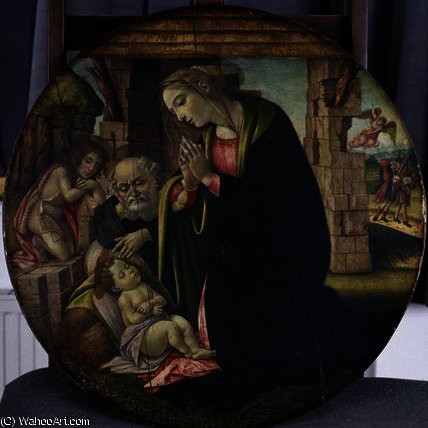
A Tender Moment of Devotion: Botticelli’s “The Adoration Of Jesus By Mary And Joseph”
Sandro Botticelli, a name synonymous with the grace and ethereal beauty of the Early Renaissance, invites us into an intimate scene of faith and familial love with his painting, “The Adoration Of Jesus By Mary And Joseph.” While details surrounding this specific work remain somewhat elusive – its precise date and current location are not widely documented – it embodies the core tenets of Botticelli’s artistic vision. The composition centers on the Virgin Mary tenderly cradling the infant Jesus, her posture one of profound reverence and maternal affection. Joseph stands nearby, a quiet pillar of support, his presence grounding the scene in earthly devotion. The painting isn't merely a depiction of a biblical event; it is an exploration of human emotion filtered through the lens of religious belief.
Echoes of Florentine Renaissance
Born Alessandro di Mariano di Vanni Filipepi in Florence around 1445, Botticelli flourished within the vibrant artistic milieu of the Medici court. His style emerged as a delicate bridge between the fading Gothic traditions and the burgeoning humanist ideals of the Early Renaissance. He wasn’t solely focused on strict realism; instead, he prioritized elegance of line, graceful figures, and a subtle use of color to convey emotion and narrative. This painting exemplifies that approach. The background, featuring what appears to be a castle-like structure in the distance, isn't rendered with photographic precision but rather serves as an atmospheric backdrop enhancing the spiritual weight of the foreground scene. The inclusion of benches and a chair subtly suggests a domestic setting, bringing a relatable human element to this sacred moment. Botticelli’s training as a goldsmith – noted by Giorgio Vasari – is evident in the meticulous detail applied to the figures' drapery and expressions.
Symbolism Woven into Every Detail
The Adoration of Jesus is steeped in religious symbolism, a hallmark of Renaissance art. The very act of adoration signifies acceptance of Christ’s divine nature and his role as savior. Mary’s kneeling posture underscores her humility and devotion, while Joseph's protective stance symbolizes his earthly guardianship. While the specific iconography within this particular painting requires further study, Botticelli frequently employed symbolic elements in his works – often drawing from both Christian theology and classical mythology. The architectural details in the background may allude to the New Jerusalem, a symbol of heavenly perfection. Considering Botticelli’s other famous depictions of religious scenes, such as his numerous “Adoration of the Magi” paintings, it's reasonable to assume that this work also carries layers of hidden meaning intended to enrich the viewer’s understanding and spiritual experience.
A Timeless Appeal for Modern Interiors
The enduring appeal of Botticelli’s art lies in its ability to transcend time. “The Adoration Of Jesus By Mary And Joseph,” even as a reproduction, brings a sense of serenity and grace into any space. Its soft palette and harmonious composition make it suitable for a variety of interior styles – from traditional to contemporary. The painting's focus on familial love and spiritual devotion resonates universally, offering a moment of quiet contemplation in the midst of modern life. A high-quality hand-painted reproduction allows art lovers to experience the beauty and emotional depth of Botticelli’s masterpiece firsthand, adding a touch of Renaissance elegance to their homes or collections.