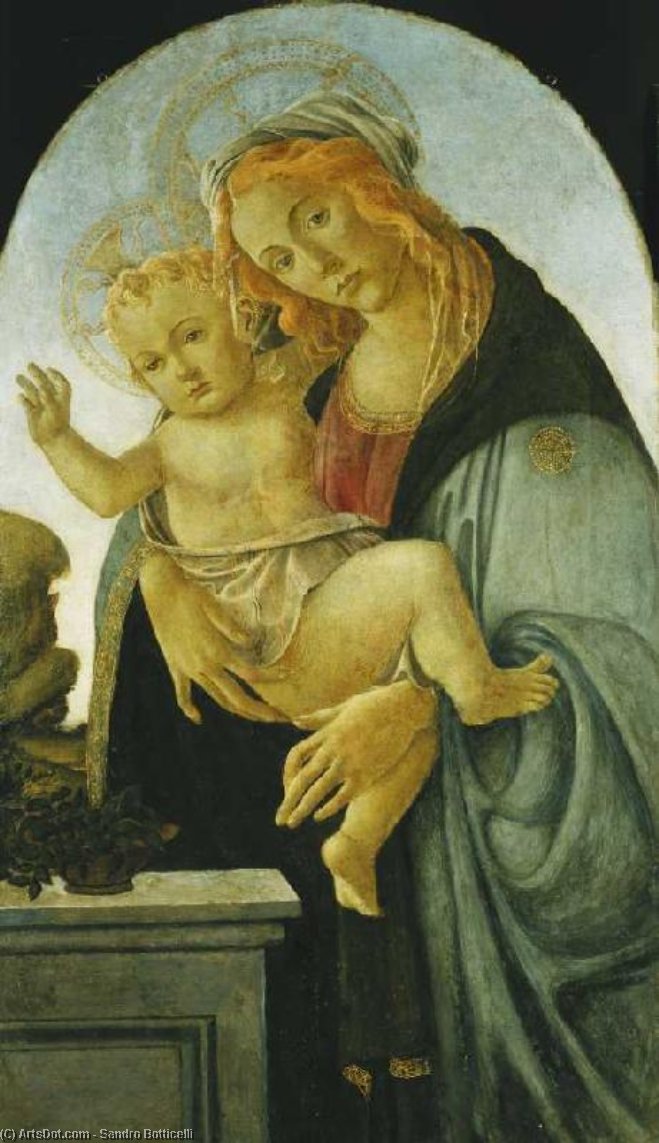
A Timeless Reverie: Botticelli’s The Madonna And Child
Sandro Botticelli's "The Madonna And Child" stands as an enduring emblem of Renaissance piety and artistic grace, a work that transcends mere representation to embody the profound spiritual connection between mother and child. Painted during the height of Florence’s cultural blossoming – roughly around 1480 – this masterpiece reflects the era’s fascination with classical ideals while firmly rooted in Christian iconography. Botticelli, deeply influenced by his apprenticeship under Fra Filippo Lippi and later patronized by the powerful Medici family, masterfully blends technical skill with a distinctly lyrical style that would come to define his legacy.
- Subject Matter: The painting’s central focus is undeniably Mary, depicted in flowing robes of deep blue – a color historically associated with royalty and divinity – holding the infant Jesus. Her serene expression and gentle posture radiate an unparalleled sense of maternal love and protection.
- Composition & Technique: Botticelli's signature style is immediately apparent in the painting’s elongated figures, delicate lines, and ethereal atmosphere. He employs tempera on panel, a technique favored during this period, which allows for vibrant colors and subtle gradations. The use of gold leaf adds to the overall luminosity and reinforces the sacred nature of the scene.
- Angelic Presence: Three angels flank Mary, their presence adding layers of spiritual significance. These celestial beings are not merely decorative elements; they represent divine assistance and the eternal guardianship surrounding the Madonna and Child. The angel above them further emphasizes this protective aura.
Symbolism Woven into Sacred Space
Beyond its immediate beauty, "The Madonna And Child" is rich in symbolic meaning, reflecting the complex theological beliefs of the time. The blue robe, as mentioned previously, symbolizes Mary’s purity and divine status. The inclusion of the clock in the background – a relatively rare element in early Renaissance depictions of the Virgin – introduces a subtle meditation on mortality and the passage of time, reminding viewers of the eternal nature of Christ's sacrifice. The positioning of the figures also holds significance; the pyramidal composition creates stability and harmony, reflecting the desire for order and balance prevalent in Renaissance art.
Historical Context & Botticelli’s Florentine World
Botticelli painted this work during a period of immense political and artistic change in Florence. The rise of the Medici family as powerful patrons fueled an unprecedented flourishing of creativity, attracting artists from across Italy and Europe. Botticelli himself was deeply embedded within this vibrant cultural landscape, working not just for private commissions but also contributing to public celebrations and religious festivals. His connection to the humanist movement, which emphasized classical learning and human potential, is evident in his idealized depictions of figures – particularly Mary – reflecting a renewed interest in ancient Greek and Roman art.
Emotional Impact & Artistic Legacy
"The Madonna And Child" continues to captivate viewers centuries after its creation. Its serene beauty, coupled with the profound emotional resonance of the subject matter, evokes feelings of peace, reverence, and spiritual connection. Botticelli’s masterpiece remains a cornerstone of Western art history, influencing generations of artists and solidifying his place as one of the most celebrated figures of the Early Renaissance. A hand-painted reproduction offers an unparalleled opportunity to experience this timeless work of art in exquisite detail.