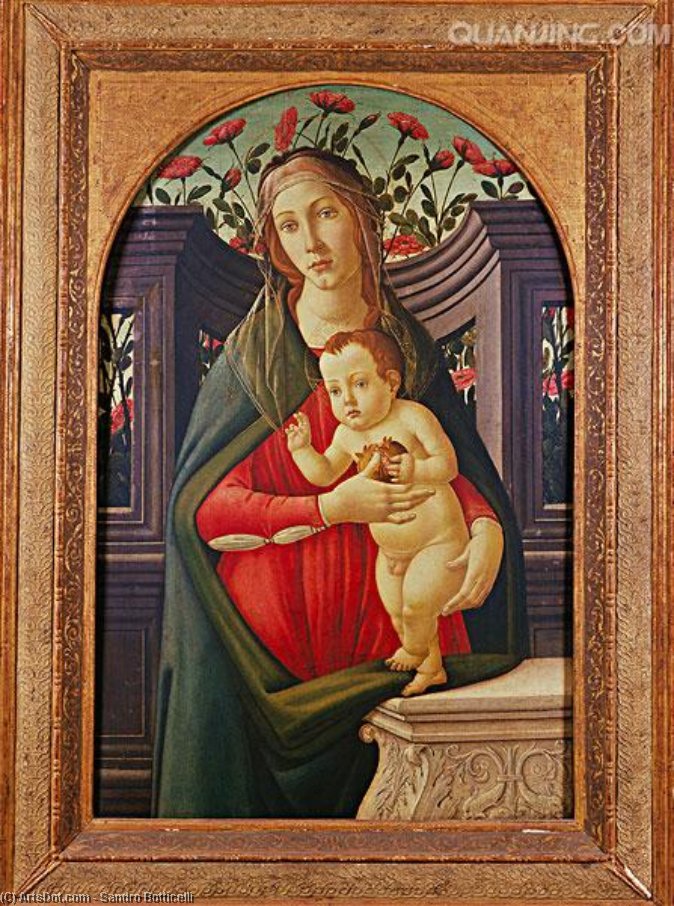
Discover Sandro Botticelli’s ‘Madonna & Child’! A Renaissance masterpiece featuring serene figures, floral backdrop & meticulous detail. Explore this iconic oil painting's beauty and symbolism.
Discover Sandro Botticelli (1445-1510), Renaissance master of 'Birth of Venus' & 'Primavera'. Explore his elegant style, mythological themes, and lasting influence on art history!
The Madonna And Child In A Niche Decorated With Roses – Sandro Botticelli
Botticelli’s “Madonna with child in a niche decorated with roses” stands as an emblem of Florentine Renaissance idealism, capturing the spirit of its time and resonating powerfully with viewers centuries later. Painted circa 1480-82 during Botticelli's most prolific period—a moment when he was at the zenith of his artistic reputation—this exquisite oil painting transcends mere representation; it embodies a profound meditation on faith, beauty, and maternal tenderness.
A Symphony of Line and Color: Style and Technique
Botticelli’s distinctive style is immediately recognizable by its graceful linearity and delicate coloration. Departing from the rigid conventions of Gothic art, he embraced a humanist aesthetic that prioritized clarity and elegance—influences stemming directly from Leonardo da Vinci and Michelangelo. The painting utilizes meticulous brushwork, layering thin glazes of pigment to achieve luminous surfaces and subtle tonal variations. This technique is particularly evident in the drapery folds, which ripple with an ethereal fluidity, conveying movement without resorting to dramatic perspective. Botticelli’s masterful handling of color—primarily muted reds, blues, and greens—creates a harmonious palette that enhances the painting's serene atmosphere. The artist skillfully employs hatching and cross-hatching to sculpt form, emphasizing the contours of Mary’s face and torso while subtly defining the architectural niche framing the central figures.
Historical Context: Florence at the Dawn of Humanism
The artwork emerged from Florence during a transformative era—the High Renaissance—characterized by an unprecedented revival of classical ideals and a burgeoning interest in human anatomy and observation. Botticelli's patronage came primarily from Lorenzo de’ Medici, “Il Magnifico,” whose humanist vision championed artistic excellence alongside civic virtue. The painting reflects the prevailing cultural preoccupation with idealized beauty and spiritual contemplation, mirroring the broader humanist movement that sought to reconcile faith with reason. Furthermore, it aligns with the burgeoning fascination for biblical narratives and their symbolic significance—a trend fueled by scholarly rediscovery of ancient texts and a renewed emphasis on moral instruction.
Symbolism: Flowers, Light, and Maternal Devotion
The floral arrangement surrounding the Madonna and Child is laden with symbolism. Roses, prominently featured in the niche’s decoration, represent purity and divine love—themes central to Christian iconography. The luminous golden hue of the niche itself symbolizes holiness and enlightenment, underscoring the sanctity of the depicted scene. Mary's serene expression embodies compassion and maternal devotion—qualities revered throughout Christendom. The positioning of Christ at her feet signifies humility and acceptance of God’s grace. Botticelli’s deliberate use of these visual cues elevates the painting beyond a simple depiction of motherhood; it communicates a profound spiritual message about faith, beauty, and divine benevolence.
Emotional Impact: Reverence and Tranquility
“Madonna with child in a niche decorated with roses” evokes feelings of reverence, peace, and tranquility—emotions deeply rooted in the artistic traditions of its time. The painting’s harmonious composition and delicate coloration inspire contemplation and invite viewers to immerse themselves in its serene atmosphere. Botticelli's masterful rendering of human emotion—expressed subtly through Mary’s gaze—captures the essence of maternal tenderness and spiritual devotion. It remains a timeless masterpiece, continuing to captivate audiences with its beauty and conveying enduring values of faith and compassion.