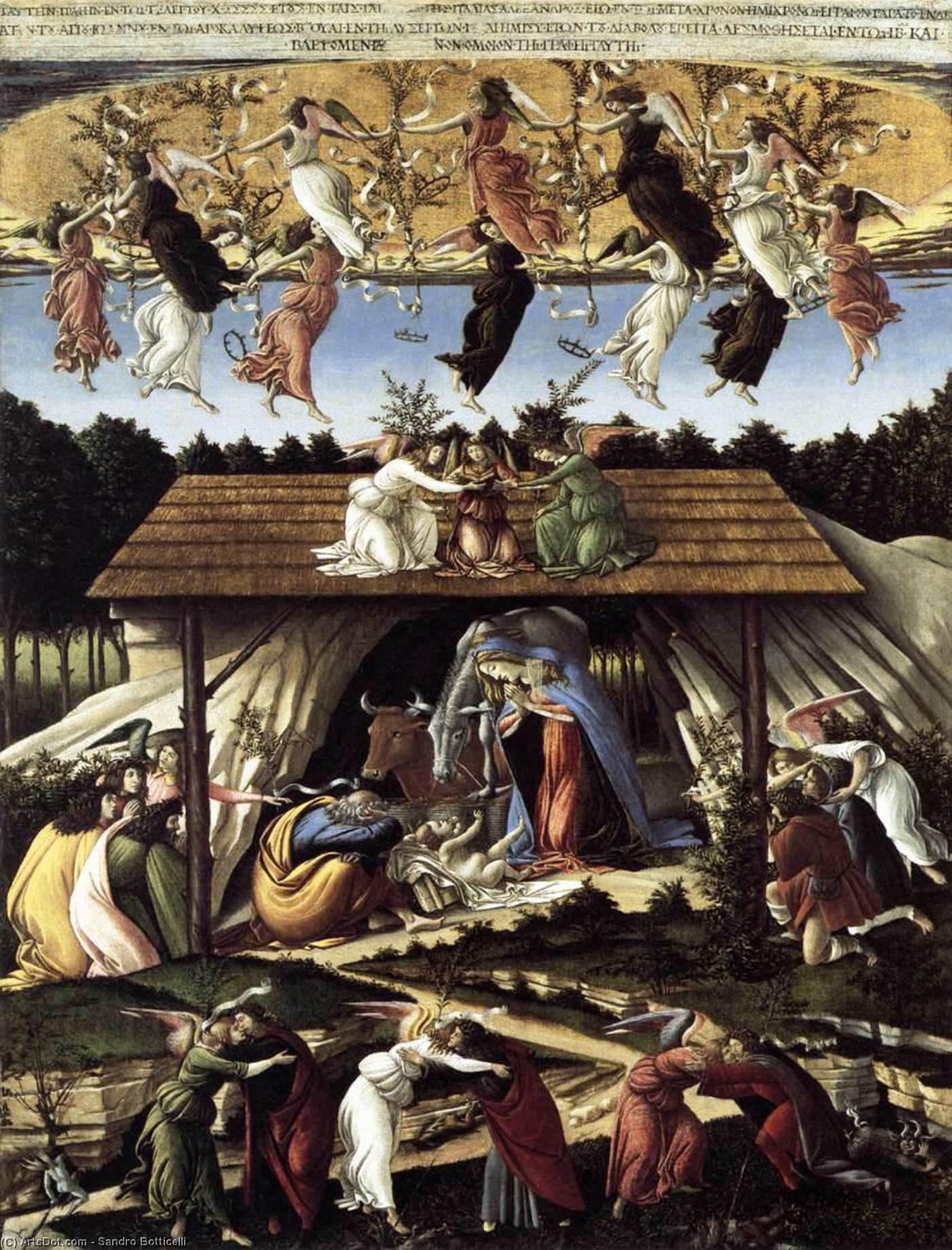
The Mystical Nativity: A Renaissance Masterpiece
The Mystical Nativity, created by Sandro Botticelli around 1500, is a captivating and spiritually rich artwork that beautifully blends earthly and heavenly elements. This masterpiece, executed in oil on canvas, is renowned for its intricate detailing, vibrant colors, and profound symbolism.
Subject and Composition
The painting depicts the nativity of Jesus Christ, a central event in Christian theology. The composition is divided into two main sections: the upper portion featuring celestial beings and the lower portion illustrating the birth of Jesus. The upper section showcases a semicircular arrangement of angels and divine figures, creating a sense of divine presence and blessing over the earthly events below. The lower section focuses on the Virgin Mary kneeling before the Christ Child, with various figures gathered around the manger.
Style and Technique
Botticelli's style is characteristic of the Italian Renaissance, emphasizing realism, proportion, and harmony. The artwork employs a variety of lines, from the smooth, flowing curves of the angels' robes to the more rigid, architectural lines of the stable. The shapes are diverse, ranging from organic forms to geometric structures. Textures are meticulously rendered, with detailed fabric folds, rough wood grain, and soft natural elements like grass and trees.
Color Palette
The color palette is warm and inviting, dominated by earthy tones such as browns, greens, and blues, which ground the scene in a natural setting. Vibrant reds, yellows, and golds add warmth and highlight important figures and elements, drawing the viewer's eye to key areas of the composition.
Historical Context
The Mystical Nativity emerged during a tumultuous period in Florence, Italy, when the preacher Girolamo Savonarola held significant influence over the city. Savonarola's apocalyptic sermons and the political upheavals of the time deeply impacted Botticelli, who believed himself to be living during the Great Tribulation. The painting reflects these anxieties and hopes for Christ's millennium as stated in the Book of Revelation.
Symbolism
The artwork is rich with symbolic elements. The celestial beings in the upper section symbolize divine approval and blessing, while the earthly figures below represent humanity's response to this sacred event. The presence of animals such as the ox and donkey adds a sense of humility and simplicity to the scene. The Greek inscription at the top of the painting translates to a message of hope and redemption, emphasizing the spiritual significance of the nativity.
Emotional Impact
The Mystical Nativity evokes a profound sense of reverence and awe. The expressive figures, particularly the angels and the central figures in the nativity scene, convey a deep emotional resonance. The painting's balanced yet dynamic composition, combined with its rich symbolism, creates an emotionally engaging experience for viewers.
Why Choose This Reproduction?
For art lovers, collectors, and interior designers seeking to add a touch of Renaissance elegance to their spaces, a high-quality reproduction of The Mystical Nativity is an excellent choice. This masterpiece not only enhances the aesthetic appeal of any room but also serves as a meaningful conversation piece, inviting contemplation and admiration.