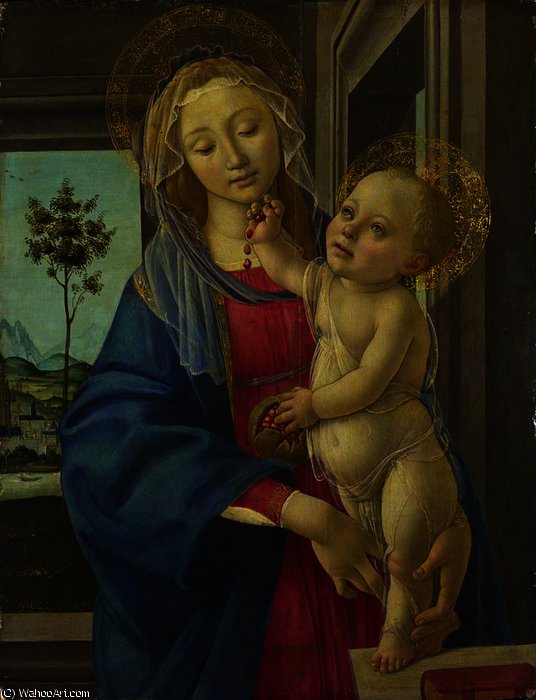
The Virgin and Child with a Pomegranate

Botticelli’s ethereal 'Virgin and Child with a Pomegranate' captures the serene beauty of the Early Renaissance, portraying Madonna delicately feeding her son amidst soft light—a timeless depiction of maternal tenderness and symbolic richness.


Sandro Botticelli (1445 - 1510)

Discover Sandro Botticelli (1445-1510), Renaissance master of 'Birth of Venus' & 'Primavera'. Explore his elegant style, mythological themes, and lasting influence on art history!

A Tender Reverie Captured in Light and Color

  • Sandro Botticelli’s “The Virgin and Child with a Pomegranate” stands as an emblem of Florentine Renaissance idealism—a breathtaking depiction of maternal devotion rendered with unparalleled grace and precision. Painted circa 1486, this masterpiece resides within the Galleria Nazionale di Firenze, offering visitors a glimpse into the artistic sensibilities of its era.
  • Botticelli’s style is instantly recognizable for its delicate lines, ethereal coloration, and stylized figures—a deliberate departure from the more naturalistic tendencies prevalent in contemporary art. He eschewed harsh realism, favoring instead an aesthetic rooted in classical ideals of beauty and harmony, drawing inspiration from ancient Greek sculpture and mythology.

Technical Brilliance: The Secrets Revealed

  • Executed in tempera on poplar wood—a technique favored by Botticelli for its luminosity and ability to achieve subtle tonal gradations—the painting showcases remarkable craftsmanship. Layers of thinly applied pigment create an illusionistic depth that transcends the limitations of the medium, capturing the soft glow of natural light filtering through the window.
  • Botticelli’s meticulous attention to detail is evident in every aspect of the composition: from the exquisitely rendered drapery folds to the delicately sculpted faces of Mary and Jesus. The artist skillfully employs sfumato—a technique pioneered by Leonardo da Vinci—to soften contours and blend colors seamlessly, enhancing the overall sense of serenity.

Symbolism Woven into Every Element

  • Beyond its aesthetic beauty, “The Virgin and Child with a Pomegranate” is laden with symbolic significance. The pomegranate fruit, prominently positioned in the center of the scene, represents fertility and abundance—a potent allusion to Mary’s role as Mother of God and the promise of divine grace. Its inclusion underscores the biblical narrative of Adam and Eve, symbolizing innocence lost and regained.
  • Furthermore, Botticelli's depiction of Mary embodies Christian iconography, portraying her as a serene Madonna surrounded by symbolic elements—such as the lily flower, representing purity and virginity—reflecting the prevailing spiritual values of Renaissance Florence.
  • Emotional Resonance: A Moment Frozen in Time

  • The painting’s enduring appeal lies not merely in its technical mastery but also in its ability to evoke profound emotion. Botticelli captures a tender tableau—a mother cradling her child—expressing the warmth of familial love and the sanctity of maternal care.
  • The soft lighting and harmonious color palette contribute to an atmosphere of tranquility and contemplation, inviting viewers to immerse themselves in the beauty of this timeless depiction of faith and innocence. It continues to inspire artists and collectors alike, cementing Botticelli’s legacy as one of the foremost figures of the Early Renaissance.
  • None