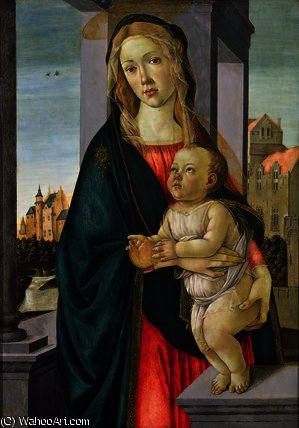
Discover Sandro Botticelli’s serene ‘Virgin & Child.’ A Renaissance masterpiece featuring luminous oil painting, classical elements, & maternal devotion. Explore this iconic artwork!
Discover Sandro Botticelli (1445-1510), Renaissance master of 'Birth of Venus' & 'Primavera'. Explore his elegant style, mythological themes, and lasting influence on art history!
A Renaissance Vision of Motherhood: Sandro Botticelli’s *Virgin and Child*
This exquisite oil painting by Sandro Botticelli embodies the serene beauty and devotional spirit characteristic of the Early Renaissance. The artwork presents a tender portrayal of the Virgin Mary cradling the infant Jesus, a timeless image steeped in religious iconography and artistic innovation.
Subject & Composition
The composition is elegantly simple yet profoundly moving. Mary and Christ are centrally positioned, drawing the viewer’s gaze directly to their intimate connection. A classical column anchors the scene vertically, subtly guiding the eye upwards – a visual metaphor for spiritual aspiration. The receding architectural backdrop, rendered with linear perspective, establishes depth and suggests a sacred space, perhaps evoking both earthly stability and divine authority.
Style & Technique
Botticelli’s distinctive style is immediately apparent in the graceful lines and delicate forms of the figures. He bridges the gap between the late Gothic period and the burgeoning Renaissance, favoring elegant linearity over strict realism. The painting showcases Botticelli's mastery of oil paint, utilizing layering and glazing techniques to achieve a luminous quality and rich color depth. Visible brushstrokes add texture and a tactile dimension, enhancing the artwork’s visual appeal.
Historical Context & Influences
Born in Florence around 1445, Botticelli flourished during a period of immense artistic and cultural change. His work reflects the humanist ideals gaining prominence at the time – a renewed interest in classical antiquity combined with Christian faith. He was influenced by artists like Filippo Lippi—whose lyrical Madonnas set a precedent for Botticelli’s own depictions of the Virgin Mary—and developed a unique style that would influence generations of artists to come.
Symbolism & Meaning
The painting is rich in symbolic meaning. The fruit, often interpreted as an apple, alludes to themes of temptation and innocence – referencing both the Fall of Man and Christ’s role as Redeemer. More broadly, depictions of the *Virgin and Child* were immensely popular during the Renaissance, serving not only as devotional images but also as expressions of maternal love and divine grace. The architectural setting reinforces a sense of stability and permanence, symbolizing the enduring power of faith.
Emotional Impact & Interpretation
The overall emotional effect is one of profound reverence, peace, and tender affection. Botticelli captures the quiet intimacy between mother and child with remarkable sensitivity. The soft lighting and warm earth tones – ochres, reds, and browns – contribute to a sense of warmth and serenity. This artwork invites contemplation and offers a glimpse into the heart of Renaissance spirituality—a celebration of faith, beauty, and the enduring bond between mother and son. It is a timeless masterpiece that continues to resonate with viewers today.
Collectors and interior designers will find this piece an exceptional addition, bringing both artistic sophistication and spiritual depth to any space.