Discover Sandro Botticelli (1445-1510), Renaissance master of 'Birth of Venus' & 'Primavera'. Explore his elegant style, mythological themes, and lasting influence on art history!
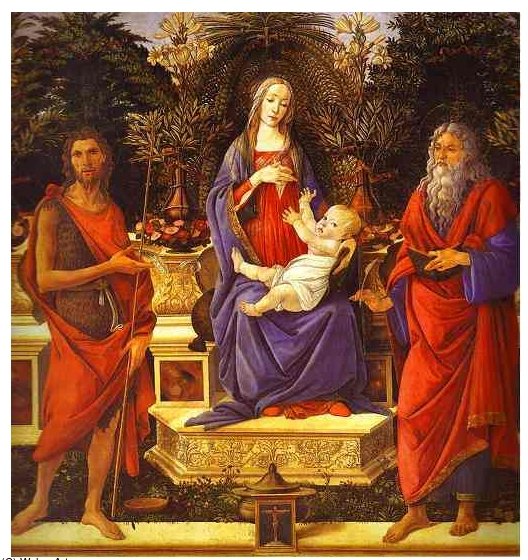
Virgin And Child Enthroned Between Saint John The Baptist And Saint John The Evangelist (bardi Altarpiece)
The Bardi Altarpiece stands as an emblem of Sandro Botticelli’s artistic prowess and the zenith of Early Renaissance decorative art. Created around 1485 for Giovanni de' Bardi, a wealthy Florentine banker and devout patron, this monumental panel painting embodies the humanist ideals that characterized the period while simultaneously reflecting profound religious devotion. Now housed in the Staatliche Museen Berlin, it continues to captivate viewers with its serene beauty and masterful execution—a testament to Botticelli’s unparalleled skill in capturing both spiritual essence and visual elegance.
Composition and Spatial Harmony
Botticelli departed from conventional altar compositions of his time, prioritizing a dynamic interplay of space and light rather than adhering strictly to architectural conventions. The altarpiece is dominated by a central throne upon which rests the Virgin Mary holding her infant Jesus—a motif that recurs frequently in Renaissance iconography. Framing this sacred scene are two flanking niches adorned with lush foliage, meticulously rendered in tempera paint—a technique favored for its luminosity and ability to achieve subtle gradations of color. This innovative use of vegetal ornamentation wasn’t merely decorative; it served as a deliberate allusion to Paradise Lost, referencing the biblical Garden of Eden and symbolizing Mary's purity and divine grace. The positioning of Saint John the Baptist and Saint John the Evangelist—one pointing towards Mary and Jesus, the other holding a quill and book—further reinforces this symbolic narrative, establishing a harmonious balance between earthly and heavenly realms.
Symbolism: Layers of Meaning
The Bardi Altarpiece is replete with symbols that speak to its theological significance. The Virgin’s outstretched hand offering her breast represents compassion and maternal tenderness—a cornerstone of Christian iconography. Simultaneously, it underscores Mary's role as the New Eve, mirroring Adam’s transgression in Paradise but ultimately redeemed through divine grace. The lilies adorning the throne symbolize purity and virginity, reflecting Mary’s immaculate conception and reaffirming her sanctity. Furthermore, the vase at the foot of the altar—filled with vibrant blossoms—represents Christ’s Passion and symbolizes the resurrection—a poignant reminder of hope amidst suffering. The eagle perched atop Saint John the Evangelist's head signifies divine providence and spiritual ascension, reinforcing the altarpiece’s overarching message of faith and redemption.
Artistic Technique and Style
Botticelli’s masterful handling of tempera paint is evident in every brushstroke—resulting in an astonishing level of detail and tonal subtlety. The artist skillfully employed glazing techniques to achieve luminous colors that shimmer with ethereal brilliance, capturing the delicate textures of foliage and drapery alike. His characteristic linear grace—inherited from the late Gothic style—is beautifully juxtaposed with a humanist sensibility, reflecting Botticelli’s embrace of classical ideals while retaining his distinctive artistic voice. This painting exemplifies Botticelli's ability to synthesize disparate influences into a cohesive visual experience—a remarkable achievement that secures its place as one of the most celebrated artworks of the Early Renaissance.
Legacy and Rediscovery
Initially overshadowed by contemporaries like Leonardo da Vinci and Michelangelo, Botticelli’s reputation languished for decades after his death in 1510. However, the Pre-Raphaelites championed Botticelli's work in the late nineteenth century, sparking a renewed appreciation for his artistic contributions—a pivotal moment in art history. Today, reproductions of the Bardi Altarpiece grace museums and private collections worldwide, ensuring that Botticelli’s visionary artistry continues to inspire generations of artists and admirers alike. Its enduring beauty testifies to the power of art to transcend time and communicate universal themes of faith, compassion, and divine grace—a legacy that cements Botticelli's position as a cornerstone of Western artistic heritage.