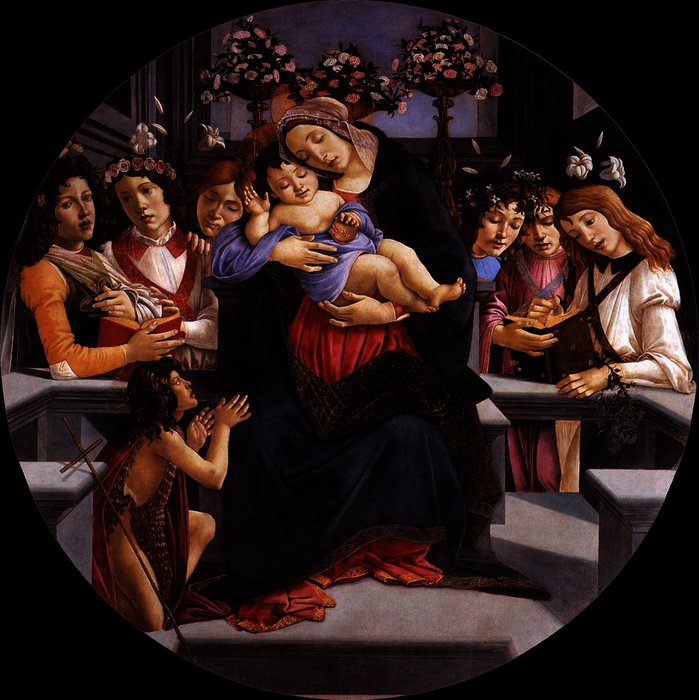
A Symphony of Grace: Sandro Botticelli’s Virgin and Child with Six Angels
Sandro Botticelli's “Virgin and Child with Six Angels” stands as a cornerstone of Early Renaissance art, embodying the humanist ideals that reshaped European thought during its formative years. Painted in 1485 for Lorenzo il Magnifico’s villa at Careggi, Florence, this tempera on panel masterpiece transcends mere depiction; it's an invitation into a realm of spiritual contemplation and artistic brilliance.
Composition & Technique: Botticelli meticulously crafted this tondo—a circular painting—employing the tempera technique, known for its luminosity and ability to achieve subtle tonal gradations. The artist’s masterful brushstrokes capture the ethereal quality of light filtering through a window, creating depth and atmosphere within the enclosed space. Observe how Botticelli skillfully utilizes perspective—though simplified—to establish a harmonious balance between figures and background.
- Detailed Observation: The central Madonna cradles Jesus in her arms, surrounded by six angelic beings who gaze down upon them with serene expressions. Each angel is rendered with exquisite detail, showcasing Botticelli’s meticulous attention to anatomical accuracy—a departure from the stylized figures of preceding Gothic art.
- Symbolism & Narrative: The scene depicts a traditional Marian iconography, emphasizing Mary's purity and divine motherhood. The angels represent God’s grace and protection, symbolizing hope and spiritual ascension. St John the Baptist, depicted at Jesus’ feet, signifies repentance and baptism—a pivotal moment in Christian theology.
Renaissance Humanism: Botticelli’s Artistic Influences
Botticelli's work reflects the burgeoning humanist movement that championed classical learning and human dignity. Artists like Michelangelo and Leonardo da Vinci were profoundly impacted by this revival of Greco-Roman ideals, prioritizing observation and realism alongside spiritual contemplation. Botticelli’s embrace of naturalism—evident in the drapery folds and facial expressions—contrasts sharply with the more formalized conventions of medieval art.
Historical Context: Florence under Lorenzo il Magnifico was a hub of artistic innovation during the Renaissance, attracting talent from across Europe. Botticelli’s patronage by the Medici family ensured that he could pursue his creative vision without constraint—a rare circumstance in his era. The painting served as a testament to the humanist fascination with beauty and harmony.
Botticelli's Legacy: An Icon of Florentine Art
"Virgin and Child with Six Angels" remains an enduring symbol of Renaissance artistic excellence, admired for its gracefulness, elegance, and profound spiritual resonance. Its influence can be traced throughout subsequent art history, inspiring artists to explore themes of faith, innocence, and divine love.
Relevance Today: Botticelli’s masterpiece continues to captivate audiences worldwide, demonstrating the timeless appeal of artistic beauty and conveying a message of compassion and serenity. Reproductions crafted with meticulous attention to detail offer collectors and interior designers alike an opportunity to experience the splendor of Florentine Renaissance art in their own homes.