A Renaissance Vision of Maternal Love and Divine Prophecy
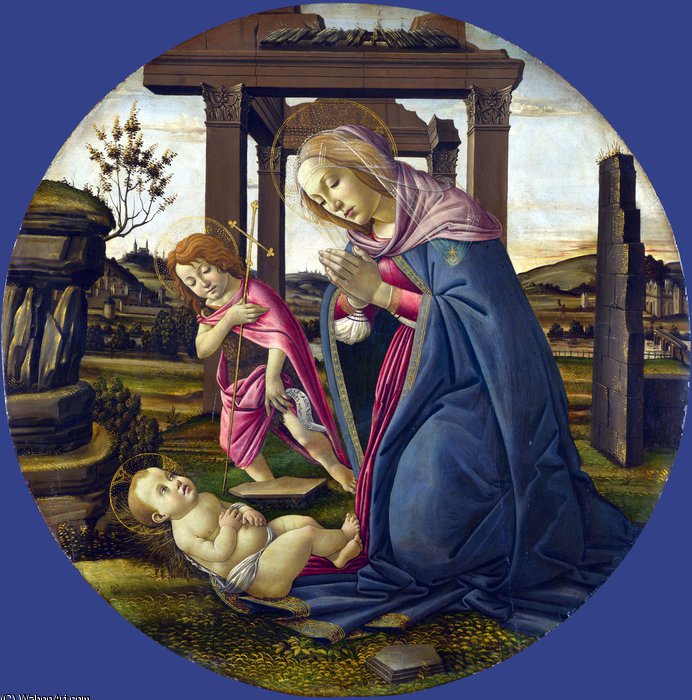
This exquisite painting, attributed to the workshop of Sandro Botticelli, presents a tender scene of *The Virgin and Child with Saint John the Baptist*. Housed in the Galleria Sabauda in Turin, Italy, this artwork encapsulates the grace and spiritual depth characteristic of the Early Renaissance. It’s more than just a religious depiction; it's a poignant study of familial love interwoven with foreshadowing of Christ’s destiny.
Compositional Harmony and Artistic Style
The composition is beautifully balanced, centering on the serene figure of the Virgin Mary cradling the infant Jesus. Her gaze, lowered in prayerful contemplation, radiates devotion. To her right stands Saint John the Baptist as a young child, a significant presence hinting at his future role as Christ’s herald. The arrangement isn't merely aesthetic; it subtly guides the viewer's eye through layers of meaning. Botticelli’s style – or that of his workshop – is evident in the flowing lines, delicate modeling of forms, and the overall sense of ethereal beauty. Three trees frame the scene, creating a harmonious backdrop and reinforcing a feeling of peaceful enclosure.
Symbolism Woven into Every Detail
The painting is rich with symbolic elements. A book resting near the base suggests knowledge and scripture, while a bird flying above Mary’s head often represents divine grace or the Holy Spirit. These details aren't accidental; they enrich the narrative and invite contemplation. The youthful depiction of Saint John isn’t simply artistic license – it emphasizes his preordained role and connection to Jesus from an early age. The circular format itself, while not uncommon, lends a sense of completeness and eternity to the scene.
Botticelli's Legacy and Historical Context
Sandro Botticelli (1445-1510) was a pivotal figure in the Florentine Renaissance. His work bridged the gap between the Gothic traditions and the emerging humanist ideals of the era. While this particular painting is attributed to his workshop, it embodies the stylistic hallmarks that made Botticelli so renowned – an emphasis on line, graceful figures, and allegorical storytelling. His rediscovery by the Pre-Raphaelites in the 19th century cemented his place as a master of Western art, inspiring generations with his poetic vision.
Emotional Resonance and Interior Design
This artwork evokes feelings of serenity, piety, and maternal tenderness. The soft color palette and gentle expressions create an atmosphere of quiet contemplation. Its circular format makes it particularly well-suited for a variety of interior spaces. Imagine this piece as a focal point in a study, a bedroom, or even a chapel-like alcove – its timeless beauty will undoubtedly elevate the aesthetic and spiritual ambiance of any room.
Key Features
- Subject: The Virgin Mary with the infant Jesus and Saint John the Baptist.
- Style: Early Renaissance, characterized by graceful lines and delicate modeling.
- Technique: Oil on panel (likely), demonstrating skillful blending and layering of colors.
- Symbolism: Rich in religious symbolism – the book representing knowledge, the bird symbolizing divine grace, and the figures themselves embodying faith and prophecy.
- Emotional Impact: Evokes serenity, piety, and maternal love. A truly captivating piece that invites contemplation and reverence.