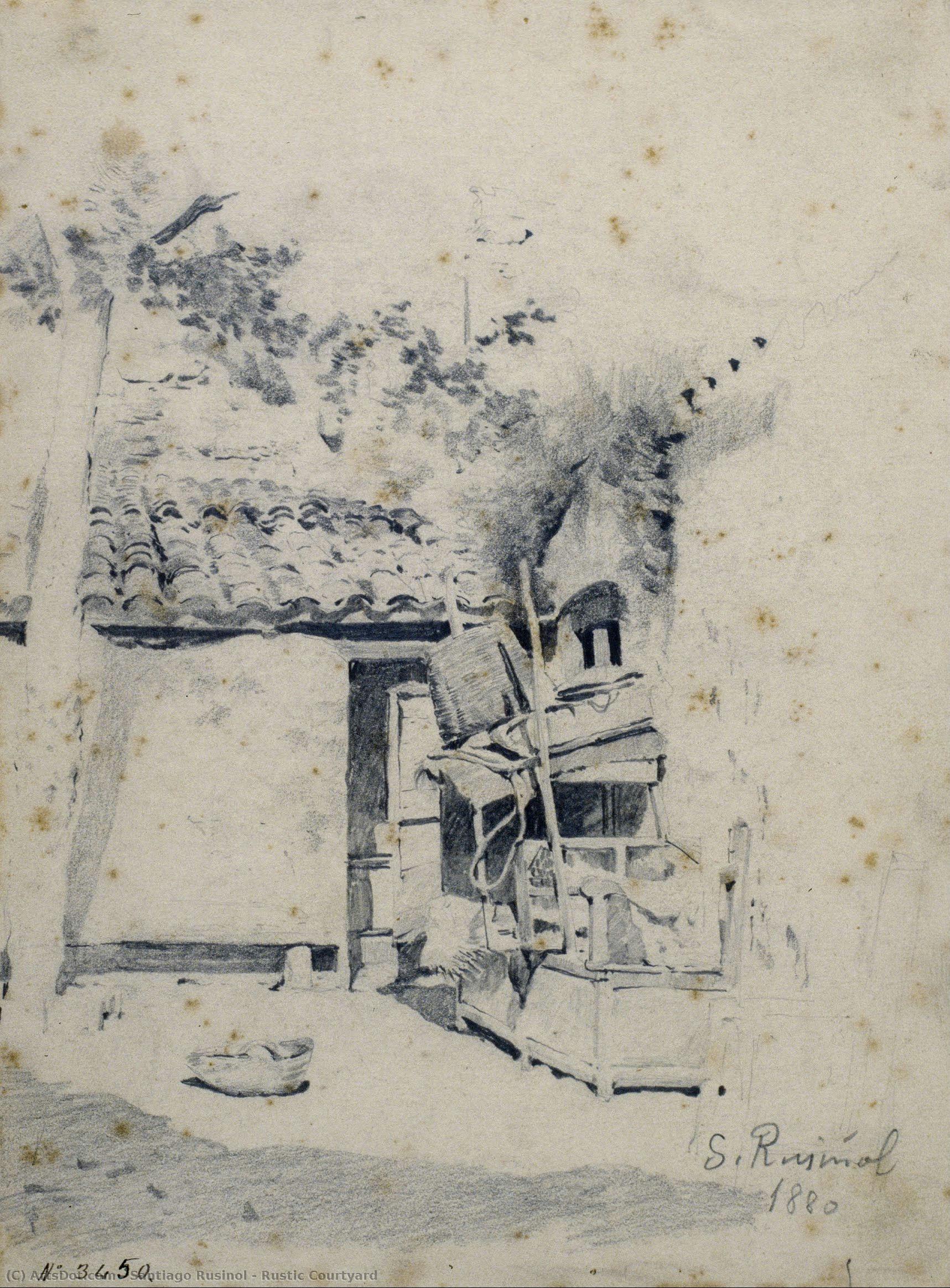
Santiago Rusiñol’s “Rustic Courtyard,” created in 1880, showcases a serene rural scene featuring a building backdrop and populated by figures and a dog. Executed in graphite pencil on paper, this piece exemplifies Catalan Modernisme and Impressionism influences.
Discover Santiago Rusiñol (1861-1931), a leading Catalan Modernisme painter, poet & playwright. Explore his Symbolist landscapes, portraits, and influence on artists like Picasso. Find works at ArtsDot!
Explore Catalan art & history at the MNAC! Discover Romanesque frescoes, Modernisme masterpieces, and a stunning collection spanning centuries within the Palau Nacional.
A Glimpse into Rustic Life: The Charm of Santiago Rusiñol's Courtyard
To stand before Rustic Courtyard is to step through a veil and into a sun-drenched moment suspended in time. This evocative painting by Santiago Rusiñol transports the viewer to a heart of Spanish rurality, where life unfolds with an unhurried grace against the backdrop of aged stone and weathered architecture. The composition itself sings with the quiet rhythm of daily existence; it is not merely a depiction of a place, but a celebration of community and simple, enduring pleasures. One can almost hear the murmur of conversation echoing off the courtyard walls, feeling the warmth of the Mediterranean sun on one's skin.
Mastery of Light and Human Connection
Rusiñol, deeply rooted in the vibrant currents of Catalan Modernisme while absorbing influences from Impressionism, captures light with remarkable sensitivity. The black and white photograph hints at a masterful handling of tonal values, allowing the interplay between deep shadows cast by the building and the bright patches illuminating the figures to create profound depth. Observe the scattered figures—they are not posed for posterity but caught mid-gesture: a casual grouping near the structure, others meandering through the open space. Even the inclusion of the dog on the left side injects an immediate spark of life, grounding the scene in tangible reality and suggesting companionship woven into the fabric of this rustic tableau.
Historical Echoes and Artistic Context
Painted around 1880, this work places us at a fascinating juncture in Spanish art history. While Rusiñol’s career would see him engage with Symbolism and more complex modern themes, Rustic Courtyard anchors itself firmly in an appreciation for the tangible, the lived-in beauty of Spain's interior life. His early immersion in landscape and urban scenes allowed him to document these authentic moments. For the collector or designer, this piece offers a window into a romanticized yet deeply observed Spanish past—a perfect counterpoint to overly polished modern aesthetics.
Symbolism of Place and Memory
The courtyard itself functions as more than just an architectural space; it is a symbol of refuge. It represents the enduring spirit of community, where human activity converges with the steadfast permanence of stone. The blend of architectural solidity and fleeting human interaction suggests themes of memory—the way moments accumulate in a single place, becoming imbued with history. Owning a reproduction of this painting allows one to curate not just a wall hanging, but an atmosphere; it invites contemplation on the beauty found in the unscripted rhythms of everyday life.
Bringing the Mediterranean Spirit Home
For those seeking art that breathes warmth and narrative into a modern interior, Rustic Courtyard is unparalleled. Its scale (150 x 201 cm) commands attention while its subject matter remains intimately relatable. Whether used to anchor a grand hall or lend character to a sunlit sitting room, this piece promises an emotional resonance that transcends mere decoration. It is an invitation to slow down, to observe the subtle dramas of light and companionship, making it a treasured acquisition for any discerning eye.