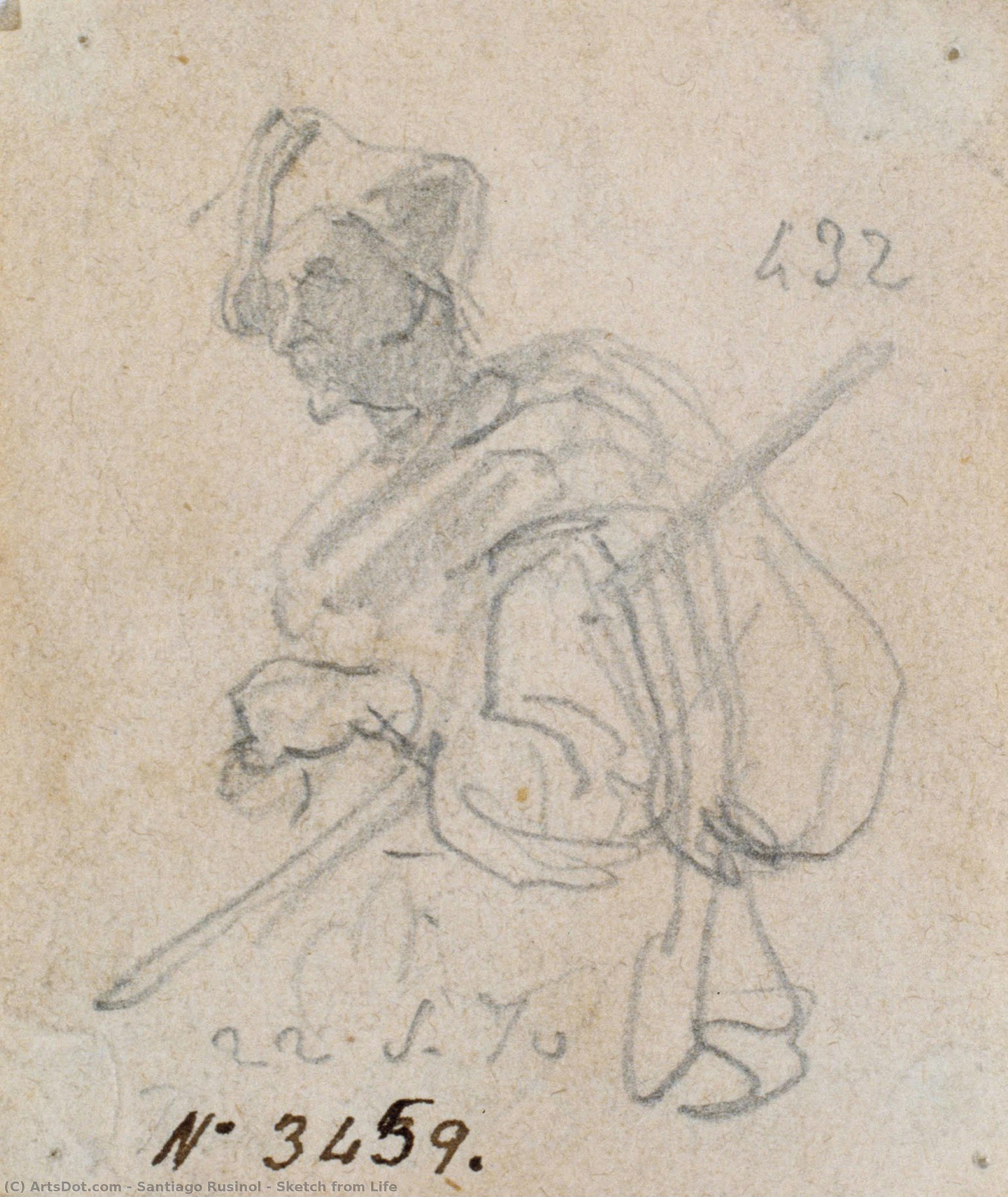
Santiago Rusiñol’s ‘Sketch from Life,’ a detailed black and white drawing from the Catalan Modernisme period, captures a man with a staff – explore this evocative piece and bring its timeless beauty into your home.
Discover Santiago Rusiñol (1861-1931), a leading Catalan Modernisme painter, poet & playwright. Explore his Symbolist landscapes, portraits, and influence on artists like Picasso. Find works at ArtsDot!
Explore Catalan art & history at the MNAC! Discover Romanesque frescoes, Modernisme masterpieces, and a stunning collection spanning centuries within the Palau Nacional.
Santiago Rusiñol: A Visionary of Catalan Modernisme
Santiago Rusiñol i Prats (1861 – 1931) stands as one of the most prominent figures in Catalan Modernisme, a movement that sought to revitalize artistic expression and cultural identity following Catalonia’s unification with Spain. Born into a family of textile industrialists in Manlleu, Rusiñol defied societal expectations to pursue his unwavering passion for painting—a pursuit that would define his life's work and solidify his legacy as an artist deeply attuned to the spirit of his time. His artistic journey began under the tutelage of Tomás Moragas at the Centro de Acuarelistas de Barcelona, where he honed his watercolor skills and embraced Realist principles, establishing a foundational understanding of observation and representation.
Early Influences: Orientalism and Historical Narratives
Rusiñol’s formative years were marked by exposure to Orientalist themes—a stylistic trend prevalent in European art circles during the late nineteenth century—reflecting an interest in exotic landscapes and cultures. Simultaneously, he engaged with historical subjects, capturing pivotal moments from Spanish history with meticulous detail and conveying narratives imbued with moral significance. These early explorations foreshadowed his later stylistic shifts toward urban scenes and evocative landscapes that would characterize his mature oeuvre. His travels throughout Spain provided invaluable inspiration, immersing him in diverse architectural settings and fostering a profound appreciation for the beauty of Catalan vernacular traditions.
Parisian Awakening: Embracing Symbolism and Impressionism
A decisive turning point arrived in 1889 when Rusiñol relocated to Paris—a city brimming with artistic ferment and intellectual dynamism. Living amidst fellow artists like Ramón Casas and Ignacio Zuloaga, he absorbed the influences of Symbolism and Impressionism, experimenting with innovative techniques and exploring subjective perceptions of reality. This Parisian period witnessed a radical transformation in his artistic vision, propelling him toward bolder color palettes and expressive brushstrokes—a stylistic evolution that would become synonymous with Modernisme’s aesthetic ideals. Notably, Rusiñol frequented Els Quatre Gats café, a hub for Catalan artists and intellectuals where he cultivated friendships with Pablo Picasso and fostered an environment conducive to artistic experimentation.
The Landscape of Catalonia: A Return to Nature
Returning to Barcelona in 1893, Rusiñol established his studio—now Cau Ferrat—in Sitges, cementing his connection to the Catalan coast and its vibrant cultural landscape. He continued to depict Catalan landscapes with unwavering dedication, capturing the ethereal beauty of dawn and dusk, the rugged grandeur of mountainsides, and the tranquil serenity of gardens—themes that resonated deeply with the sensibilities of Modernisme artists. His paintings are characterized by a masterful command of watercolor techniques, achieved through meticulous layering and blending—a testament to his profound understanding of light and color.
Legacy: Symbolism and Artistic Integrity
Throughout his prolific artistic career, Rusiñol remained steadfast in his commitment to artistic integrity—rejecting commercial pressures and prioritizing the pursuit of genuine creative expression. His work embodies a spirit of contemplation and observation—reflecting a humanist sensibility rooted in Catalan identity and intellectual tradition. Santiago Rusiñol’s enduring influence extends beyond his artistic achievements; he served as an inspiration for subsequent generations of Catalan artists, shaping the trajectory of Modernisme and securing his place among Spain's most revered painters. His legacy continues to captivate audiences today with its evocative imagery and profound emotional resonance—a testament to the power of art to transcend time and communicate universal truths.