A Celestial Encounter in Sienese Gold
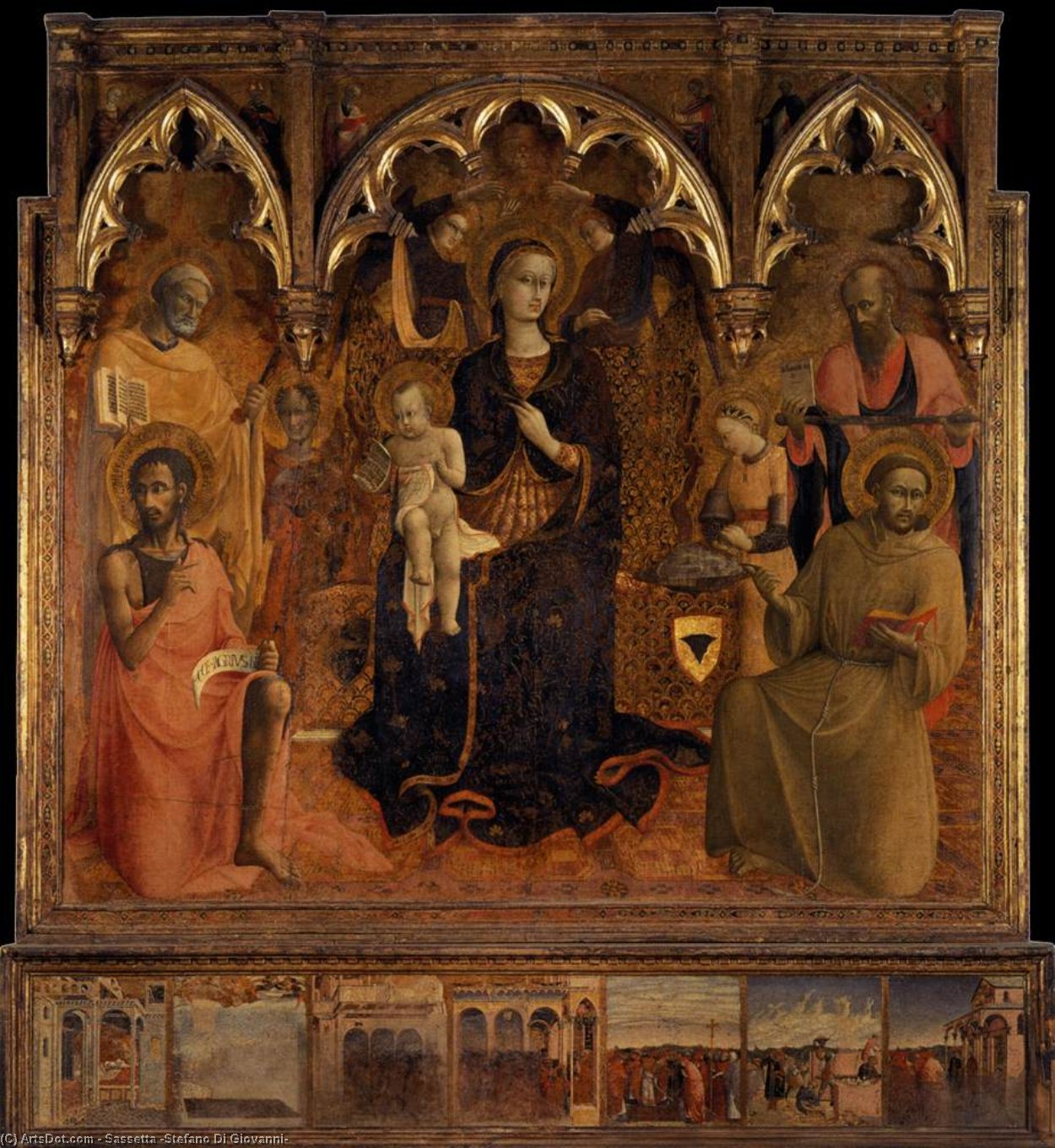
In the quiet, luminous corridors of the early Italian Renaissance, few works capture the intersection of earthly devotion and celestial grace as profoundly as Sassetta’s The Virgin and Child with Saints. Painted around 1430, this monumental masterpiece serves as a window into the spiritual soul of Siena, offering a serene meditation on motherhood and divine providence. At its heart, the composition presents the Virgin Mary cradling the Christ child with a tenderness that feels both intimately human and divinely ordained. Surrounding them, a celestial assembly of saints emerges from a landscape of profound stillness, their presence creating a sacred dialogue between the viewer and the heavens. For the discerning collector or interior designer, this piece offers more than mere visual beauty; it provides an anchor of tranquility, inviting a sense of timelessness into any curated space.
The technical mastery of Stefano di Giovanni, known as Sassetta, is revealed through his innovative use of tempera and his ability to breathe new life into the Sienese tradition. While many of his contemporaries remained tethered to the rigid structures of the late Gothic period, Sassetta integrated the burgeoning realism of Florentine innovators like Masaccio. He employed a sophisticated atmospheric perspective, subtly blurring distant horizons to create an ethereal depth that draws the eye inward. The luminosity of the drapery—particularly the flowing robes of the Virgin—suggests a light that does not merely strike the surface but seems to emanate from within the pigment itself. This mastery of tone and texture ensures that every time one views a reproduction of this work, the subtle gradations of color continue to reveal new layers of complexity.
The Language of Devotion and Renaissance Humanism
Every element within this sacred tableau is imbued with deep symbolic resonance, designed to elevate the viewer's state of contemplation. The arrangement of the saints serves as a visual liturgy, where the use of gold leaf is not merely an aesthetic choice for ornamentation but represents the uncreated light of God, transforming the wooden panel into a heavenly realm. This period in Siena was marked by a fervent devotion to familial piety and the humanist movement, which sought to reconcile divine grace with a meticulous observation of human anatomy and natural light. The painting captures this tension perfectly: it is at once a rigid icon of faith and a tender study of human connection.
For those seeking to incorporate art into a sophisticated interior, this work offers an unparalleled emotional impact. It possesses the rare ability to command a room with its historical gravity while simultaneously providing a sense of peace through its balanced composition and soft, radiant palette. Whether placed in a grand gallery or a quiet study, a high-quality reproduction of this Sienese treasure acts as a profound focal point, celebrating the enduring legacy of the Quattrocento and the eternal beauty of the human spirit.