Sebastiano del Piombo: A Venetian Vision Embracing Roman Majesty
Sebastiano del Piombo (1485-1547) stands as an intriguing figure in the High Renaissance, a painter whose career unfolded across two distinct artistic landscapes – Venice and Rome – resulting in a singular oeuvre characterized by a masterful fusion of Venetian colorism with the monumental grandeur of Roman Mannerism. Unlike many artists of his era who adhered to established conventions from their formative years, del Piombo’s artistic journey began somewhat later, initially drawn to music before dedicating himself wholeheartedly to painting in his late teens or early twenties. This initial exposure to musical pursuits instilled within him a profound appreciation for harmonic balance and expressive nuance that would permeate his subsequent works.
His Venetian upbringing profoundly shaped his aesthetic sensibilities; he absorbed the vibrant hues and atmospheric perspective championed by Giorgione, whose influence is undeniably evident in paintings like “The Tempest,” where shimmering blues and greens evoke an ethereal mood. However, recognizing the limitations of solely embracing Venetian tradition, del Piombo skillfully transitioned to Rome around 1511, immersing himself in the artistic fervor of Michelangelo’s workshop and engaging with the intellectual currents of humanist scholarship.
St Louis of Toulouse and St Sinobaldus: A Study in Contrasting Influences
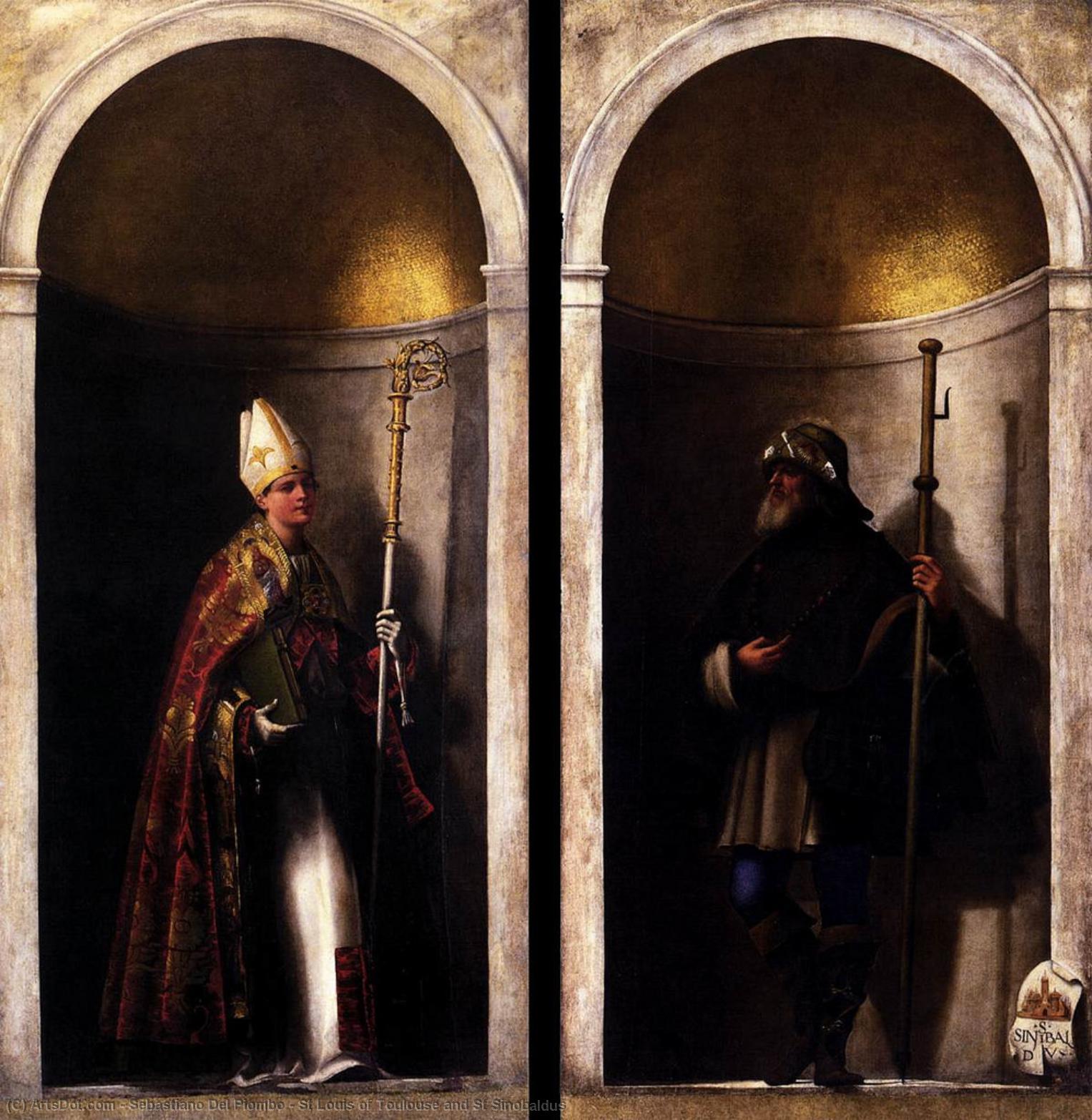
“St Louis of Toulouse and St Sinobaldus,” completed circa 1509, exemplifies this pivotal shift. The painting depicts two figures standing beneath an arched gateway – a priest and a monk – bathed in diffused light that underscores the solemnity of the scene. Del Piombo’s technique demonstrates a meticulous attention to detail, utilizing oil paint on canvas with remarkable precision to capture textures and tonal gradations. Unlike the luminous color palettes typical of Venetian painting, “St Louis” leans towards a more subdued palette dominated by earthy browns and ochres, reflecting the stylistic preferences of Roman artists during this period.
The composition itself is deliberately structured, mirroring the architectural grandeur of Roman basilicas. The arched gateway serves as a visual anchor, directing the viewer’s gaze upwards toward the heavens – a motif frequently employed in Renaissance art to convey spiritual aspiration and divine majesty. Del Piombo skillfully employs chiaroscuro—the dramatic interplay between light and shadow—to sculpt the figures' forms and heighten their emotional impact.
Symbolism and Emotional Resonance
Beyond its formal considerations, “St Louis of Toulouse” carries significant symbolic weight. The priest represents ecclesiastical authority and spiritual guidance, while the monk embodies ascetic piety and contemplation. Their positioning beneath the archway symbolizes faith’s connection to divine grace—a central theme in Renaissance theology. Del Piombo's masterful rendering captures not merely physical likeness but also psychological depth, conveying a sense of solemn reverence and quiet introspection.
The inclusion of a book held by one figure reinforces this symbolic dimension, signifying knowledge and scripture as instruments of spiritual enlightenment. The subtle facial expressions of the figures convey emotion—a contemplative gaze reflecting inner piety—further enriching the painting’s narrative power. Del Piombo's ability to evoke profound emotional resonance underscores his artistic genius and cements “St Louis”’s place among the most enduring masterpieces of the High Renaissance.
A Legacy of Venetian Colorism & Roman Grand Manner
“St Louis of Toulouse” stands as a testament to Sebastiano del Piombo's remarkable talent—a painter who successfully reconciled the vibrant chromatic traditions of Venice with the monumental stylistic ideals of Rome. His legacy continues to inspire artists and collectors alike, reminding us that true artistic innovation arises from embracing diverse influences and forging new expressive pathways.