Sebastiano Ricci's Dramatic Depiction of Myth and Desire: *Bacchus and Ariadne*
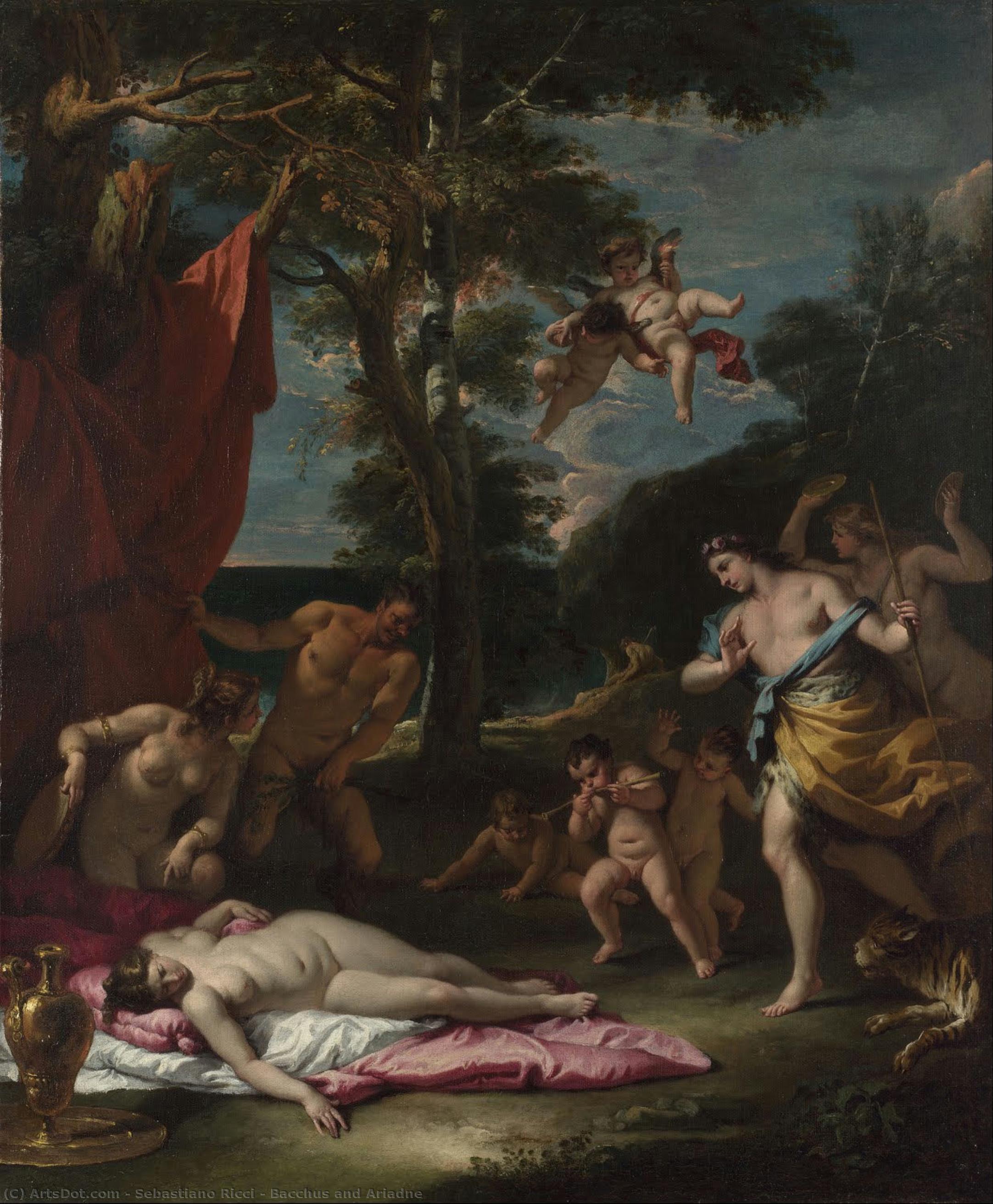
This exquisite oil on canvas, measuring 75 x 63 cm, offers a captivating glimpse into the world of late Baroque Venetian art through the masterful hand of Sebastiano Ricci. Painted around 1700, *Bacchus and Ariadne* is more than just a representation of a classical myth; it’s an intensely emotional tableau brimming with sensuality, drama, and the vibrant energy characteristic of Ricci's oeuvre. The painting, currently residing in the National Gallery in London, immediately draws the viewer into a scene of profound intimacy and impending revelry – a moment frozen in time where the goddess Ariadne, having abandoned Theseus, lies reclining on a bed, her head nestled upon a pillow, awaiting the arrival of Bacchus, the god of wine.
Ricci’s style is immediately recognizable: a vigorous and luminous manner that owes much to Giovanni Gioseffo dal Sole, yet possesses a distinctly Venetian flair. The composition is meticulously constructed, utilizing dynamic diagonals and swirling drapery to create a sense of movement and unrestrained joy. Notice the rich palette – deep reds, golds, and blues – expertly applied to achieve a remarkable luminosity, a hallmark of Ricci’s technique. The brushwork is loose yet confident, contributing to the painting's palpable energy and preventing it from feeling overly formal or static.
Symbolism and Mythological Narrative
The story depicted in *Bacchus and Ariadne* originates from Greek mythology. Ariadne, abandoned by Theseus after his victory over the Minotaur, is found by Bacchus, who, captivated by her beauty, takes her as his consort. The scene captures a pivotal moment – the beginning of their union, a celebration of fertility, intoxication, and divine love. The presence of the implied lion, often associated with Bacchus, further reinforces this connection to the god’s power and dominion.
Beyond the literal narrative, the painting speaks to broader themes of abandonment, acceptance, and transformation. Ariadne's vulnerability as she rests on the bed suggests a poignant moment of surrender, while Bacchus’s arrival represents a potential for renewal and ecstatic liberation. The figures are not merely characters in a myth; they embody universal human experiences – desire, loss, and the search for solace.
Technique and Historical Context
Painted around 1700, *Bacchus and Ariadne* exemplifies Ricci’s skill as a painter of grand manner fresco painting. His work was highly sought after in Venice and beyond, often commissioned for religious and aristocratic patrons. Ricci's ability to capture movement and emotion with such dramatic effect was particularly valued during the late Baroque period. The use of oil on canvas allowed for greater luminosity and detail than tempera paints, a crucial factor in achieving Ricci’s signature style.
The painting’s dimensions (189 x 104 cm – as noted in Art UK) would have been impressive for its time, reflecting the scale of aristocratic interiors. The meticulous attention to detail and the masterful rendering of human form demonstrate Ricci's technical prowess and his commitment to creating works that were both visually stunning and emotionally resonant.
A Timeless Masterpiece
*Bacchus and Ariadne* remains a powerful testament to Sebastiano Ricci’s artistic genius. Its dramatic composition, vibrant colors, and evocative symbolism continue to captivate viewers centuries after its creation. Whether you are an art collector seeking a significant addition to your collection or an interior designer searching for a statement piece that embodies the spirit of the Baroque era, this reproduction offers a unique opportunity to own a fragment of artistic history – a window into a world of myth, passion, and unparalleled beauty.