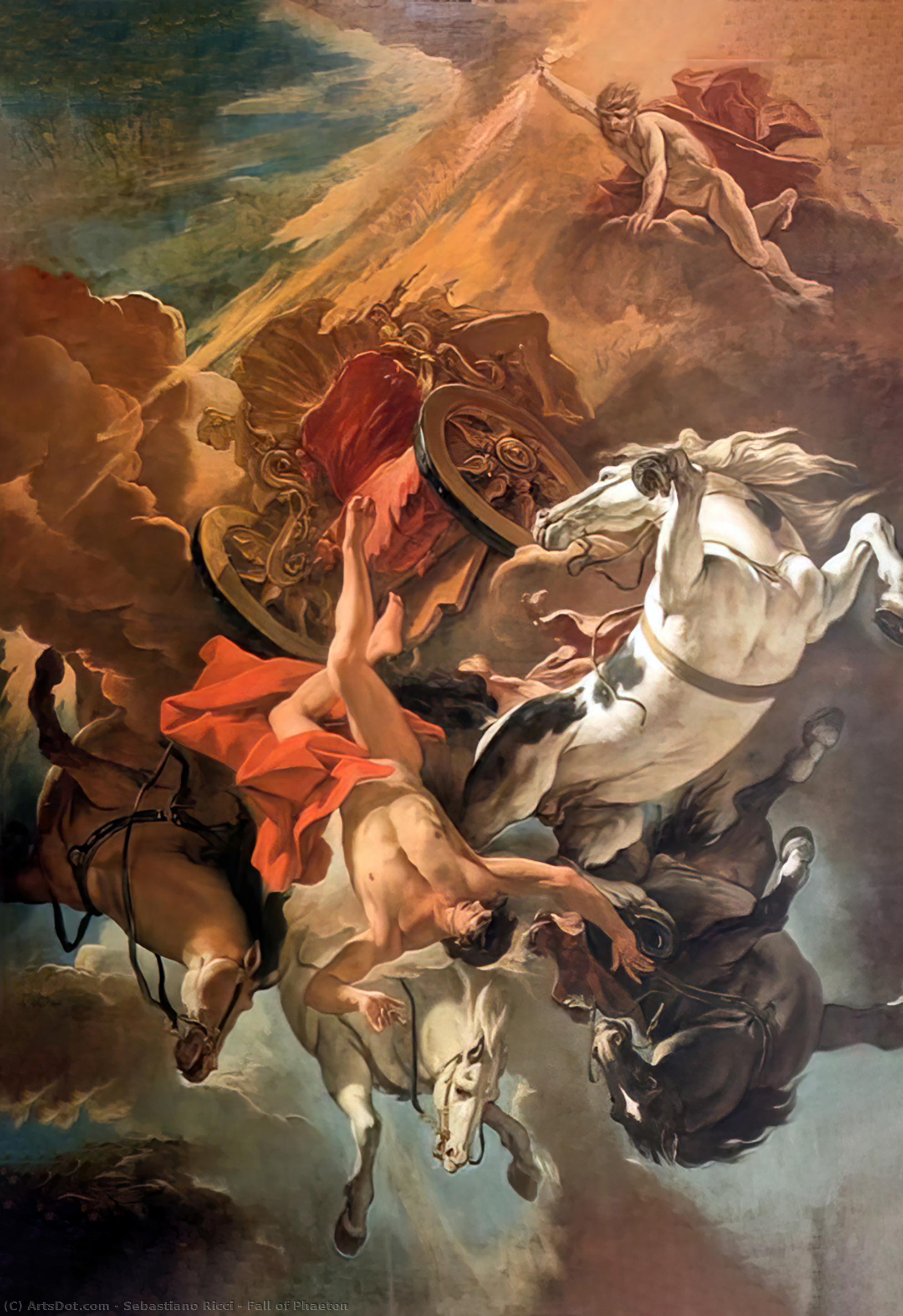
Experience the chaotic grandeur of Sebastiano Ricci's Fall of Phaeton, a dramatic 1703 Baroque masterpiece depicting mythological descent through vivid light and motion, now available as a fine oil reproduction.
A Celestial Descent: The Drama of Sebastiano Ricci’s Masterpiece
In the grand tradition of the Venetian Baroque, few works capture the sheer, unbridled chaos of mythic tragedy as effectively as Sebastiano Ricci’s Fall of Phaeton. Painted in 1703, this monumental oil on panel serves as a breathtaking window into a moment of cosmic catastrophe. The narrative centers on the hubris of Phaeton, the son of the sun god Helios, who, in a desperate bid to prove his divine lineage, attempts to command the solar chariot. What begins as an ascent toward glory rapidly dissolves into a terrifying descent. As the reins slip from his grasp, the celestial horses bolt in terror, dragging the very fabric of the heavens toward the earth. Ricci masterfully orchestrates this moment of transition, where the light of the sun meets the dark, churning waters of the river Eridanos, creating a visual spectacle that is as much about the loss of control as it is about the beauty of divine light.
The technical prowess displayed in this large-scale work—measuring an imposing 377 x 277 cm—is nothing short of extraordinary. Ricci, a pivotal figure in the transition from the heavy drama of the Baroque to the lighter, more luminous elegance of the Rococo, utilizes a palette that breathes with life and movement. The sky is not merely a backdrop but a living participant in the tragedy, filled with swirling, turbulent clouds that mirror the internal turmoil of the falling hero. Through vigorous brushwork and a sophisticated command of chiaroscroll, Ricci directs the viewer's eye across a complex landscape of motion. One can trace the frantic energy from the powerful horses in the foreground to the distant, panicked figures near the upper reaches of the composition. The interplay of light and shadow creates a sense of depth that pulls the observer into the heart of the storm, making the scale of the disaster feel intimately personal.
For the discerning collector or interior designer, The Fall of Phaeton offers more than just historical significance; it provides a profound emotional resonance. The painting explores universal themes of ambition, the consequences of overreaching, and the fragile boundary between divinity and mortality. Its dynamic composition makes it an ideal centerpiece for grand architectural spaces, where its sweeping movements can interact with the scale of a room to create a sense of awe. Whether viewed as a study in classical mythology or as a triumph of Venetian colorism, this work remains a timeless testament to the power of art to capture the sublime. Owning a high-quality reproduction of such a masterpiece allows one to invite this legendary moment of celestial drama into a contemporary setting, serving as a constant source of inspiration and a conversation piece that bridges the gap between the ancient myth and the modern eye.