The Enigmatic Gaze of a Venetian Gentleman
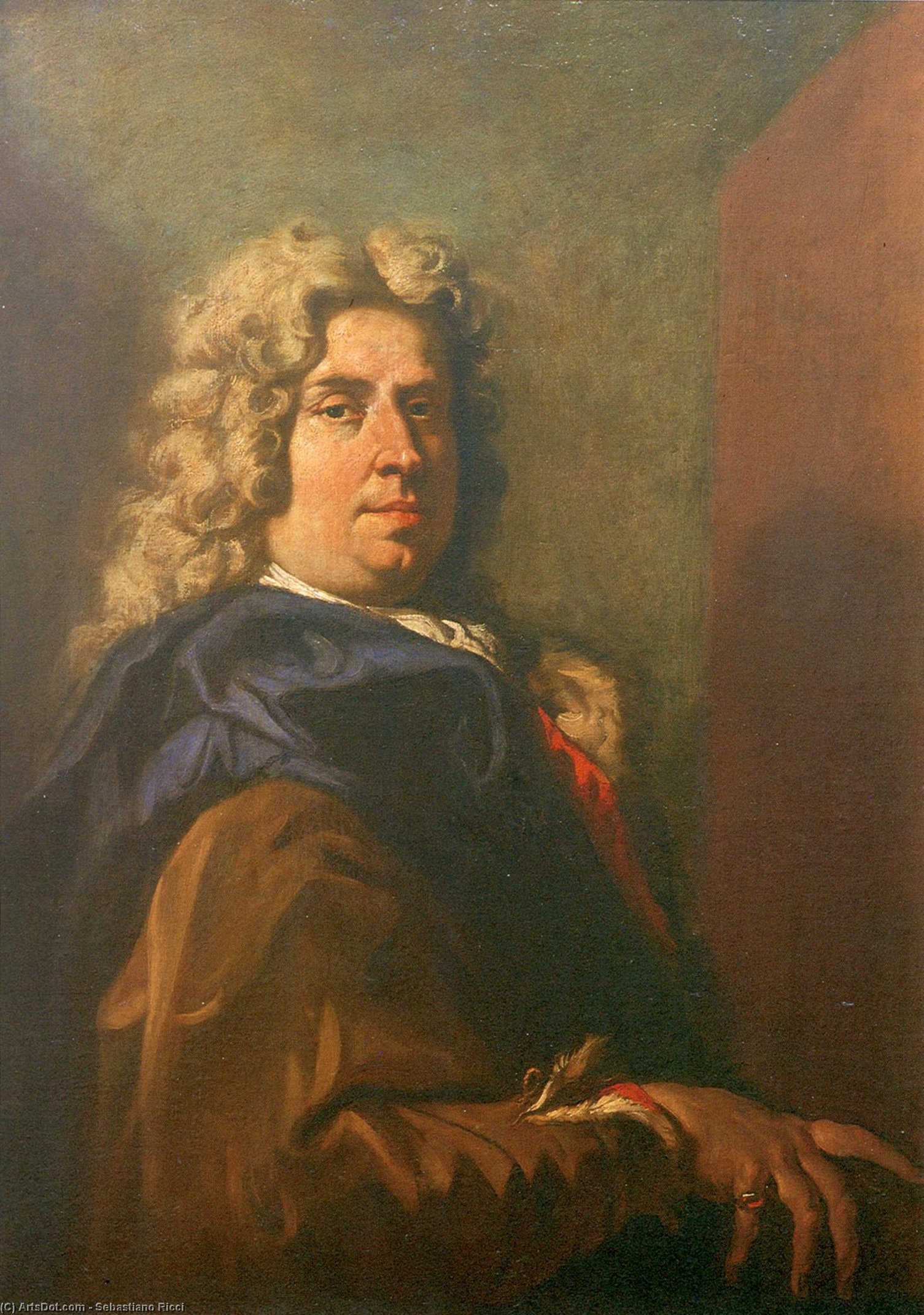
Sebastiano Ricci’s “Self-Portrait,” painted in 1704, is more than just a likeness; it's a carefully constructed tableau of status, introspection, and the burgeoning confidence of a rising star within the vibrant world of late Baroque Venice. The painting immediately commands attention with its dramatic lighting – a chiaroscuro technique borrowed from Caravaggio – that sculpts the subject’s face and clothing, creating an interplay of light and shadow that lends both depth and a sense of theatricality to the scene. The dark, textured wall behind him isn't merely a backdrop; it serves to heighten the impact of his figure, emphasizing his presence and drawing the viewer into his gaze.
Ricci’s style is distinctly Venetian, yet he transcends mere imitation, forging a unique voice within the established tradition. He leans heavily on the influence of earlier masters like Correggio and Giorgione, particularly in his use of color and atmospheric perspective. However, unlike many of his contemporaries, Ricci avoids the overly decorative tendencies that sometimes characterized Venetian painting at the time. Instead, he favors a more restrained elegance, prioritizing clarity of form and a subtle emotional resonance. The subject’s attire—a richly embroidered coat, a velvet waistcoat, and a meticulously styled wig— speaks volumes about his social standing and reflects the opulence of the era. The small dog beside him is not merely an accessory; it's a potent symbol of loyalty and companionship, adding a touch of warmth to the otherwise formal portrait.
A Window into the Artist’s World
Understanding Ricci requires placing his work within the context of 18th-century Venice. The city was experiencing a period of remarkable artistic ferment, fueled by international trade and a renewed interest in classical antiquity. Venetian painters were increasingly exposed to new ideas and influences from across Europe, leading to a fascinating synthesis of styles. Ricci himself was a cosmopolitan figure, traveling extensively throughout Italy and beyond, absorbing the techniques and aesthetics of various schools. His early life, marked by scandal and imprisonment, undoubtedly shaped his artistic sensibility, imbuing his work with a certain intensity and psychological depth.
The painting’s date – 1704 – is significant. It represents a pivotal moment in Ricci's career, as he was establishing himself as one of the leading portrait painters of Venice. This self-portrait offers a rare glimpse into the artist’s own perception of himself and his place within the artistic landscape. The confident expression on his face suggests a growing sense of self-assurance, while the subtle details—the carefully arranged dog, the meticulously rendered clothing—reveal a meticulous attention to detail and a desire to project an image of refinement and sophistication.
Technique and Materials: A Master’s Touch
Ricci's masterful use of oil paint is immediately apparent. The brushstrokes are visible yet controlled, creating a rich, layered surface that captures the nuances of light and shadow with remarkable precision. He employs impasto—thickly applied paint—to accentuate certain areas, such as the folds of his clothing and the contours of his face, adding texture and volume to the composition. The color palette is dominated by warm tones – browns, golds, and reds – which are contrasted with darker shades for the background and details, creating a sense of depth and drama. The painting’s overall effect is one of luminous intensity, achieved through careful attention to both technique and materials.
The canvas itself, likely stretched linen, provides an ideal surface for Ricci's expressive brushwork. He demonstrates a deep understanding of the medium, skillfully manipulating color, texture, and light to create a compelling portrait that transcends mere representation. The painting’s enduring appeal lies not only in its technical virtuosity but also in its ability to evoke a sense of intimacy and connection with the viewer.